
Healing, redemption through art
Published 1:00 pm Tuesday, March 27, 2007
Ceremony, film help mark 65th anniversary of
the internment.
From a pen or brush, pinned between a set of weathered fingers, spill the hues of Jimmy Mirikitani’s past.
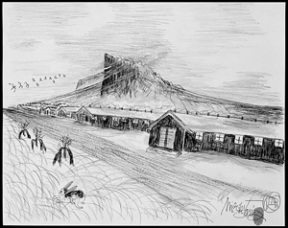
Lush greens, muted browns and fiery oranges stretch across fibers of white, testaments of family and friends lost in Hiroshima or in the dust at Tule Lake Internment Camp, where he was imprisoned during the prime of his life.
The years have chipped away at his body, but his memories, like the scenes he creates in his art, remain sharp.
“An American kid said, ‘Japan and America war start, what you gonna do?’” said the 87-year-old Mirikitani, reflecting on the escalation of World War II. “I told him ‘I not start war – I born Sacramento.’”
From Sacramento, to a childhood in Hiroshima, to his eventual homelessness on the streets of New York, Mirikitani’s life, and the art that has helped define it, are explored in “The Cats of Mirikitani,” an award-winning documentary film by Linda Hattendorf.
Both Mirikitani and Hattendorf will be on the island over the weekend for screenings of the film. Show times are 4 p.m. March 30 at Bainbridge Performing Arts, followed by a reception with Mirikitani and Hattendorf, and 5 and 7:30 p.m. on April 1 at Lynwood Theatre.
All shows will include exhibitions of Mirikitani’s artwork. Prints will be sold, with proceeds going into a trust for Mirikitani.
Proceeds from the box office will benefit the Nikkei Internment and Exclusion Memorial, where on Friday the community will mark the 65th anniversary of the internment of 227 Japanese Americans from Bainbridge Island.
On hand for that event will be former governors Gary Locke and Mike Lowry, as well as Congressman Jay Inslee, a Bainbridge Democrat who has worked to make the memorial site part of the national park system.
“We’ve come a long way,” said memorial committee chair Clarence Moriwaki, of both the memorial site and the country as a whole. “It’s emblematic of our riches in a way, to have so many people involved with this project, especially when you think back to what was happening 65 years ago.
“Back then no one stood up and said ‘Mr. Roosevelt, you might be making a mistake here.’”
Absent such intervention, Mirikitani, like 120,000 other internees, was forced to straddle the rift between two countries – the one of his family heritage and the one where he sought to establish a new life.
His drawings depict the tangible consequences of that rift, from the destruction of the atomic bomb in Hiroshima, which killed several of his family members, to his three and a half years at Tule Lake.
The film draws its name from Mirikitani’s fondness for cats – they appear frequently in his artwork – and in particular from a boy he met at Tule Lake, who asked Mirikitani to draw him a cat before later dying in the camp.
Then, what begins as a study of Mirikitani’s life and art, morphs into something else.
On 9/11, his story becomes entwined with Hattendorf’s, after she invites the homeless artist into her New York apartment to escape the toxic cloud that enveloped the neighborhood following the collapse of the World Trade Center towers.
The remainder of the film traces their joint effort to uncover Mirikitani’s history and help him regain his independence.
Islanders Cynthia Sears and Frank Buxton first saw the film last fall at the Port Townsend Film Festival, and have since been working to draw attention to Mirikitani’s art and story and Hattendorf’s work.
“There’s an obvious connection to the history of the local Japanese community,” Buxton said. “But the thing about the film is Linda’s ability to gently, gently, gently, bring out Jimmy’s story.
You walk by homeless people all the time, but you never know what’s going on beneath the surface.”
Moriwaki, who like Buxton has seen the film several times, marveled at Mirikitani’s transformation by film’s end.
“It’s really something,” he said. “He’s iconic. His story is one of healing and redemption. These stories are starting to come out more as people begin to feel more comfortable talking about them.
People shouldn’t have to hold this pain in their whole lives.”