New high school building in mid-hurdle
Published 7:00 pm Saturday, November 18, 2006
City approval could come next week, as officials figure out how to juggle students
For those tasked with the Bainbridge High School renovation, Thursday was judgement day. Sort of.
First came a review of the plans by the city’s hearing examiner, whose blessing – a decision on whether the project meets city code is expected within a week – would pave the way to the new building’s expected completion in 2008.
Under scrutiny were lighting, vegetative buffers, building height and the number of available parking spaces, which would be reduced from the current total of 652 to 571.
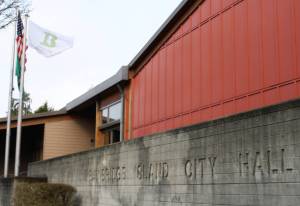
Seven hours after the session at City Hall, came stares of a different kind, from about 40 sets of eager eyes at the BHS library during a three-dimensional slideshow tour of the new building.
While neither event yielded concrete decisions, consensus among district officials was that both were significant steps forward, even if it made for a long day.
The morning meeting with the city – at which public comments were mostly glowing – will directly impact how the nuts and bolts of the project unfold.
The nightcap gave the gavel to taxpayers, who after walking with virtual shoes through halls that will one day mark the campus pulse, rendered their own verdicts about the $20.855 million project.
“It’s beautiful,†said one woman, before asking architect Butch Reifert and BHS Principal Brent Peterson one of the crowd’s many questions – ranging from windows to railings to the noticeable absence of lockers – about how the school will function once it’s built.
“Clearly, creating a safe environment is job one,†said Peterson, who also outlined the transition plan for the school, which will be burdened by construction through all of the 2007-2008 school year.
The school’s current 35,000-square-foot “200 building†will be replaced with a two-story structure twice its size, housing math and foreign language classrooms, administrative and counseling offices, the library and commons.
The plan also includes significant changes to traffic flows and parking, most notably in the reduction of available parking spaces.
Still about $665,459 over budget, the project is set to go to bid in March, with construction slated to begin in June.
Peterson said the district plans to turn the construction site over to the builder as soon as possible.
First, though, the school must relocate its technology core to another location, a process that’s already under way.
Doing so would avoid crippling phones and voice mails before teachers are able to finalize grades at the end of the school year. The main BHS office will likely be moved to the 100 building across campus.
Peterson said he’s working with the staff at neighboring Commodore Options School to compensate for the loss of five classrooms and the cafeteria, which will likely be moved to the gym at the east end of the campus, near the “pit.â€
Parking go-round
Before any of that, the district needs the nod from the city in the form of a conditional use permit.
City planner Kelly Tayara recommended approving the project subject to 50 conditions, among them planting more trees in the vegetative buffer along the west end of campus.
Neighbors of the school who spoke at the city meeting were nervous about how the new parking and traffic configuration would impact the neighborhood.
Under the plan, buses would enter from High School Road and turn around near the new parking lot in an area of the campus – close to western neighbors – where they didn’t previously go.
Lighting at the school was also a concern. Fixtures haven’t yet been chosen, but Reifert said they would be consistent with code and would be shielded to aim light down, rather than out, and avoid glare.
Parking, one of the most contentious topics throughout the process, was the main topic of discussion.
At minimum, the city requires the school to provide one space for every 10 students and one per staff member. The maximum number of spaces allowed is 499.
The school district asked to exceed that number by 72 spaces. Even so, the school would sustain a net loss in parking that doesn’t include 50 or so informal spaces, utilized now by more creative parkers, that will no longer exist after the renovation.
Peterson said the parking reduction meshes with efforts to get students out of their cars in favor of alternate transportation. Two groups – one student led, the other a combination of district brass and volunteer parents – are now crafting incentives to that end.
Discussions have begun with Kitsap Transit about the possibility of district-subsidized bus passes and the modifying of routes to accommodate BHS students. The reason, Peterson said, is that students seem to prefer public transportation to school buses.
Other plans call for restricting parking for students who live within a certain, yet-to-be-determined distance from the school and preferred parking for those who choose to carpool. Either way, the goal is to shrink the sea of cars that now spills over onto neighboring streets.
“We want to encourage as many students as possible to find other ways to school,†Peterson said.
Thus cars, like lockers, are falling out of favor at BHS.
“There are none planned,†said Peterson, of lockers in the new building, citing maintenance and security concerns, as well as changing needs.
“Lockers aren’t particularly popular,†he said. “Fewer and fewer students sign up for them. They just don’t use them anymore.â€