
The heat is on at volunteer fire training
Published 10:00 am Saturday, December 10, 2005
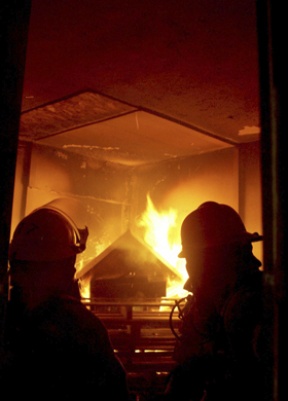
A practice run puts trainees into the heart of a
raging inferno.
At 200 degrees, I feel the rubber of my oxygen mask begin to warm.
At 300 degrees, the paint on the walls starts to bubble.
At 400 degrees, the flames whip the air into a cyclone, slashing the rising paint into strips.
At 500 degrees, my ears begin to burn through two layers of Kevlar. A firefighter at my side yanks me to my knees as I note the sensation.
“Everybody down!†he shouts.
As the ceiling approaches 1,200 degrees, the air above us begins to combust, sending a rolling sheet of flame over our heads. It’s around this time that I notice a firefighter’s visor melting over his helmet.
“Hose!†someone yells.
Two quick bursts of water pummel the ceiling and base of the fire. The room’s hazy, hellish red is immediately cast in the cold gray of smoke and steam.
Once outside, firefighter Peter Redinger cools off against a ladder truck and sculpts his oozing visor.
“We were minutes away from a flashover,†he says, describing the moment when everything in the room bursts into flame. “That means the walls, the carpet, you and me – even the air. In a real situation, we’d bang down that flame from outside that room. But we were in there to see how fast the temperature rises, how fast the flames move.â€
And, he says, to expect the unexpected. Unlike their frequent “live fire†drills in concrete training structures, real homes pose unique, unforeseen risks.
“One thing we didn’t notice was that the wall behind us was burning,†Redinger says. “We were watching the pile of wood burn, but the gasses that collected above the door caught fire. It’s weird. You never know.â€
Similar controlled burns continued for seven hours on Saturday.
Dozens of island firefighters stormed an old Finch Road house, repeatedly cooking and soaking the 87-year-old walls until they were a warm pulp by day’s end.
Michi Noritake, 85, has lived in the house nearly all her life. She watched for hours from a next-door window as smoke billowed from the eaves, windows were shattered and chunks of the old roof were hacked away for ventilation.
She recalled the days when her family farmed strawberries on the property and when they locked the doors before heading to an internment camp during World War II. Now that her son has built a home only 10 yards away, the family decided to donate the old house to the Bainbridge Island Fire Department.
“It’s sad to see it go,†says Noritake’s son, Greg, as he paced the grounds. “But in a way, I feel good watching these guys train. I’m glad it’s getting some use because otherwise it’d just be torn down.â€
Fire exercises like this are a rare but important part of a firefighter’s training, says Luke Carpenter, the department’s operations chief.
“We need to do more of these because our usual training in a concrete warehouse in North Bend is not the same as a single-family residence,†he says.
House fires of this magnitude don’t happen often on the island.
Of the 54 fires the department responded to last year, about one-third were in homes or other buildings, according to Fire Chief Jim Walkowski. But the infrequency of full structural blazes doesn’t diminish the need for this type of training, says volunteer firefighter Dan White.
“It’s a good chance to reinforce what we’re trained to do,†he says. “It’s rare that we get to train like this. It’s more real than what we learn in the academy, and it’s nice to know our training really works, especially (in a situation) when it really counts.â€
Firefighters’ enthusiasm for the training has them anxious to charge back into the inferno.
“Put me in, Coach!†says a volunteer waiting with his mask in hand.
“You’ll be in there a couple more times,†says volunteer firefighter Chris Schmit, who coordinates each foray into the blaze.
He shifts name tags around a board, much like a gridiron general, pulling players on and off the field.
“How do you like my helmet, Coach?†asks another volunteer as he struts from the house sporting the day’s second heat-warped visor.
“We’ll take it out of your pay,†jokes Schmit.
“What pay?†the young volunteer shoots back.
Some firefighters strike a more serious tone as they huddle in a circle and loosen their steaming coats. They’ve just seen a “fire angel,†a rare phenomenon that occurs when combusting air swoops through a room in a flaming channel.
Carpenter has seen plenty of them and they always give him pause.
“I’ve seen something like a face in the flame,†he says. “I don’t believe in ghosts, but it made me do a little thinking.â€
Even more dangerous are “backdrafts,†Carpenter says, which occur when a burst of oxygen hits smoldering material, igniting a flash of flames with explosive force.
“You need three things for fire: fuel, oxygen and heat,†he says. “Sometimes a trapped flame will burn up. But there’s still fuel and there’s still heat.
“Open a door and you hit it with oxygen. That gives you an explosion, which is just rapid combustion. It goes off like dynamite.â€
While flames pose serious risks to firefighters, toxic gas is the greater initial danger for a home’s residents.
“Carbon monoxide is the silent killer,†Carpenter says. “Fire doubles in size every 30 seconds. But most don’t burn to death. They die from asphyxiation if they’re not out of there in five to seven minutes. That’s why early detection is so important.â€
And that’s why Carpenter has 10 smoke detectors in his own home.
“Someone sleeping doesn’t have the gear you have on now,†he says. “They don’t have a breathing apparatus. They have pajamas.
“That’s why, when I arrive on the scene at 2 o’clock in the morning and I see a house on fire, the words I like to hear most are ‘nobody’s inside.’â€