The day the apple trees burned
Published 7:00 pm Saturday, December 10, 2005
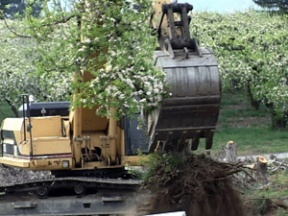
A documentary studies changes in Washington agriculture.
Growing up in Wenatchee, Jamie Howell and Guy Evans used to pass orchards on the way to school and most everywhere they went.
That changed in 2001, whenthe two returned to Wenatchee after studying at the University of Washington.
“It was the year you could couldn’t go (anywhere) without seeing a pyre,†Howell said. “We were struck that there are almost no orchards left in town. They were being displaced by subdivisions.
“We said, ‘What’s going on?’â€
At that time, they came across a paper on sustainable small-scale farming by John Ikerd, a professor emeritus of agricultural economics at the University of Missouri in Columbia, Mo.
That led the pair to discover a new breed of American farmer, which sparks hope for the future of small-scale agriculture.
The 58-minute documentary that resulted from the pair’s two-year study is “Broken Limbs.†A free showing will be held at 3:30 p.m. Dec. 11 at IslandWood, followed by a discussion with the filmmakers.
The project became personal when Evans’ father, Denny, a third-generation apple grower, received the dreaded letter from the bank, declining a loan extension and calling in everything he owed, forcing the sale of home and farm.
Once the “apple capital of the world,†Wenatchee community life revolves around orchards with a famous apple blossom festival and reports of blossom dates making the newspaper.
“So when people start going bankrupt, everyone hears,†Howell said. “It’s devastating for a family that’s been in it for generations.â€
Farmers frequently take out loans at the start of the season to pay for labor and depend on the harvest to pay off the loan.
In bad years, farmers might ask the bank to float their loan another year, hoping for a better harvest. In good years, Howell says, farmers would be off to Hawaii right after harvest.
But 2001 was different. Instead of receiving checks from packing sheds, farmers were getting bills. The price of apples was so low, it didn’t even cover the cost of packing them.
“Some will say it’s the market shaking out, but that’s not our experience,†Howell said. “There were some very good farmers going under.â€
Howell sees three main pressures putting farmers under: increased global competition; consolidation in the retail trade, allowing a few powerful buyers to dictate the price of apples; and the increased cost of labor and other expenses.
Ikerd’s paper was compelling to the filmmakers because it challenged business’ focus on growing and becoming more efficient to increase profit margins.
Ikerd argued that a sustainable business model requires making money, but also using environmentally sound practices and being socially responsible – the lack thereof tears up communities when small farms are forced under or under pays migrant workers.
“When you incorporate these other pieces, it changes farming,†Howell said. “Food is fundamental to every social issue, the way we live.â€
In Wenatchee, farmers make up the fabric of the community, but with many going bankrupt, they had to go elsewhere for jobs.
“You see what’s happening to apples, you see it in all different industries,†Howell said, referring to the exodus of jobs to overseas countries where wages are lower.
“If your model takes the small farmer out of the community, it has repercussions,†Howell said. “We want people to recognize these connections. If you’re looking at the social return and environmental cost, you’ll make a different decision.â€
Howell and Evans found farmers who had switched to sustainable practices and were surviving. Some marketed directly to the consumer via farmers markets, thus making 80 cents on the dollar instead of 5 cents through a central buyer.
“And it’s better for the community, they can ask the farmer what’s on the food. That’s a luxury in many cases,†Howell said.
“When we show the movie, we challenge people to make three purchases each week that have some local connection. We want people to feel like there is something they can do. You can direct your dollars to small farmers, if you want to.â€
* * * * *
New branches
“Broken Limbs†will be shown at 3:30 p.m. Dec. 11 at IslandWood, followed by a discussion with filmmakers Guy Evans and Jamie Howell and representatives of local farming advocacy group the Trust for Working Landscapes. Free with light refreshments. To register, call 855-4300 or visit www.islandwood.org.