
Let the rains come down
Published 4:00 pm Wednesday, November 23, 2005
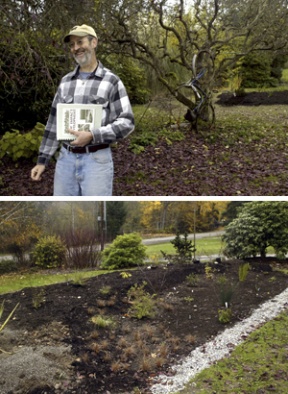
Jim Gleckler won’t be flooded out, since installing a ‘rain
garden’ in his yard.
For 13 years, as winter rains approached, Jim Gleckler would worry.
With his small house at the foot of a long slope, rainwater would rush down and end up in his basement. But now his demonstration “rain garden†and bioswale – a swath of depressed, absorbant soil – will take care of that.
“I was thinking it makes sense on so many levels: stewardship, civic responsibility and gardening,†said Gleckler, who lives in the Eagledale neighborhood. “Those are all just philosophically pleasing.â€
Gleckler first heard about rain gardens at the Conscientious Projector film festival last spring. The gardens are designed to capture high volumes of storm water and let them slowly infiltrate into the ground instead of running off into the street and eventually the sound, washing pollutants from autos with it.
Runoff has been cited as the cause of up to one-third of the water pollution in the Puget Sound area. It also robs deep underground aquifers – which provide the island’s drinking water – of replenishment.
Gleckler and his wife, Cassie, are the proud owners of a new rain garden made possible through the nonprofit Natural Landscapes Project and funds from the city’s natural resources education fund for education and outreach projects and as part of the program to reduce non-point source pollution.
A lot of elbow grease and research also came from the Glecklers and local resident Dave Ullin. Initial plans were worked out with consultant Michael Broili and coordinated by Natural Landscapes Project co-director Cara Cruickshank.
The demonstration garden will be open for the public to view and learn how to make their own. Gleckler says people are welcome to come by and take a look when the gate is open or make an appointment to visit (842-4815). An “open garden†will be held 1-4 p.m. Dec. 11 at 5149 New Sweden Ave.
“Hopefully, architects and builders will look at it,†Cruickshank said. “We want to show people what the options are (for handling runoff) and that it can be done for a reasonable price.â€
The Gleckler rain garden in the front yard measures about 26-by-8-feet; the needed size varies with the area of the roof from which runoff will be captured.
The bed is comprised of a foot of gravel layered with filter cloth to keep out the 1-2 feet of an absorbant “engineered†soil on top. The soil is 40 percent native soil, 40 percent compost and 20 percent sand.
The garden cost less than $2,000 and required about three weeks of on-and-off work to construct.
Previously, water from the Gleckler roof was collected and piped away, eventually flowing to the street. Now it is directed into the top of the rain garden, where it will be absorbed.
The water could also run across the yard as a “stream†to reach the garden, depending on personal preference, Cruickshank said.
As the fledgling plants in the garden grow, they will draw water out of the ground and evapo-transpirate the moisture into the air.
Behind the house, what seems like just another of several lush garden beds is a bioswale that will intercept and absorb the waters rushing down the slope.
It’s an improvement from Gleckler’s earlier attempts at runoff management – digging a ditch around his house each fall and still getting water in his basement during heavy rains anyway.
After an excavator dug a 2-foot ditch, Ullin volunteered his labor to shape the berm that provides a physical barrier to rushing waters.
The bed just in front of the berm is engineered like the rain garden with amended soil and three zones of plants: those that can stand being saturated, those that can take water rushing over them and those on top of the berm that prefer more moderate watering.
The project began with “perc†tests at six sites around the property, looking at how quickly water was absorbed by soils at depths of 6 inches, 1 foot and 2 feet.
The poorly percolating glacial silt in the Glecklers’ yard was then amended to create the “engineered†soil used in the rain garden and bioswale and layered with a thick mulch.
Geckler said he was happy to add another garden bed.
“I believe in less grass and more garden,†he said. “Grass is only good for compost.â€
He farmed in Pennsylvania for 11 years and worked in a nursery.
“I have dirt in my blood,†he said
He and his wife, both nurses, were attracted to the Northwest because they love the rain.
“If the garden is happy, we’re happy,†he said. And for the first time in 13 years, “I’m looking forward to the heavy rains.â€