Images of pain, images of resilience
Published 10:00 am Wednesday, November 2, 2005
Photographer Paul Dix saw the human impact
of a civil war.
Not yet 2 years old, Luz Mabel Lumbi Rizo already bore the scars of a battle veteran.
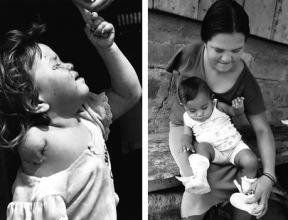
In a photograph dated 1987, stitch marks weave under the young Nicaraguan’s shoulder, framing what was once her right arm.
In a photo taken 16 years later, Luz Mabel is smiling and pullingshoes onto her toddler’s feet.
“That’s the nature of Nicaraguans,†said Paul Dix, the photographer who documented Luz Mabel’s transformation and will present 20 years of Nicaraguan images tonight at Bainbridge Commons. “In spite of all the suffering and pain, they often find some joy, especially with their children.â€
Dix and his partner, Pam Fitzpatrick, worked for Witness for Peace in the 1980s, traveling to Nicaragua at the height of civil war there.
They shot photos and gathered stories, paying special attention to the war’s toll on children. Dix found Luz Mabel 18 years ago in a camp for the war-displaced. Her family’s home had been attacked by U.S.-backed Contra rebels who had hoped to overthrow the left-leaning Sandinista government.
“The Contras actually targeted her family,†the Montana-based photographer said. “No one knows why for sure. Her father was killed, and so was her 38-day-old baby sister. The family lost everything as a result of the attack.â€
Dix asked Luz Mabel’s 12-year-old sister to draw a picture of the incident.
The image produced was raw and bloody, with men shooting into the house, her brother holding the door and family members dead on the floor.
“Unlike a lot of others, Luz Mabel was surrounded by family,†Dix said. “She still had some help.â€
When Dix and Fitzpatrick returned to the Central American nation in 2003, the pair were pleased to find Luz Mabel carrying on.
“She didn’t remember the weird gringo who took her picture,†Dix said.
“But I was glad to see her. It really made me happy that day because mostly we saw tragic cases. It was one sad day after another.â€
In an interview with Dix and Fitzpatrick, the adult Luz Mabel said: “I live here peacefully. It is difficult because, well, at times I worry about raising the child. (Losing the arm) changed everything. My arm is buried in Jinotega with my father, it is next to him.â€
Nicaragua has grown poorer over the last 20 years, Dix said, making life especially hard for the children crippled and maimed during the war.
“Nicaragua is the second poorest nation in the Western Hemisphere after Haiti,†he said. “It’s such a desperate situation and few have jobs or enough to eat.â€
Dix and Fitzgerald hope to broaden Americans’ understanding of the conflict and its modern day implications by showing their photos and stories during a six-month tour.
Their stop in Bainbridge will feature a one-hour slide show documenting the lives of approximately 20 Nicaraguans.
The pair’s presentation will feature only a few pictures of Bainbridge’s sister island Ometepe.
“Ometepe escaped much of the conflict and has done so well in comparison to the rest of Nicaragua,†he said. “We visited there recently and could see that people are a lot better off.â€
Dix said a strong island economy, available medicine and clean water is responsible for much of Ometepe’s relative stability.
He credits the Bainbridge-Ometepe Sister Islands Association, which is co-sponsoring the presentation along with the Agate Passage Quakers, for its efforts to support Ometepe coffee cooperatives and improvements to the water system.
“Ometepe is beautiful and is doing quite well,†he said. “But Ometepe is the exception to the rule.â€
* * * * *
Scars of empire
Photographer Paul Dix and Pam Fitzpatrick will present their “Living with the Consequences of U.S. Policy†slide presentation tonight, from 7:30 to 8:30 p.m., at the Bainbridge Commons on Brien Drive. Admission is free, but donations will be accepted.