Mayoral Candidates Q&A: Kordonowy and Tooloee
Published 8:00 am Wednesday, October 26, 2005
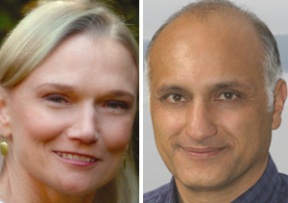
Darlene Kordonowy
Age: 57
Education: B.S., history and business economics, North Dakota State University
Occupation/work experience: Sixteen-years in financial and printing industries, including working as a financial analyst for Standard & Poor’s, an account executive for American Standard Corporation, and later for two regional manufacturing companies.
Current occupation: Four years as mayor of City of Bainbridge Island.
Community involvement: 1988-1989, volunteer at Bainbridge Arts and Crafts and Bloedel Reserve; 1989-1990, co-chair of Bainbridge Island Home Rule Steering Committee; 1991-1993, chair of the Comprehensive Plan Advisory Committee; 1992, Kitsap Regional Planning Council’s Joint Planning Committee; 1994-1995, Kitsap Transit Passenger-Only Citizen Review Panel; 1994-2001, Bainbridge Island Planning Commission; 1991-2001, member, boards of directors for Kitsap League of Women Voters, Helpline House, Bainbridge Island Land Trust, and Health, Housing and Human Services Council; 1998-2000, president of board of directors of Helpline House; 1999, Bainbridge Island Kiwanis’ Citizen of the Year.
1. With Winslow Tomorrow planning effort about to bring recommendations for downtown growth and redevelopment, what comes next? What can the mayor do to follow through with the recommendations? How should the city pay for improvements, and should funding be put to a public vote?
Continuing the momentum of Winslow Tomorrow’s planning effort is paramount. I will do so by making headway on three separate but simultaneous tracks: 1) implement the first set of recommendations; 2) distribute, integrate and manage the project’s work plans through the city council, the project manager and appropriate city departments; and 3) perform analysis and produce recommendations for a second Winslow neighborhood – more than likely the ferry terminal district.
As mayor, I will execute the first set of Winslow Tomorrow recommendations without delay. The biggest danger is that City Council and the community will accept the general concept of Winslow Tomorrow but will try to save money by slicing off a little bit here and a little bit there. Such action would mean the slow failure of the entire package – death by a thousand slices, as the Chinese say.
The Winslow Tomorrow recommendations are bold, and it will take courage to implement them. To jumpstart the implementation process, I have included funding for the most immediate recommendations in my 2006 budget, which I presented to the community and City Council early in October.
Next month, I will present the entire package of recommendations to the council, and follow up with detailed work plans in January.
Taken together, these recommendations show us the way to increase population density in Winslow by making mixed-use development of downtown properties financially viable, while adding amenities that will make shopping and living in Winslow more attractive.
Increased population density in Winslow will help reduce density in other areas and maintain the green landscape as promised in the original comprehensive plan in 1994. “Fair, but firm†parking enforcement, a system of shuttle busses and expanded parking, including underground and satellite parking, will allow more of us to take advantage of businesses in Winslow while at the same time dispersing traffic congestion.
These recommendations will carry a hefty price tag, but most of this money is not likely to come from property taxes. There are many other sources of funds.
In my 2006 budget proposal, I have recommended $3 million in councilmanic (council-approved) bonds to pay for the first set of recommendations. Within the short term, increased economic activity in Winslow will generate more revenues to pay costs in future years. The city also will be able to leverage its funding by partnering with the private sector on capital improvements, such as underground parking garages. And the city will seek loans and grants from state and federal sources to help fund the capital improvements required by Winslow Tomorrow.
Additionally, there are a variety of legal mechanisms and quasi-governmental organizations, which, once established, allow a portion of the taxes generated to be captured by the organization and used to invest in further development.
At some point, it may be necessary to ask islanders to bear some of the costs to implement Winslow Tomorrow.
Four years ago, we decided to tax ourselves to preserve open space on the island. For the same reason, I believe we may decide to utilize voter-approved bonds to make the necessary investment to implement Winslow Tomorrow. If we are willing to make Winslow the vibrant urban core of our community, it will help keep the rest of the island green. In the long run, we will all benefit.
2. Does City Hall “work†for citizens? What would you do as mayor to improve everyday service to islanders?
I think there’s general agreement that City Hall today works better for citizens on the island than it did four years ago. When I took office in 2002, the city was routinely late in filing its financial reports. For the past two years, the city’s financial statements were completed on time. Last year, for the first time in many years, we received a clean audit, and I expect the same result this year.
The new team of senior managers that I hired is working together more effectively, and islanders benefit directly from their efforts. For example, when I met with a group of builders several weeks ago, they told me that Planning Director Larry Frazier has significantly improved the service they receive from the city’s planning department. Today, island property owners who want to dig a well or install a new septic system don’t have to travel to Port Orchard to file the applications. I arranged with the Kitsap County Health District to have a service representative available at City Hall one day a week to meet with islanders.
These changes are encouraging, but there’s always room for more improvement. During my next term, I will work closely with the City Administrator Mary Jo Briggs to seek additional improvements in service to islanders.
By acting on ideas such as surveying citizens who are regular users of city hall or rotating employees through a “meet and greet†corps, the city administrator and I will learn where improvements are needed.
In addition, I want to institute a series of regular meetings with groups of constituents – similar to my recent meetings with business owners, developers and senior citizens. I want to hear firsthand where city services have improved and where we need to focus additional efforts.
Finally, I also will work with my staff to find more cost-effective ways to deliver essential services to the community. For example, by coordinating our stewardship activities for open space more closely with the metro park district, I believe we will be able to deliver better services to the public at a lower cost.
3. What challenges do you see facing the city and/or community in the next four years? How would you deal with them as mayor?
The biggest challenge for both the city and the community is managing population growth in a way that meets the legal requirements of the Growth Management Act and, at the same time, preserves the things we all love about Bainbridge. We must ensure that Bainbridge does not become merely a Seattle suburb in the sound.
We will have to find ways to safeguard the natural environment and systems that are an essential part of our island. And, continuing growth means more demands for city services at a time when city revenue sources are constrained.
These are tough challenges, but I know we can meet them. Fifteen years ago, I led the effort to develop the Comprehensive Plan that is our blueprint for managing growth on Bainbridge. In the next four years, our actions – or lack of action – will determine whether we realized the vision embodied in that plan.
The first step will be to implement the Winslow Tomorrow recommendations. That includes everything from long-term investment in improving our infrastructure to making changes in our zoning and building codes. As mayor, I will work to help the council and the public understand these critical recommendations and build public support to put them into action.
Next, I want to expand on the success of Winslow Tomorrow to focus on the entire island. To that end, I am interviewing islanders interested in serving on a new Citizens Advisory Committee whose focus will be the update of the land use element in the Comprehensive Plan.
By 2025, the island is expected to grow by 7,000 people – some experts put that number even higher. Even if the new Winslow can accommodate half that growth, we will need to accommodate 3,500 new islanders in areas outside Winslow. The Neighborhood Services Centers are ideal locations to consider for additional density, particularly if transferred from aquifer recharge or other critical areas. I want to draw on the best thinking of all islanders to find the best way to accommodate growth and preserve our island-city’s green landscape in perpetuity.
Keeping the city on a sound financial footing will be another big challenge. I am always mindful of the growing cost of government. Over the next four years, I will work with the community and City Council to establish specific priorities for city spending. We must use our finite resources to support the long-term interests of the community as reflected in the Comprehensive Plan.
Additionally, City Council and administration must work together to establish a set of financial principles within which a flexible and sustainable organization can operate and effectively serve the residents of this community. Working with the management team to find ways to tighten our belts is an ongoing responsibility.
I will work to diversify our economy to make sure that the city has the advantage of new sources of revenue, including those that emerge from increased economic activity on island. I will use my strong working relationships with county and state officials to find additional funding from state and federal sources. And the city will create more public-private partnerships to stretch our tax dollars.
***
Nezam Tooloee
Age: 47
Education: B.S. mechanical engineering, Stanford University 1980; M.S. management science, Stanford University 1982
Occupation/work history: 1982-1990, partner, Strategic Decisions Group; 1990- 1995, sr. vice president, International Wireless Communications; 1995-1997, vice president, U.S. AirWaves; 1997-1998, CEO, ClearComm (for U.S. business)
Current occupation: 1998-present, sole principal, Wireless Alliances (own strategic business development and management consulting practice)
Community involvement: Primary contributions include Bainbridge Island Public Schools Trust; Bainbridge Education Support Team (BEST); Wilkes Elementary School (Wilkes auction); Bainbridge Island Land Trust; Friends of Pritchard Park; Bainbridge Public Library; Helpline House and Project Backpack; Kids Up! (playground at Battle Point Park); Kids Discovery Museum; Bainbridge Arts and Crafts (arts auction); Bloedel Reserve; Bainbridge Foundation (One Call for All)
1. With the Winslow Tomorrow planning effort about to bring recommendations for downtown growth and redevelopment, what comes next? What can the mayor do to follow through with the recommendations? How should the city pay for improvements, and should funding be put to a public vote?
It is essential that the vision of Winslow Tomorrow be implemented. This project has enabled us to forge a consensus with a broad base of support on what to do with our downtown. This was achieved because about 135 islanders stepped up and solved the problem together — and they own the results.
I want to see these results become reality because this is the most critical project that we have undertaken as a community to manage growth and shape it in ways that reflect our shared values. I also want to see this happen because not taking action on the results could cause great harm to the whole community.
Winslow Tomorrow has identified the things that need to be done to implement the vision. The citizen leaders of Winslow Tomorrow together with its project manager presented recommendations to the community last Saturday. These include:
• Policy changes: remove obstacles.
• Financing plans: tap new funding sources.
• Incentives: encourage desired outcomes.
• Partnerships: expedite transformation.
• Deals: pave the way for changes.
• Programs: keep community groups engaged.
• Organization inside the city: manage the execution.
• Structures outside the city: finance and operate facilities.
The next mayor will have enormous influence on our ability to implement. He or she will have to establish sound priorities, make timely decisions, negotiate with council, consummate deals with others and mobilize resources.
My skills and experience as a business executive are ideally suited to this challenge. My work on the council enables me to deal with people who are friends and colleagues to resolve any policy or fiscal issues that arise along the way.
If we do it right, most of the desired re-development will be financed with private capital. There are some things such as utilities along or under Winslow Way that will have to be paid for by taxpayers. In such areas, we may well be able to get attractive state loans that are re-paid from recurring revenues.
I agree with one of the key findings of Winslow Tomorrow: bonds leading to higher property taxes which require voter approval will be a last resort – if they are needed at all.
I support all of their recommendations and we need to focus on those that are on the critical path. This involves laying out a timeline for when things will happen and what things have to be completed first so that other things can then follow. We can then focus on the things that are on the critical path and figure out when they will be done, who will do them, how we will pay for it and what the outcomes will be.
While the staff focused on Winslow Tomorrow will have operational responsibility for doing this work, the executive leadership for it must come from the next mayor. In particular, things on critical path must get adequately funded in the operating and capital budgets that the mayor proposes to the city council each year.
2. Does City Hall “work†for citizens? What would you do as mayor to improve everyday service to islanders?
Absolutely. The only mission of City Hall is to work for the citizens. Its job is to provide the services that the taxpayers demand.
Traditionally, this is viewed as “core†services such as roads, cops, utilities, land use laws and building permits.
In our community, we ask the city to provide “discretionary†services in a wide range of other areas such as environmental protection, cultural and artistic programs, transportation alternatives, affordable housing, and human services.
This creates a long-term challenge for us. Our city administrator and department heads (the professionals we have hired to deliver services) have pointed out that they do not have the staff to do all that is currently asked of the city.
We need to deal with this point because, if true, it is sure to lead to burnout for staff and poor service for residents.
Since just adding more staff is not a viable financial option, we need to look for a long-term answer elsewhere (more on this below).
In the near term, I see some ways of improving service that do not substantially increase workload for staff. In particular, as mayor, I would:
• Hold quarterly accountability reviews with city administrator and department heads to ensure that they stay on track for delivering the results desired by the community and the council.
• Ask the entire organization to embrace a culture of service in which city staff views its role as helping solve problems for islanders and finding ways to say yes to the many good ideas that citizens propose.
• Use regular citizen satisfaction surveys performed by independent consultants to make sure that the culture of service is taking root. There is no reason for us not to do so and no reason not to share the results with the citizens.
• Make sure that all employees at the city have a performance appraisal done by his supervisor at least one a year and move to “360 reviews†where people get feedback from supervisors, subordinates, and peers.
• Empower city staff to resolve problems before they turn into complaints and create incentives for them to ask for help from their supervisors before that happens – and before complaints turn into disputes or litigation.
• Make myself available to citizens in regular town hall meetings, through blogs and in other ways, so they can share their concerns directly with me, and ask the city administrator and department heads to provide timely responses.
In the long term, the answer to good service is in re-thinking what the city does.
We need to look at everything the city is doing and ask hard questions. Does it need to be done at all? Could it be done more efficiently in-house? Could it be better done by outside contractors? Should community volunteers do it instead?
This will enable the city to focus on doing what it must do well and not doing the rest – which will lead to a quality of service to citizens that is sustainable.
3. What challenges do you see facing the city and/or community in the next four years? How would you deal with them as mayor?
Based on hands-on involvement as a council member dealing with a wide range of issues, I believe our key challenges in the next four years are three: We need to find a sustainable financial course and ways of paying for pressing community needs, which go unmet year after year, without raising new taxes.
Recurring expenses consume essentially all of the city’s recurring revenues and about 65 percent of these expenses are salaries and benefits for employees. This situation is just not sustainable. The city needs to find an overall level of staffing and costs (and services) that is appropriate and sustainable.
Over 10 years the slice of recurring revenues that was available to help pay for capital projects declined from nearly 30 percent to practically zero. As a result, most capital projects that meet pressing community needs are simply delayed year after year or not done due to a lack of funding.
The city needs to carve out a sufficient slice of recurring revenues to help pay for capital projects and tap a wide range of funding sources to do so.
We need to be much more proactive in shaping future growth, which if not well managed, will adversely impact our quality of life, sense of community, and physical environment.
The city is committed to achieving 50 percent of growth in Winslow and 50 percent of it in outlying areas. But, since this was adopted 10 years ago, only one-third of the growth has been in Winslow and two-thirds in outlying areas.
We need to reverse the split over the next 10 years so that we can achieve the goal of a 50-50 split in growth within 20 years of adopting that goal. (Implementing Winslow Tomorrow will help a great deal.)
The city needs to do far more to ensure the island’s water supply, protect natural systems, preserve rural character and deal with traffic congestion in the years ahead. We need to become equal partners with the ferry system (and other agencies) in making the key decisions that will affect our future.
Bainbridge has a strong and mutually dependent connection with the ferry systems. Although we are heavily impacted by decisions the ferry system makes, the city is not an equal partner in making those decisions.
If we don’t act now, the ferry system will go ahead with its own $200 million plan to expand its facilities on Bainbridge. This plan meets their financial and operational needs, but it will not serve our community’s needs.
Rather than just accepting decisions that the ferry system makes, the city needs to forcefully and effectively advocate for the interests of our island community – and then hold the ferry system to its commitments.