CITY COUNCIL Q&A: Central Ward, Position No. 4 Bill Knobloch vs. John Doerschuk
Published 5:00 pm Wednesday, October 19, 2005
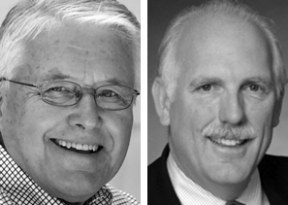
Bill Knobloch
Age: 68
Education: B.S. history, Fordham University; graduate, Naval Flight School
Occupation/work experience: retired naval officer, commercial pilot
Community involvement: Bainbridge Island City Council, Bloedel Reserve, BI Arts and Humanities Council, BI Land Trust, American Legion, VFW, Cultural Facility Assessment Committee, BI Chamber of Commerce, Bainbridge Island Broadcasting
*****
1) With the Winslow Tomorrow planning effort about to bring recommendations for downtown redevelopment, what comes next? What should the council do to follow through with the recommendations? How should the city pay for improvements, and should funding be put to a public vote?
After the Winslow Tomorrow recommendations are publicly presented at an open house, the public should have an opportunity for response through several public comment sessions before City Council. Council then will deliberate for approval with caveats that should include answers for how the funding will be formatted. More important is how a proposed fiscal plan will be accepted by the community island-wide. Unless funding requests show, in detail, important infrastructure needs for downtown, all funding required for Winslow Tomorrow should be put to the public for approval. The basis for this is the fact that city money includes taxpayer dollars. Winslow improvements must address community benefit in general rather than certain interest groups in particular. In the Winslow core there are infrastructure needs that include storm water, sewer and water lines. These are in desperate need of upgrading and repair. Any bond levy for infrastructure has to include specifics of how that money will be used and at what rate to the taxpayers.
Once the City Council deciphers the Winslow Tomorrow recommendations in terms of public/private partnerships and then receives public commentary for those recommendations, action in the form of resolutions for plan approval, funding format (councilmanic or voter-approved bond levy) and strategy in time line format should be put on the agenda for formal approval. At that point, this will provide direction for how our community wants to look and feel when asserting our quality of life values.
2) Are there any existing city programs or ordinances you would work to eliminate? Any not in existence you would work to enact or fund?
The sign ordinance demands immediate work as demonstrated by the recent fiasco regarding Right of Way [ROW] issues. Constitutional rights involving free speech and private property rights should be made clear through our code revision.
We are in a governmental growth phase that includes several taxing districts competing for the same bond levy dollars. I suggest that we consider whether the city wants to stay in or get out of the park business. That also begs the question of whether the park district should be part of the city organization? Bob Fortner’s tax analysis group has shown us a very clear picture of what the community is facing in terms of future operational costs and raises the question of how we can save dollars by cooperating on similar cost issues for everyone. Is the community ready to tackle this major revision now? (Community values survey!) I feel the cost efficiency is very appealing considering the merger benefits of operating in similar geographic locations. The benefit of tax district coordination has been shown by the Kitsap Regional Coordinating Committee that has city, county, tribe and port authority cooperation as one of its core precepts for financial, administrative and operational efficiency.
The Waterfront Park and Harbor Plan are obvious examples of how our government is not focused on the vision required to operationally enact a plan that makes sense for community benefit. This budget session will see a request for another consultant to update to our Waterfront Park Plan. I question the need when considering the WT effort as well as the stagnation of the Anchoring and Mooring Plan. We have a serious need to address how we envision what we want for our Waterfront Park and harbor that includes our partnership with the WSF. I will be asking whether it is time to bring back the proposal for a boat marina that I suggested my first year in office. Such a focus will partner with the WT effort in a way that allows citizens to see the benefit community-wide.
3) What challenges do you see facing the council and/or the city in the next four years? How would you deal with them?
Thoughtful leadership and ongoing two-way communication will be necessary to meet our challenges.
Fiscal sustainability for our government is an overriding issue that needs resolution if we are to provide ongoing, essential community services. Statewide initiatives (I-747 etc.) have finally trickled down to local government. Revenue flow has stagnated to a 1 percent lid on property tax monies collected while low-cost loans and grants cannot be counted on for future revenue projections. Much of the aforementioned revenue is considered soft money versus the hard money category for operational costs to run government annually. Previous county efforts for backfill help on lost revenue have disappeared and dictate a picture of stand-alone city efforts to solve the shortfall. Part of that effort is revealed in the mutual aid programs now in force for several agencies. [Public safety, judicial sharing etc.] Dealing with this issue requires political will on the part of elected officials to change the culture of bureaucratic growth.
Secondly, there seems to be a growing momentum regarding the right of a property owner to do whatever they want with their property despite the obligation not to harm the community’s best interests. Bainbridge Island has a fragile infrastructure that is centered on the fact that we are solely dependent on wells fed from shallow and deep aquifers. My approach is to slow down government’s enforcement attitude until the private property owner can catch up with understanding the severity of abusing our environment on Bainbridge. The warning signs are showing up geographically in the Puget Sound area, and I will not bore you with all the reports warning of loss of habitat, drinking water endangerment, etc. Bainbridge has similar responsibilities regarding awareness of what we can do with our property as long as we can balance our development needs with aquifer recharge, habitat management and shoreline stewardship.
* * * * * * * *
John Doerschuk
Age: 53
Education: B.A. cum laude, political science, University of Washington, 1974; additional education in financial analysis, accounting, legal affairs, management, etc.
Occupation/work experience: consultant, manager and real estate broker of investment properties and miscellaneous service, hospitality and retail businesses
Community involvement: Former downtown parking committee, BI Chamber of Commerce, BI Downtown Association, affordable housing management, many homeowners associations, homeless feeding, Institute of Real Estate Management, International Council of Shopping Centers, building owners and managers association, Seattle wireless SIG, youth in government, etc.
***
1) With the Winslow Tomorrow planning effort about to bring recommendations for downtown redevelopment, what comes next? What should the council do to follow through with the recommendations? How should the city pay for improvements, and should funding be put to a public vote?
Winslow Hardware is the canary in our mine. Council needs to prioritize items that will have the best impact and best return for the investment of our resources and move forward. Much of Winslow Tomorrow can be done with incentives to the private sector. Several items on the table appear more expensive than need be, and worse, appear to have little or no return to our community in terms of business sales, infrastructure or livability.
In summary, we need to quickly implement 70-85 percent of Winslow Tomorrow, do it with little or no borrowing and do it all while minimizing disruption to businesses and residents. Increasing the vitality of our island, reducing the number of cars/family and taking development pressure off the rest of the island is what this new village in Winslow Tomorrow can be and should be about.
Borrowing for a parking garage or community center when there are many other ways to get the outcome for less, is not smart. We need proactive people and ideas to find faster, better and cheaper ways to get the outcomes desired. It takes an island to build a village, and it will take a village to build a sustainable island. This is in my heart and at the core of my candidacy.
2) Are there any existing city programs or ordinances you would work to eliminate? Any not in existence you would work to enact or fund?
We spend too little encouraging good results and too much time on enforcement and rules. We need to educate and motivate as much as we legislate. Where are the improvements in community outreach and education in the proposed Critical Areas Ordinance?
We need to focus on goals and outcomes, rather than the narrow “let’s make a rule against it†mentality. City actions need balance between encouraging good behavior and regulating against bad or poor behavior.
We have “nice†plans and goals but are in denial about some of their illogical outcomes. The debacle of Kallgren Road is a good indicator of this problem and the conflicts in our goals and “plansâ€.
Overspending on a $10 million sewer plant (should be $7 million) then charging a 45 percent increase to its users shows poor oversight by my opponent and chair of the public works committee. We need reasonable and prudent spending. We can save more on this sewer plant than they want to borrow for Winslow Tomorrow!
Skyrocketing litigation costs, coupled with refusals to disclose information about the cases and payments also illustrates the need for real transparency and disclosure from City Hall.
Many rules and ordinances have good basis, but we need to refine them, get them to make common sense and direct them to achieve outcomes we really want. Most importantly, we also need to educate and motivate, and not just legislate and alienate.
3) What challenges do you see facing the council and/or the city in the next four years? How would you deal with them?
1) Stopping council’s constant interruptions and micromanagement of staff and focusing department heads on leading their teams on mutually set goals, outcomes, improvements in customer/citizen service, and improvements in productivity. Council spends a lot of time telling people what to do instead of asking staff and departments for outcomes.
This means we need a majority of council that can work together and get beyond micromanaging staff and move into setting goals and ongoing evaluations of progress and problems. I expect to ask many, many times: What are the goals? What are the expected outcomes? What is the return we expect for our investment? And, how does this compare to other cities and businesses?
2) Getting our fiscal house in order. Enough said above, and not enough room here, except to say this is an area where I have a lot of experience.
3) Building a vibrant and more livable Winslow that will naturally pull much of the growth to the island into the core where we will have fewer cars per household, more pedestrians, more bikes, better sales in more locally owned stores, a lower tax base overall, along with more friends, more smiles and more fun.
And of course, a critical element for us and our connectivity (physical, economic, mental and historic) is a working boat yard accessible to and enjoyed by our entire community and within walk