Off to Siberia for another group of island teens
Published 11:00 am Wednesday, July 6, 2005
Work with Russian orphans changes lives, sponsors say.
Perhaps the Cold War wouldn’t have lasted so long if the U.S. and Russia got together for a non-political activity:
Tie-dyeing.
That’s how local fiber artist Janie Ekberg helps transcend the language barrier and puts smiles on the faces of young Russian orphans at Camp Siberia, a facility she built north of Novosibirsk, the capital and largest city in Siberia.
The tie-dyeing attracts a lot of attention.
When the counselors – all students at Bainbridge High School – set out the supplies, people from the nearby village come running to share in the fun.
“They want to tie-dye everything,†Ekberg said. “And they want to sign their kids up at the American camp and stay for meals.â€
The nonprofit residential camp, however, is strictly for Novosibirsk orphans, none of whom speak English and all of whom represent “the bottom rung of Russian society,†Ekberg said. “They are ostracized.â€
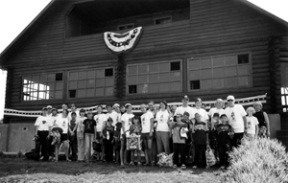
On Tuesday, Ekberg left for her fifth summer at camp with 18 teen counselors and three adult chaperones.
They’ll come home on July 23, having spent time soaking up the culture in Moscow and St. Petersburg before opening camp.
Her daughter and son-in-law, Allison Ekberg and Luka Dvaladze, already are in Russia, making sure hotel, transportation and guide arrangements are in order. Both speak Russian – Allison spent a year at the university in Novosibirsk and Luka is from the Republic of Georgia – an invaluable asset for the organization.
Camp is broken into a pair of four-day sessions with a day in between. Helping the Americans are a team of Russians ranging from translators to a doctor.
Ekberg acknowledged that some people think four days isn’t very long.
“You wouldn’t have enough energy to make it magical any longer,†she said. “The campers are Velcro kids. They never let go.â€
Each counselor typically is assigned one child for the whole session, which is spent entirely on the 1-acre camp grounds.
The two-level main structure sleeps 50: counselors on the first floor; campers in bunk beds on the top floor. There are areas for eating and doing crafts.
Ekberg started the building process in 1998, with her own money. There’s no running water, but everyone does fine with the water tank, hoses and outdoor shower.
Counselors carry all necessary supplies, sports gear and extras from Bainbridge Island. Peanut butter, Crystal Light and energy bars are welcome commodities. Once at camp, there’s no driving into town for forgotten goods.
Everyone has a job to do, including the campers, who might set the table or help serve food.
The cook produces three meals a day during both sessions for up to 66 people – counselors, campers, chaperones, translators, a doctor, helpers and adults from the orphanage.
After breakfast, everyone does crafts, such as beading or piñata-making. The two-hour lunch is the big meal of the day, followed by relays, a water balloon toss or perhaps basketball with a backboard put up by former counselors. Everyone gathers around the fire pit at night.
Although the winters are fierce in Siberia, summers can be very hot. When it rains, counselors have to be especially patient and creative in dealing with their charges.
The close quarters give the Bainbridge teens a taste of what life is like for the campers.
“They’re living in the same environment that the orphans are living in. Nothing is private. There’s nowhere to be private,†Ekberg said.
New bonds
All the children find things to bond over, Ekberg said, even the 15-year-old orphans. Smiles and hugs entwine campers and counselors.
“Our kids really are privileged kids. They come back and they tell their friends about their experiences at Camp Siberia. To watch them get it about life is extraordinary,†Ekberg said.
Now that the camp is running smoothly, Ekberg and the board of directors have expanded Camp Siberia’s mission.
They now raise money to provide scholarships for campers so they can support themselves and learn a trade after they leave the orphanage.
Orphans can only go to school through the ninth grade and must leave the orphanage when they’re 17. Russian children may go to university if they have finished the 11th grade.
“We can’t save them all, but we can do something to save some of them,†said longtime board member Ellin Spenser, who has sent both her sons to Camp Siberia.
It won’t be easy to do, she said, adding it’s going to take having relationships in Russia, banking relations and an administrator of some sort.
“It’s not done yet, but I think it can be done,†she said.
Board president Rick Torseth agreed. He steered Camp Siberia from an idea to a nonprofit organization, allowing Ekberg’s vision of bringing Bainbridge teens to Russia for three weeks to become reality. He instituted a series of systems and procedures that, “short of Janie, if any one person left, we’re not person-dependent any more,†he said.
Torseth went to Camp Siberia its first year and in 2004. The basic template, he said, has stayed the same.
“Our counselors have been champions of how to make the camp better,†he said. Before they start camp, “they have no idea what it’s like to meet a camper and then three days later have to put them on a train. How could I fall in love and have this hurt the way it does?
“We didn’t see this coming when we put this together, the ties that bind the Bainbridge kids.â€
But all this doesn’t get done without a corresponding group of people in Russia, he said, especially Natasha Syrykh, a former school principal in Novosibirsk and assistant director of the city’s Opera Ballet Theater.
An artist exchange program brought Syrykh and Ekberg together years ago and from their efforts to help orphans sprung the idea for Camp Siberia. Syrykh, members of her family and friends spend a month each summer helping at the camp.
All Camp Siberia counselors return home saying they can make things better, Spenser said. “They’re looking at the world differently.â€
The board finds input from the counselors and the two teen board members invaluable.
“They’re totally forthcoming and insightful,†Spenser said. “Camp Siberia is so successful on so many levels and much of this is attributable to Janie and her vision and her passion for this. And to Rick for his dogged organization. And especially to the kids, who have exuded this enthusiasm for what they did.
“The thing that’s so amazing is this was just one idea from a person who cared.â€
* * * * *
Ambassadors
Bainbridge High School students, mostly sophomores and juniors, who have trekked across the world to make a group of Russian orphans happy at Camp Siberia this month include:
Colton Callahan, Austin Charvet, Jenna Conrad, Ryan Dardis, Molly Dwyer, Carol Earnest, Tierney Faulkner, Beau Green, Claire Hosterman, Peter Huisinga, David Kroman, Mary Masla, Tim Spenser, Robbie Stevenson, Jack Walsh, Emma White, Austin Wood and Arthur Yang.
Because the program has grown in popularity – mostly by word of mouth – students have to submit applications that “demonstrate their desire to be of service and a willingness to undertake work that is demanding, both physically and emotionally.â€
They also undergo interviews with members of Camp Siberia’s board of directors, including the two student representatives, and provide references that are checked.
Once selected, each student must attend team-building and leadership meetings throughout the year and raise enough money for his or her expenses and that of their camper. This year’s $3,500 fee covered airfare, visas, transportation, food, lodging, sightseeing in Moscow and St. Petersburg and all expenses at camp.
Proceeds from Camp Siberia’s annual dinner-auction at Kiana Lodge in Poulsbo go toward camp maintenance and operations and building an endowment for scholarships and loans.
For more information about the camp, visit www.campsiberia.com or call board president Rick Torseth at (206) 295-4432.
– Rhona Schwartz
* * * * *
The trip ahead
The adults involved with Camp Siberia say the program would never work without the input they get from the Bainbridge teens, who help chart the course for decision-making. Here are some thoughts from past and current counselors.
Sydney Dale, 17, who serves on the Camp Siberia board of directors, heard about the huge impact the trip made on the people who went and she wanted the experience. She was a counselor in 2004.
“I hoped to form a connection with the kids in Siberia,†she said, and found the experience of this connection more than she knew was possible.
“You can’t prepare for this experience,†she said, “even though you think you’re prepared.â€
Sydney said language wasn’t a barrier at camp.
“The children were so happy to have the counselors visit, they would just run up to you and hug you and smile and you didn’t need to talk,†she said.
The children made a big impact on her.
“Many of the children are orphans or lost family members,†she said. Some had terrible stories, yet they were still able to be happy and have hope.â€
Tim Spenser is looking forward to his Russian adventure, a trip he has only heard positive things about. His older brother was a counselor; his mother sits on the board of directors.
Tim said he is excited about the traveling aspect, nervous about not knowing Russian and curious about how the experience will change him.
“Bainbridge has so many opportunities and wealth,†he said. “We have a responsibility to give back because we have so much.â€
When Molly Dwyer was in the eighth grade, she saw “a big presentation†on Camp Siberia. From this blossomed an interest in helping others in another country. Molly had heard many good things about the program and knows “the purpose is to help children.â€
She thought it would be hard to adapt to the Russian culture, but a Russian dinner and stories of past trips eased her anxieties.
As the year of preparations continued, she thought she would only be learning how to help kids in Siberia. She did not expect to make so many friendships with her fellow counselors. Before her bags were packed, she said: “I’m good friends now with many people in the group and the trip hasn’t even started yet.â€
– Darcy Wallace