
A quarter-century of good design
Published 5:00 pm Wednesday, May 18, 2005
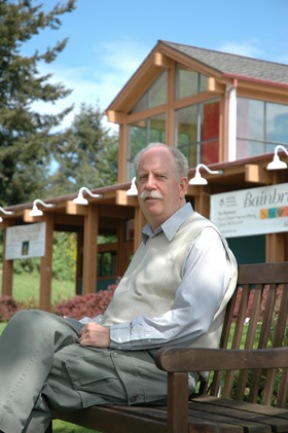
Peter O’Connor has helped shape the island for 25 years.
In nursery school, Peter O’Connor’s report card noted that he liked playing with blocks.
By the time he was 11 years old, he was nailing scraps of wood together to build forts in the woods near his Vermont home. And he had already decided to become an architect.
“I just remember as a kid thinking it was so much fun to build things,†O’Connor said.
This year O’Connor celebrates the 25th year of his firm, O’Connor Kreigh Architects, which designs homes and other projects around the Northwest. The firm was known as O’Connor Associates Architects, until Julie Kreigh joined as a partner in 2003.
O’Connor himself has become a building block of the island community. His firm has designed more than 25 island spaces including the Phelps Road fire hall, Helpline House and many residential homes.
But his work on the Bainbridge Performing Arts Center as both architect and committee member has a special place in his heart. He and his wife Wendy O’Connor both love theater and have served terms on the BPA board.
He started out in 1982 on the BPA building committee working on designs and fund-raising, and was part of the team that saw the building through to its opening 11 years later in March 1993.
“It was a real labor of love for the people involved there,†O’Connor said. “A good architectural project is more than the building, it takes into account people’s emotions.â€
He still does some set designs for BPA, and both of his children went through BPA’s theater school. His son is now a professional actor, while his daughter pursues a career as a fashion stylist, influenced by her theatrical training.
O’Connor has also been active in preserving affordable housing on Bainbridge Island since the early 1990s, serving on city committees tackling that issue as well as sitting on the Housing Resources Board and more recently setting up the Community Housing Coalition through the Health, Housing and Human Services Council.
“People move here because it’s a ‘special place’ and we need to examine what makes it special,†he said.
From his view, the mix of ethnic population, artists, teachers and others set Bainbridge apart, “cherished members of the community we don’t want to lose.â€
Fixing the right knee
For O’Connor, each project is a puzzle for the architect to solve, based on the physical requirements – such as the number of bedrooms or a theater’s seating capacity – plus aesthetic taste and budget constraints.
“(As an architect) I see myself as a facilitator,†he said. “A person comes to you with a problem or vision and my job is to interpret that. Listening is so important, understanding what the client is getting at.â€
He likens it to calling in an old country doctor to fix your bad knee.â€
If he fixes the wrong knee or his own knee, (he hasn’t) done the job,†O’Connor said. “If you do the right job, people should enjoy it.â€
After brainstorming and planning comes the fruition of the vision and thousands of details.
For just a single window, the architect must take into account its placement, its trim, how the sunlight will enter the room as the sun moves across the sky, and what people will see looking out.
O’Connor quotes the famous architect Ludwig Mies van der Rohe, who said “God is in the details.â€
“If the details don’t work, the project falls apart,†O’Connor said. “The quality of it is in the details.â€
Getting the details right brings out the best in the space, he says. O’Connor recalls visiting a house he was working on that had been framed, but the builder had put in different dining room windows, with sills six inches higher than what the plans called for.
“I walked into the dining room and knew they were too high,†O’Connor said.
He brought a dining chair into the room and sat down, and then invited his clients to do the same. With the higher sill, a seated person could not see the ground outside, which O’Connor says makes people feel uncomfortable.
“I belive in continuity between the indoors and outdoors,†he said. “It’s important how the indoor space is integrated with the outside. There’s a natural flow… it’s especially important here (in the Northwest); on a nice day you want to enjoy the outside. On cloudy days, you still need light.â€
This idea of flow is part of a developing Northwest style of architecture, O’Connor says, which uses wood, metal and large glass windows in innovative ways, opening up spaces.
With new technologies and materials available today, large windows don’t necessarily mean wasteful heat loss.
Windows can decrease lighting costs, and heat-absorbing materials can collect heat from the day’s sun to continue heating at night.
Advances in technology over the last 25 years allow architects today to work more efficiently and design buildings that cost less, are more energy efficient and better control concerns like moisture
“I look at what’s happening to the planet and feel horrified,†O’Connor said. “I feel architects have to contribute what we can to improve that, to make the system work and have less impact on the system.â€