The Coffee House Rules
Published 12:00 pm Saturday, May 14, 2005
Popular hangout Pegasus turns 25
In Greek myth, inspiration came in the form of a winged horse.
Born from the sea god Poseidon, the Pegasus kicked at the side of Mt. Helicon with its hooves, causing the wells of inspiration to gush forth. The flood of water nourished the Muses, initiating an era of creativity and discourse.
The myth holds true for Bainbridge – but in island lore, the Pegasus came in the form of a coffeehouse.
“It’s the place to convene a meeting, hold court, read the paper, write, study, debate, sing, chat and solve the world’s problems,†said Kat Gjovik, who has led a Conversation Cafe discussion group at Pegasus for the last four years.
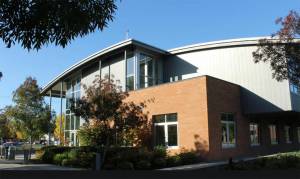
Opening its doors on May 1, 1980, the coffeehouse on Parfitt Way has served as a landmark hotspot for coffee, conversation and culture for 25 years.
Gjovik and many others have used the ivy-covered brick building as a concert venue, art gallery, political action hub, living room, classroom and even a place to get a cup of coffee.
“Its always been friendly, lively, casual and a bit funky and bohemian,†she said. “If only the walls could talk!â€
The walls would likely begin their tale at Port Blakely, back when the bricks served as a mill incinerator chimney. When the mill burned in 1907, the fire-treated bricks were salvaged by a hardware store proprieter.
The size of his new Parfitt Way shop, built in 1937, was designed to exactly match the number of bricks taken from the chimney. The hardware business grew, eventually moving to Winslow Way, while the old shop assumed various guises, including a hair salon in the 1970s.
It was around this time that David Dessinger sailed into Eagle Harbor from Berkeley, Calif. He still had the taste of fresh-roasted coffee stained on his lips from days spent sipping espresso with the Haight-Ashbury crowd.
Taking work on the island as a carpenter, Dessinger often moaned and groaned to his co-workers about the poor state of Northwest coffee. Their advice: put up or shut up.
“They told me to do something about it,†he said. “So, I did.â€
Dessinger, then a harbor liveaboard, roasted his first batch of imported green coffee beans in a cast iron skillet over his sailboat stove. His first attempts became “international compost,†but three years of steady effort made him ready to pass on his passion.
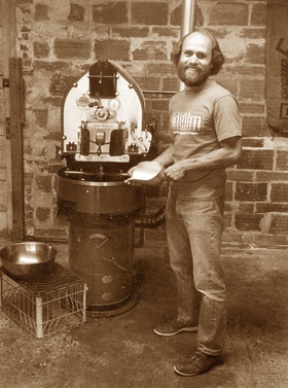
Dessinger set up shop in the old hardware store’s garage with a beat up Danish coffee roaster on a pair of saw horses. When the door was drawn open one weekend in 1979, the whole waterfront knew Pegasus Roastery was open for business.
“The aroma was always on the waterfront and word traveled fast,†he said.
Selling beans naturally led to selling a fresh brewed cup, and the coffeehouse was opened shortly after.
“There was no reason not to,†he said. “I was single and had a lot of energy. I didn’t have a lot to invest but I had sweat equity. So that’s what I built it on.â€
Dessinger was so jazzed about his new coffee venture that he didn’t wait for the hair salon to move out before setting up his espresso machine.
“They were still doing a perm in the back while I was tuning up the machine in the front,†he said. “I had to hustle to get it going by May Day.â€
A pagan springtime celebration and an international workers’ holiday, May 1 had special significance for Dessinger.
“It means new beginnings and openness to new ideas,†he said. “Even though I’m not a bit political, May Day was also the start of the Russian Revolution. I saw the coffeehouse as a revolution of ideas because it had never been done before.â€
Pegasus was certainly the first coffeehouse that roasted its own beans on the island, but a second Pegasus in downtown Seattle also predated Starbucks in brewing its own beans.
“The health inspectors didn’t know what to do with us,†he said. “We sold beans and liquid coffee. They didn’t know if we were a grocery store or a restaurant.â€
Dessinger drew inspiration for his coffeehouses from London’s apothecary shops, which he describes as “warm, a little dark and welcoming with a lot of substantial wood cabinetry and shelves.â€
He also patterned his establishment after the coffeehouses of Vienna where long stays are encouraged by comfortable seating and plenty to read.
“What makes a coffeehouse in Europe is that selling coffee comes secondary to people,†he said. “I wanted it to be like a reading room, where people could educate themselves. I took regular trips to Seattle to get the London Times, French newspapers and Chinese newspapers in English.â€
Dessinger said he always saw the coffeehouse serving a social purpose beyond selling coffee.
“I wanted it to be a place to exchange ideas between different people,†he said. “There’s not many places on the island where different social statuses mix, except maybe T&C. But, unlike T&C, we weren’t selling physical sustenance, we were selling metaphysical sustenance.â€
Hazel Van Evera, who purchased the coffeehouse in 2000, shares Dessinger’s vision.
“What drew me to Pegasus was the energy of the place,†she said. “It carries on a long tradition of coffeehouses as a vortex where people gather.â€
As the island has changed over time, Pegasus has remained a draw for all types, she said.
“On any given day, I’ll have a purple-haired kid with tattoos and piercings sitting over there next to some 80-year-olds playing bridge,†she said motioning to the coffeehouse’s back corner. “Then, at the outdoor tables, I might have a lady who lives in a yurt and raised five kids next to a woman who just moved here and bought a $4.2 million house.â€
Van Evera has also carried on the coffeehouse’s history as a venue for artists and activists.
“Some use it as an office, some as a living room, but it’s always been a hub for information and the arts,†she said.
Elane Hellmuth spent years in the the coffeehouse laying the groundwork for what would become the Association of Bainbridge Communities and efforts to clean up the island’s polluted sites.
“We’d go there after breakfast, for hours getting our petitions signed to shut down Wyckoff or to stop them from building houses on Port Blakely,†she said. “We’d go from table to table, talking about air pollution, chemical plants, pesticides. It had great, home-grown coffee and was a fun, enjoyable place to do good work for the island.â€
Many island artists and musicians also made their first public forays at Pegasus. While the walls are often booked by local artists a year and a half in advance, the coffeehouse has long been a showcase for local musicians – both novice and expert – and traveling pros.
“It’s a big thrill to see students come and do their first ever live performance at Pegasus,†said Norm Johnson of the Island Music Guild, which hosts featured performances at the coffeehouse on Friday and Saturday nights, as well as an open mic on Sundays. “They find that it’s very addictive.â€
Dessinger, who still owns and operates Pegasus Coffee roasting plant on Day Road, said it’s always been the musicians, artists, soccer moms, sailors and caffeine-fueled philosophers that have made the coffeehouse what it is.
“It’s a privilege to me that the community has always been a part of it, over these 25 years,†he said. “But it’s always been more of a community effort, all I really did is open the doors.â€