
Admit it: you lie about your diet
Published 8:00 pm Saturday, April 23, 2005
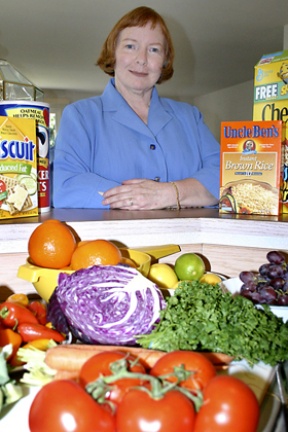
And Judy Putnam’s research proved it, as the USDA’s new ‘food pyramid’ was crafted.
Judy Putnam has the skinny on what’s making Americans fat.
The island newcomer has spent the past 40 years in the U.S. Department of Agriculture, researching what Americans eat.
Her findings – which reveal startling increases in the consumption of refined flours and sugars, and added fat – correspond to a sharp rise in obesity and type 2 diabetes since 1980.
As a result, the U.S. government established new dietary guidelines in January, unveiling a new version of the iconic “food pyramid†just this week.
“I have upset mightily the millers and bakers†with the data she presented to the U.S. Department of Agriculture’s dietary guidelines committee, Putnam said – while admitting that she herself enjoys the occasional pleasure of Girl Scout cookies.
“I’m not a nutritionist,†she says, stressing that as an economist her work involved conducting consumer surveys related to diet and health concerns, attitudes and knowledge, and analyzing food consumption patterns.
Putnam recently moved to Bainbridge Island after retiring from the USDA’s Economic Research Service in Washington D.C.
The data she gathered and analyzed came from surveys on what people reported eating, and statistics from domestic food producers and manufacturers reporting what they sent to market.
When she compared the two, she found that Americans are fairly accurate when reporting how many vegetables they eat. But they – we – tend to dramatically underreport the amount of sugary goodies consumed, according to data on how many of those items are purchased off grocery store shelves by consumers.
“People tell the truth about what they think they should eat,†Putnam said. “But when it comes to grains, especially the cookies, cakes and high-sugar snack foods, the databases differed wildly.â€
Putnam can see how it happens. She herself wouldn’t hesitate to report that she prepared dark leafy greens for her supper, but might be less inclined to detail the number of thin mints she enjoyed afterward.
Putnam’s research comparing eating patterns from 1985 to 2000 point to various culprits of the American obesity epidemic. Among her more startling findings:
• That every man, woman and child in America eats an average of 11 servings of grain and cereal products per day – 10 of them made from refined products, and only one from whole grain as recommended for good health. That’s 200 pounds of flour and cereal products per year (compared to 135 pounds in 1970), and the equivalent of 11 slices of bread or 6 cups of pasta per day – enough food for a big man or a teenage boy working on a farm, but way too much for most Americans.
• The government guidelines recommend no more than 12 teaspoons of sugar per day. But Putnam’s research showed people eating 31 teaspoons daily, much of it hidden in prepared foods as a substitute for fat, due to the low-fat craze.
• One-third of the vegetables that Americans consumed in 2000 came from three sources: iceburg lettuce, frozen potatoes – mostly French fries – and potato chips.
• Total caloric consumption per day was 300 calories higher in 2000 than in 1985, with refined grains accounting for half of the increase. Added fats accounted for 24 percent; added sugars, 23 percent; fruits and vegetables, 8 percent; while meat and dairy declined by 1 percent.
Not surprisingly, two-thirds of Americans are now considered overweight, if not outright obese, government statistics show. And type 2 diabetes rates have skyrocketed, particularly among children.
It’s odd, Putnam agrees, that at a time in which more information is disseminated about the correlation between food, exercise and good health, more people are getting fat and unhealthy.
“I am quite amazed,†she said. “We know a lot more about health and science and our knowledge base has increased so much, but people don’t seem to know how to put it into practice for themselves.
“I think the new pyramid is going to help them, because they can customize it for themselves.â€
The old food pyramid with its colored, horizontal bars representing various food groups, suggested that grains make up the largest portion of the American diet, and fat the least.
But the USDA has abandoned that model in favor of an interactive pyramid that can be personalized by age, sex, height, weight, exercise habits and health concerns. The new guidelines are online at the USDA website, www.MyPyramid.gov.
The new pyramid, which has vertical stripes and shows a person climbing stairs, cuts suggested daily grain consumption from the 6-11 servings recommended in 1992 to three servings of whole grain foods
Putnam thinks the new guidelines, which emphasize exercise and moderate eating, could help people improve their health.
That is, if they follow it. Unfortunately, her research showed that people didn’t follow the 1992 food pyramid very carefully.
In a 2002 paper, “U.S. Per Capita Food Supply Trends: More Calories, Refined Carbohydrates and Fats,†Putnam and her colleagues noted that American eating habits resembled an hourglass more than a pyramid.
The hourglass model, however, did not produce hourglass body shapes.
“We gobble huge amounts of added fats and sugars from the top tier of the pyramid (marked ‘use sparingly’) and heaping plates of pasta and other refined grains from the bottom tier,†Putnam wrote, “but we are sorely lacking in the vegetables, fruits, low-fat milk products, and other nutritious foods in the middle of the pyramid.â€
Ironically, the heavier people get, the less realistic they are about what they are eating, according to her research.
“People don’t own up to what they are eating,†Putnam said, “And the research shows that the ones who are most overweight seem to fudge the most.â€




Best of Bainbridge
