Summer drought begins now, city cautions
Published 11:00 am Saturday, March 19, 2005
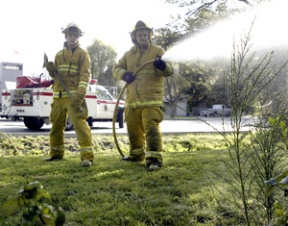
Officials say dry conditions bring the threat of brush fires months earlier.
Bainbridge firefighters dusted off the old brush-fire truck a few months early this year, working out a few kinks before what is expected to be a particularly hot, dry season kicks in.
“This is looking like a huge issue with concerns numerous in scope,†Fire Chief Jim Walkowski said, as he watched firefighters blast fir trees with water. “We’ve already had a brush fire and that’s very significant. If things continue the way they are, we predict the fire season will begin in mid-April. That’s two or three months earlier than usual.â€
The mercury level is expected to rise as river and lake levels continue to drop, spurring Gov. Christine Gregoire to declare a statewide drought emergency last week. Snowpack in the Olympic and Cascade ranges has already shrunk by 75 percent, reducing much of the state’s water supply to alarming levels.
Despite having a ready supply of groundwater, Bainbridge Island will feel the itch of thirst along with the rest of the state, said city water resources specialist Jalyn Cummings.
“Bainbridge Island is fortunate in that we receive our water supply from groundwater, significantly reducing the effects of a reduced snowpack,†she said. “However, this means we rely heavily on rainfall to recharge our aquifers. If the shortage in rainfall continues, shallow wells could experience water declines or even temporarily go dry.â€
One-third of the city’s water is drawn from the Fletcher Bay aquifer, which recharges at an estimated 1 percent per year, according to Douglas Dow, a senior hydrologist with the engineering firm Robinson and Noble.
“The deep aquifer can’t sustain this level of drawing without changing things,†Dow said.
One way to change things is to conserve, said Cummings. The city is asking residents to voluntarily clamp down on water use by taking quicker showers, watering lawns less, fixing leaky faucets, installing low-flow toilets and other measures.
“All of those added together can add up to a lot of water savings,†she said.
Cummings expects to have a comprehensive water conservation program in place soon with various water saving tips on the city’s website.
While residents’ lawns grow a little browner, some island farmers can’t afford to see their crops do the same.
“Water is absolutely the most important thing for farming,†said Brian MacWhorter, whose Butler Green Farm supplies fresh vegetables to Town & Country Market and county residents through a Community Supported Agriculture program. “I make every effort to conserve water, but the lettuce and corn need the same amount every year. Everyone needs to conserve. It’s like the gasoline thing, we could save so much if we drove fuel efficient cars and used mass transit. But we don’t do that.
“It’s the same with water. People say ‘screw it’ and use as much as they want.â€
Gerard Bentryn, who owns Bainbridge Island Winery, has seen his irrigation pond dwindle over the last few months. Despite the declining water reserves, Bentryn said his grapes will fare quite nicely in the dry weather.
“Unless it’s unbelievably dry, it won’t impact us,†he said. “My roots go down six feet deep and rely on rain accumulated down there from the winter. We prefer to have not that much rain. Last summer, which was pretty dry, we had a magnificent crop.â€
Third generation island farmer Akio Suyematsu is also confident his crops will flourish through the dry summer.
“I’ve got two reservoirs and they’ve worked fine for me for 50 years,†the raspberry grower said. “But I know other farmers will be hurting.â€
Island garden stores may also feel the drought’s impact, but not necessarily from dry skies and parched roots.
“I’m afraid people are going to panic and not buy plants,†said Junkoh Harui, owner of Bainbridge Island Gardens.
Leaders in the nursery and landscape industries lobbied Gov. Gregoire to not declare the drought emergency, fearing similar repercussions. Plant sellers suggested a more selective declaration for areas hardest hit by the dry season, such as Eastern Washington.
“Over here, on Bainbridge and Kitsap County, we get a lot of groundwater and don’t need so much from the Olympics,†Harui said. “No matter what the statistics are, good growing practices are in order,†such as morning and nighttime watering and mulching to preserve moisture.
Thoughtful gardening practices are one part of a regional effort to lessen the drought’s impact, said Public Works assistant director Lance Newkirk.
“We have to be respectful of water as a resource and be cognizant of the big picture,†he said. “We’re all interconnected by water.â€
For water conservation tips or more information on the drought, see www.bewatersmart.net or www.ecy.wa.gov and click on “Drought.â€