Truth about teen drug use
Published 7:00 am Saturday, January 15, 2005
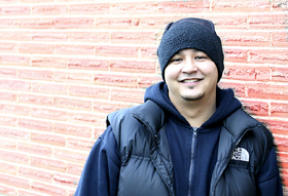
The new BYS counselor promises straight talk and help for island teens.
When it comes to addiction, Truth Griffeth has seen and heard it all.
The 35-year-old drug and alcohol counselor has worked with homeless teens on the streets of Seattle, and alcoholic men and women on skid row.
Now he’s been hired to help teens on the island as a counselor at Bainbridge Youth Services, adjacent to the high school.
“My experience is that chemical dependency is an equal opportunity destroyer,†said the soft-spoken Griffeth, whose name is apropos of his vocation. “From Yale to jail, from Park Avenue to the park bench,†and from the streets of the city, to the halls of Bainbridge High.
“There’s a lot of work to be done here, a lot of awareness to be raised.â€
He expects the work to be challenging, particularly since the island is known to harbor a fair share of “functioning†substance abusers.
“There are some cases where the consequences of addiction are evident, and you can say, ‘Look, you’re getting into fights, you have lost your friends, you are failing school,’ “ Griffeth said. “Here, there are more high-achieving students, more athletes, more intact families and it can be harder to break through the denial.
“That will be the challenge, I think.â€
In his black knit cap, jeans, hooded sweatshirt and black down jacket, Griffeth looks at ease in the company of teenagers, and it’s no wonder.
The former musician and his wife, longtime islander Deanna Romero Griffeth – she also works in the chemical dependency field, as a research advocate at the UW – have six children between them, two of whom attend the high school.
Griffeth said he plans to make his services known to the kids at the high school by setting up a table in the commons on Mondays and Wednesdays, and offering counseling appointments on Saturdays.
He expects that many of his clients will be referred by their parents or school officials.
“Sadly, not many kids come in on their own, unless there is a problem at home,†Griffeth said, noting that as counselor for youths, he expects to involve their parents in therapy at some level.
Counselors believe he will be a credible voice with island youths.
“He has a real passion for helping kids, no matter what their problem,†said Lois Lee, director of Bainbridge Youth Services. “We wanted someone with an expertise in chemical dependency, and we felt he was the best choice. We think the kids will really relate to him.â€
There is a continuum of drug and alcohol use among teens, Griffeth said, ranging from experimentation, to regular use, to abuse, and finally, to dependency. Most people don’t confront their addiction issues of their own accord, but are led to counseling when the problem has become rather serious.
The signs of a problem can show up in the form of mood swings, memory loss, or dramatic changes in habits, friends and routines.
“And then parents start finding baggies in the dryer, the bottle in the room. They know something is wrong,†Griffeth said.
“A big thing that I see a lot is changes in how (youths) spend their recreational time,†he said. “They give up sports and the old friends. It’s not fun anymore to ride bikes and play basketball – they’d rather smoke weed and play video games with their friends.â€
It’s behavior he’s seen over and over again – even in himself, during his own teen years.
Griffeth, who is of Native American and Hawaiian ancestry, was adopted by an Anglo-European University of Washington professor and his wife, and grew up on Seattle’s Capitol Hill.
In adolescence, he grappled with “cross-cultural identity stuff,†and when his parents moved to Alaska during his sophomore year, he stayed behind, “bouncing around for awhile, staying at friends’ houses.â€
He went to alternative schools, dropped out, got his GED. It was, he said, “a pretty interesting adolescenceâ€; those years of knocking around might explain why he later became interested in homelessness.
Griffeth became a musician and lived the life, but was tired of it by his mid-20s and enrolled at the University of Washington, unsure of what to focus on.
Then a friend asked him to work with her as a volunteer at Downtown Emergency Services, the largest non-religious social services agency serving homeless, mentally ill addicts in Seattle.
He found himself passionate about the work and augmented it with a bachelor’s degree from the UW and a master’s degree in social work and chemical dependency from Washington University in St. Louis. He did lots of clinical work along the way.
Ironically, or perhaps providentially, his career took him back into the schools that he loathed as a teen. He has worked in Seattle public schools as an HIV/AIDS educator, in addition to working with homeless youth in shelters.
“I think it’s funny the creator put me back in the schools,†he said. “I think a lot of kids can relate to my experiences on that level.â€