
Yes, they’d like fries with that
Published 5:00 am Wednesday, December 8, 2004
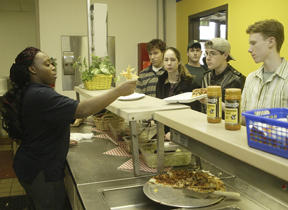
Concern over the quality of school lunches inspires a review of menus and ingredients.
It’s lunchtime at Bainbridge High School, and the cafeteria is full of students scarfing their favorite items on the menu: big slices of gooey pizza and plates piled high with crispy fries.
But what freshman Anna Houk craves are fresh salad greens with healthy toppings. She’s become bored with the school’s mostly iceburg lettuce salad-in-a-box, and longs for more choices.
“I’m not a health freak or anything, but I think if they have pizza and fries every day, they ought to provide healthier options, too,” said Houk, 14, an avid dance student who makes a point of eating well.
“Organic,” she adds, “would be awesome.”
Some island parents couldn’t agree more. Alarmed by high rates of obesity and diabetes among children nationwide, a group of parents is pressing the Bainbridge Island School District to make school lunch menus healthier.
“I do not believe the schools are the source of the problem, but they are uniquely leveraged to help do something about it,” said island physician and Blakely school parent Dr. David Cowan, who sees the link between unhealthy lifestyles and heart disease in patients every day.
The statistics are sobering: The obesity rate for American preschoolers and adolescents has doubled in 30 years and tripled for children ages 6 to 11, according to the American Medical Association, which reports that 9 million children are considered obese.
Type II diabetes has become so common in children that its other moniker, “adult onset diabetes,” has been dropped, said nutritionist Lola O’Rourke, also a Blakely parent.
What kids eat at home, and how much exercise they get, are critical aspects of the obesity epidemic, the parent group agrees.
But school lunch entrees of chicken nuggets, waffle sticks and syrup, cheeseburgers, nachos with cheese sauce and corndogs don’t help.
“We saw that there was such a mismatch between what we were telling kids and adults about healthy eating, and what was served in the schools,” said Cowan, who practices at Virginia Mason Winslow Clinic. “It would be hard to be alive in America today and not be aware of this issue.”
As health care providers and parents with children in the schools, Cowan, O’Rourke and Dr. Darsi St. Louis approached district officials with concerns, which were well received.
Since then, a committee comprised of parents, district officials and food service managers has been formed by the district to proceed with changes.
Coming soon: organic apples and dairy products.
“I think we are extremely lucky to have this group of parents come forward to help,” said school board member Mary Curtis. “We as a school district are always concerned about performance, but we have to make sure our students are fed well, too.”
The parents also want more classroom time devoted to the importance of nutrition and exercise, especially in the primary grades. And they’d like children to have more time to enjoy their lunches, instead of rushing so they can get outside for recess.
The issue couldn’t be more timely. Spurred by “epidemic levels” of obesity among Washington youth, state lawmakers passed a bill this year that requires school districts to analyze and revamp their school lunch, exercise, and health education policies by Aug. 1, 2005.
“Schools should be a place where good choices are modeled,” said O’Rourke, the national spokeswoman for the American Dietetic Association based in Chicago, Ill. “We know improvements can be made in the food being served. And we know that the earlier kids are exposed to good eating, the better off they will be.”
A detailed computer analysis of the foods served by the district is currently under way, said Todd Miller, the new food services manager for the Bainbridge Island School District.
The process will allow Miller to see if the menus meet or exceed guidelines for fat, calories, sodium, cholesterol and other nutritional elements set by the state and federal governments.
The current menu is similar to what has been served in the schools for years and will likely be changed once his analysis is complete, he said.
By law, school lunches are required to provide 30 percent of a child’s calories and nutrition for the day.
“I want to improve it, and I think we can do better,” Miller said, noting that he is in the process of meeting with organic food suppliers and growers.
Historically, he said, the purpose of school lunch was to make sure kids got the RDA (recommended daily allowances), at low cost, so that even kids who couldn’t afford lunch got one.
“Now people want healthy lunches, and to go way beyond that. The organics are more expensive, but there are ways to be creative. In Olympia, they no longer serve dessert, which freed up money for other things.”
School menus have changed over time, said longtime high school food manager JoAnne Hoppis, who started 30 years ago cooking lasagna and other dishes from scratch. Everything was fresh-cooked back then, and she still makes the high school’s pasta sauce that way.
It usually sells out, students say.
Small changes have been implemented to make lunch healthier, Hoppis said.
“We use low-fat mayo now, and there’s more fresh fruit and salad,” she said. “We are going to take out the Snapple, because it’s too full of sugar. And I think we’ll eventually get rid of the fries,” she said – as dozens of students lined up for a heaping plateful.
Providing healthy foods at the high school is tricky, she said, because the cafeteria is competing with McDonald’s, Safeway, and the convenience food at the gas station nearby.
“If we don’t have it,” Hoppis said, “they’ll just go down the street.”
Lower fare
Although Houk and some of her vegetarian friends wish there were more fresh salads and non-meat selections on the menu, the choices at the high school are far more extensive than what is served in Bainbridge elementary schools.
In the primary schools, teachers and parent volunteers can order “off-menu” items such as a bagel sandwich or a salad, to avoid the high-calorie entrees like macaroni and cheese.
For students, $2 lunches are accompanied by a salad bar and fruit, which teachers strongly encourage the children to eat. But those foods often get neglected on the plate, said O’Rourke, who has noticed that kids are dipping their food in huge quantities of ranch dressing, rather than using just a little on their carrots.
And therein lies a key question:
If you give the kids healthy food, will they eat it?
An overhaul of the lunch program in the Seattle schools that eliminated junk food and added healthy foods has resulted in a significant drop in revenues, according to published reports.
But the opposite occurred at Lincoln Elementary School in Olympia, a model in the state, where lunch participation rates rose 16 percent once organic foods were introduced.
BHS Principal Brent Peterson said he wholeheartedly supports the movement to add more healthy choices to the menu.
But, “It’s a challenge to build a market,” he said, noting that many students are choosing the burgers even when healthier choices are offered. “We can’t afford to have a menu that no one will eat.”
Ultimately, Peterson said, it’s up to students and parents to decide what’s for lunch, whether it’s homemade or from the cafeteria.
“We’re a small voice in a very loud marketplace,” he said.
The Bainbridge parent group thinks it’s possible to serve healthy food that kids will eat, especially if it’s freshly prepared.
They want more whole and organic foods, more produce, fewer vending machine snacks with artery-clogging “trans-fats,” and, eventually, food prepared at the schools.
“It’s not that you can’t serve pizza at school,” Cowan said. “But if it were made by us, we could have fresh vegetables on top, or a partially whole wheat crust.”
The bottom line is money.
School lunch programs are self-supporting. They have to be affordable, nutritious and break even at the end of the year.
With a total annual budget of between $700,000-$800,000 per year, the food service program for Bainbridge Island schools feed about 4,100 students; in October, 26,000 lunches were served district-wide. About $300,000 is earmarked for food.
School lunches are heavily dependent upon use of the cheap U.S. Department of Agriculture “commodity” foods that are the mainstay of school lunch programs.
That’s where the fries, cheese, noodles, hamburgers, hot dogs, corn dogs and teriyaki beef dippers come from, Miller said.
“Dollars and cents are the driving force, which is why you see so many convenience foods on the menu,” Miller said. “When you ‘scratch cook,’ you have to have more people, more space, more of everything.”
If he can swing it financially, Miller said he’d like to offer more fresh-cooked foods for lunch. However, most schools abandoned cooking from scratch long ago and their kitchens are no longer equipped for the task.
The healthy foods advocates think Bainbridge Island parents and citizens would be willing to supplement that budget if it meant better lunches for their children.
“This is Bainbridge Island,” Cowan said. “We should be a leader on this issue, not a follower.”