A weaving of the ages
Published 7:00 am Saturday, September 16, 2006
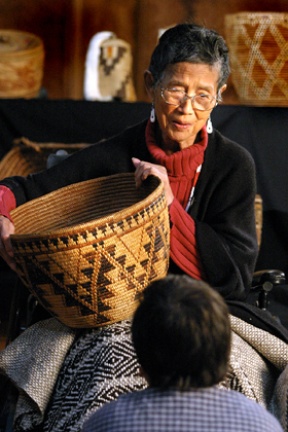
Grandmother Vi brought presents for her grandchildren. And all the grandchildren to follow.
Upper Skagit elder Vi Hilbert donated her museum-worthy collection of baskets, some of them close to 200 years old, and other artifacts to IslandWood, which welcomed them at a gathering in the outdoor learning center’s Great Hall on Wednesday.
“The baskets have many things to teach us,†Hilbert told the audience of children and adults. “All the baskets are going to live here. They’re going to teach you and you’ll be teaching your parents.â€
Made from such materials as cedar bark, spruce root, maidenhead fern, red bud and horse hair in varying sizes, the baskets represent the work of several Northwest tribes, including Skagit, Klickitat, Yakama, Okanagon, Suquamish, Tulalip, Skokomish, Quinalt, Nisqually and Tlingit.
Hilbert’s collection belies its age. The surfaces of the baskets are smooth and blemish free and display an attention to detail that is awe-inspiring in its execution and artistry.
Among them are a twined clam basket with a tumpline for supporting the basket from the forehead and a coiled cedar root berry basket made from bear grass that displays a beaded rim.
A renowned Salish linguist, Hilbert answers to several monikers, among them Mother Vi, Auntie Vi and Grandmother Vi.
“Will we ever see 200 years?†she asked, holding a large basket made from a cedar tree more than two centuries old. “No. It’s wonderful to see that things live that long and teach us. I won’t live to 200 years, but this basket will. Aren’t we lucky that some things will live forever?â€
Born in 1918, Hilbert grew up on the Skagit River speaking Lushootseed, the Salish language of the indigenous people whose homelands stretched from Puget Sound to the Cascades. An only child whose family moved a lot, she immersed herself in the Lushootseed traditions, stories and cultures.
Seattle became Hilbert’s home in 1942. She started collecting and translating stories and songs told and sung in Lushootseed and, in 1972, published a two-volume grammar book of the language. She taught the Lushootseed language and culture at the University of Washington for 15 years, retiring in 1988. The following year she was named a Washington State Living Treasure.
In 1994, the UW awarded an honorary Doctor of Humanities degree to Hilbert, who has published 10 books and a Lushootseed dictionary and archived hundreds of tapes and videos. Also that year, President Bill Clinton presented Hilbert with a National Heritage Fellowship from the National Endowment of the Arts.
The IslandWood ceremony opened with a Suquamish gathering song and an acknowledgment of “the great gift of these beautiful baskets. They will be teaching tools to many, many generations.â€
IslandWood filmmaker Katie Jennings bid welcome to “our friend Mother Vi. She announced we would be having a video party, so this is a working session…to do the work that has to happen. We have so much to be thankful for today. Vi, who always sees in us the very best and brings out our very best.â€
With the baskets, Jennings said, “Vi brings us the teachings, feelings and world thoughts of the people who made the baskets. We rely on you to share the news of their arrival.â€
In tribute to Hilber, a song that “honors our mother and all of us human beings†was sung. Then in a clear voice, Hilbert offered her remarks.
“The baskets are a gift to this home because this home is permanent and honors the work of the cedar tree,†she said. “This home is an education center for our people to continue to learn. To honor the words and the spirits of the First People.â€
Her nephew, Northwest First People culture carrier Johnny Moses, explained the designs and memories of some of the baskets.
With a deep, resonant voice, Moses sang songs from “the family,†Longhouse and Shaker songs, explaining “we must never forget our relatives. We were raised by both. One is a love song that belongs to Auntie Vi’s father. They sing it after they pray for somebody. We want you to stay alive…have a strong mind so children will stay alive. It kept me alive.â€
Of the day’s ceremony, he said: “Auntie Vi said this is a party and (we are) passing on something positive to the future generations so they will know someone cared about them. And we took a chance to speak out and share the teachings. And I am so grateful.â€
Hilbert chose to place the artifacts in the care of IslandWood because there they would be out in the open.
“You can’t learn without touching things,†said Hilbert, a founding advisor to the facility. “They need to be picked up so people can honor the work and the feeling that went into making them. Baskets like these aren’t being made any more.â€
â€We are deeply honored,†said IslandWood director Ben Klasky. “We believe this wonderful gift will create some extraordinary educational opportunities that extend our commitment to hands-on, experiential education.â€
Hilbert’s collection soon will be on display for people visiting IslandWood, and its educators are planning to incorporate the baskets in their curriculum for the Puget Sound-area fourth-, fifth- and sixth-graders who enjoy week-long visits throughout the school year.
IslandWood’s whole approach is hands-on, said education director Pat O’Rourke.
“These baskets have rich stories to tell about people and their connection to the land,†she said. “We hope they will inspire children to explore their own stories.â€