Author yearns for prose at the top of its craft
Published 8:00 am Wednesday, April 27, 2005
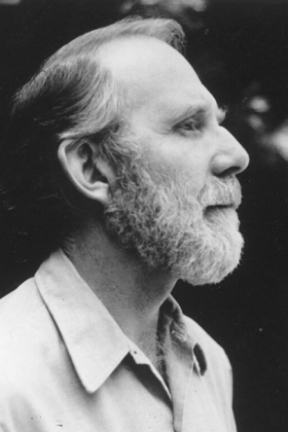
Acclaimed writer Ivan Doig discusses his works Saturday.
Ivan Doig, one of the West’s most honored writers, takes listeners on a guided tour of the literary terrain he mapped in “This House of Sky: Landscapes of a Western Mind†this Saturday.
The juncture of Montana’s high desert with the Rockies – the hard country where Doig’s Scottish forebears settled – is the land recalled in his memoir. The author lets listeners saddle up and ride with him to expose the geology of a book that many consider a seminal work about the American West.
“Now, I’ve been (in Puget Sound) longer than I was in Montana,†Doig said, “I do have a kind of dual citizenship. But the landscape of ‘House of Sky’ has a kind of rootedness, maybe because things stay with you when you learn them there for the first time.â€
Doig’s father was a ranch hand, and his mother died young. By the time he reached college age, the family had moved by Doig’s reckoning about 24 times, as his foreman father – an able worker of men as well as cattle and sheep – went from job to job.
Doig himself left Montana to earn journalism degrees at Northwestern University in Chicago, Ill., an exile driven, he says, as much by economic necessity as the harsh realities of the ranch-hand’s life.
Doig had a first career in journalism and earned a doctorate in history from the University of Washington, but veered from academe to write.
His realization, in the 1960s and 1970s, that the way of life he had known in Montana no longer existed was, he says, one impetus to write a memoir.
“This House of Sky†was 10 years in the making, but only two and a half were spent writing.
Doig spent months using various techniques to sharpen recollection, like listing all the places he had lived growing up.
“I sat down with file cards and worked at retrieving details of memory,†he said. “What was in a lambing shed, who did these chores? I’d work at details day after day, and made a conscious effort at retrieving memories.â€
Coming to his first book already a professional writer gave Doig the advantage of knowing he could publish. And he knew how to conduct interviews and to do the research that he likens to an iceberg: one may only use 10 percent of the material, but “you’ve got to float the damn thing to see what’s coming to the top.â€
He took a recorder to Montana and taped; he let the voices of the subjects speak directly in italicized paragraphs.
His journalist’s training also gave him an instinct for when to call a halt to gathering background information.
“Having chosen against the academic life and for the writing life, I never let myself get bogged down in the quicksand of endless research,†Doig said.
When he did sit down to write, he was unsparing in his reworking of the manuscript. The opening lines are indelible:
“Soon before daybreak on my sixth birthday, my mother’s breathing wheezed more raggedly than ever, then quieted.
And then stopped.
The remembering begins out of that new silence. Through the time since, I reach back along my father’s telling and round the urgings which would have me face about and forget, to feel into these oldest shadows for the first sudden edge of it all.â€
While Doig has made his forebears live in prose and resurrected a way of life long gone, the driving force has not been nostalgia but love of language.
“I’ve looked (nostalgic) up and it’s an adjective that’s based in longing for the past,†he said. “I’m longing to write at the top of my form.â€
Choices – like the decision to open the book in first person – were made for literary strength, rather than personal salve.
And Doig chose language over verisimilitude.
“A memoir has to be the essence of a life rather than the framework, as in a biography,†he said. “You don’t need to know every twist and turn…there are ways to take liberties and still have ground rules that are clear to the reader.â€
While Doig often uses direct quotes, he puts the words into italics rather than quotes because an interviewee’s version of events has already been subject to interpretation. He was careful, because he has had to answer to a tough readership; the folks he taped.
“I was quite aware that they were going to say ‘hell, that wasn’t what I told you,’†he said.
The book was published in 1979 by Harcourt Brace Janovich to acclaim. Since then, Doig has penned 10 more books, with an 11th soon to appear.
For aspiring writers, he has this advice:
“You’ve just got to know yourself,†he said, “and try to stretch your capacity to get hold of the work.â€
* * * * *
Western mind
Award-winning author Ivan Doig shares the strategies and tactics through which he transformed memory into literature in his award-winning first book, “This House of Sky: Landscapes of a Western Mind,†at 7:30 p.m. April 30 at Island Center Hall in a lecture sponsored by Field’s End with support from Eagle Harbor Book Co. Titled “Makings: Putting ‘This House of Sky’ Together,†Doig’s lecture draws on writing his own memoir of growing up the son of a ranch hand and a ranch cook in the small towns and valleys of Montana. Tickets are $12 for adults, $10 for seniors and students at Eagle Harbor Book Co. or at the door. A book-signing follows. Call 842-4162 for information.