Designing a greener island
Published 2:00 pm Wednesday, July 26, 2006
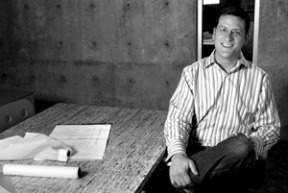
Island architect Matthew Coates sets out on his own, with vision
Matthew Coates is bringing his vision for a greener Bainbrige into focus one home at a time.
“A home shouldn’t just be a roof over your head,†the Bainbridge-based architect said at his new office on Hildebrand Lane. “Hopefully, it can be something more.â€
That “something more†could include a range of environmentally-friendly principles that guide Coates’ island-based firm.
Coates Design’s homes boast grass-covered roofs that channel rainwater into gardens, siding crafted from trees cut and milled on-site, and passive solar features that keep homes cool in the summer and require less heating in the winter.
“I want to demonstrate that ‘green’ design doesn’t necessarily have to be cost prohibitive or on the fringe,†he said. “It’s becoming very common place, especially on the West Coast, as more people incorporate sustainable practices into their lives.â€
The 35-year-old Point White resident opened shop on the island earlier this month, after years working with two of Seattle’s most distinguished purveyors of structural design. Coates worked for Mithun, known as a national leader in developing ‘green’ offices and civic centers, and NBBJ, where he helped shape concepts for the Bill and Melinda Gates Foundation headquarters. Last year, Coates and a former co-worker at Mithun won the coveted “Cradle2Cradle†sustainable design competition, besting 600 other entries from 40 countries. Their design, which featured a home with spinach-powered photovoltaic panels, put Coates’ name on the lips of architects worldwide.
“It’s been published so many times it’s crazy,†he said. “I’ve gotten a lot of exposure. It did lend some credibility to my abilities and confidence to go out on my own.â€
Coates aims to prove that sustainably-built homes are a natural fit for more than just the rich and eco-eccentric.
“There’s a perception that this is for the elite or wealthiest of our society,†he said. “I don’t appreciate that perception. With cost-effective and efficient design, I believe sustainable architecture can earn back all (design) fees over time and reduce operations costs.â€
According to Coates, about 80 percent of the nation’s energy consumption is tied to heating, cooling and lighting homes, offices and other structures.
Using sustainable design concepts – many of which are rooted in traditional building methods – can save homeowners money over the years, especially as energy costs continue to rise.
Coates has incorporated many of his ideas into his Point White home, which he built using cedars harvested to make way for the 2,000 square-foot residence.
A large, south-facing window capped with long eves collects the sun’s heat in the winter and shed rays in the summer.
The home’s generous use of thick concrete blocks and masonry units help gather and retain heat during the colder months, while cooling the home and it’s patio when the temperature rises.
His house, set on a one-acre lot purchased in 2000 for under $100,000, was built for about $400,000 with Coates and his wife, Ruth, supplying the design and a large portion of the sweat equity.
Coates is working on redesigning a Murden Cove house with various energy-efficient upgrades and structural features that blend the 1950s-era rambler into the landscape. He plans to demolish and reuse much of the building’s materials, including a large cement patio that will be broken into bits and re-installed for greater rainwater drainage.
“It’ll be more permeable with little ‘growies’ living between the gaps,†he said.
The building’s roof will take on a “butterfly†appearance, with panels channeling rainwater to a new garden leading to the main entrance.
Coates is also working on residences in California and Texas but hopes to draw the bulk of his projects from Bainbridge.
“The business has been spreading here mostly through word-of-mouth, but I’m finally in the yellow pages,†he said. “Now I’m getting things built here and hopefully that’ll be a catalyst for new projects.â€
Coates’ fusion of architecture and environmental concern was born during his formative years living in community facing development challenges that may have a familiar ring to islanders.
“I grew up on the water on Torch Lake in Northern Michigan where an appreciation for clean air and water is automatic,†he said. “But there were things I started to see that I didn’t like. People were putting in big, high-maintenance lawns and houses were getting crowded in with large septic systems.
“There was a proliferation of motor boats and jet skis and industrial sites that hadn’t been cleaned up. It upset me even as a child. I became very interested in finding some sort of harmony between shaping spaces for people and the natural world.â€
Bainbridge Island, he said, is fertile ground for such a fusion.
“I believe our community is in a very vulnerable state,†he said. “There’s limited real estate and what’s left is really very valuable both economically and environmentally. I’d like to see growth handled responsibly and I believe very strongly I can contribute to that.â€
For more information, visit www.coatesdesign.com