The ever-popular alternative
Published 12:00 pm Saturday, September 3, 2005
Commodore Options expands project-based and arts programs.
Necessity is the mother of invention, and at Commodore Options School, it’s also the mother of learning.
Instead of memorizing facts about science from a textbook, in “project-based†learning – being expanded this year – students choose a critical question to investigate, such as, “Why are fish in the streams dying?â€
To answer the question, students would learn about water quality, fish health and investigative methods by drawing on reference materials and experts in the community.
“It’s a way to use a context for investigation, but doing it in a way that you’re getting the lessons about ions and water that you would normally learn in a chemistry class,†Commodore Principal Catherine Camp said. “It’s called ‘just in time’ learning, learning when you need the information.â€
Project-based learning, teaching initiatives from England and an art apprenticeship will enrich school for the K-8 students in the Odyssey Multiage School, grades 9-12 at Eagle Harbor High School and the homeschooling support program, all of which fall under the Commodore umbrella.
Noted teacher Barry Hoonan, fresh from his year teaching in England on a Fulbright and brings knowledge about “formative assessment†to share with his colleagues. This method calls for teachers to ask students to define just-learned concepts during the course of a lesson.
“(It) makes sure students can name and start practicing (new concepts) all through the lesson and not at the end,†Camp said. “The assessment is built into the lesson plan.â€
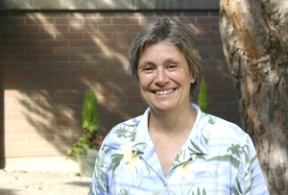
The art apprenticeship program grew from Claudia McKinstry — who used to job share a teaching position with Camp when Commodore’s high school program was still the contract studies of Strawberry Hill Alternative High School more than four years ago.
“When Claudia returned to art, she took the students with her,†Camp said.
The success of students “hanging out†at McKinstry’s studio and creating art under her mentorship — informally started in the 1980s — drew Commodore to expand that opportunity.
A pilot program last year, it is expanding this year to include more artists and students thanks to funding from the Harvest Foundation. The art apprenticeship is part of the Teen Empowerment Through the Arts program of Bainbridge Island Arts Education Community Consortium.
“I don’t lecture, we just work. If somebody has a question, we would talk about it. It’s problem-solving. In painting, there’s rarely one right answer,†McKinstry said.
Just being in a professional art studio intangibly pushes students ahead. McKinstry compares the atmosphere of writing for class to the seriousness of writing professionally for a publication.
In her studio, art books and other materials she has acquired for her work are sources of inspiration not normally available in a school.
Being free of a classroom’s time constraints, students can work for hours if they hit their stride, or take a break and walk on the beach when they like.
And, “if it’s a class for credit, there are (school district) criteria you have to meet, but you can really ‘grain of salt’ that (outside the classroom). In class you never have enough time (to cover the curriculum),†she said.
* * * * *
Big umbrella
Parents choose Commodore Options School for its small school environment and high parent-involvement model. Parents must commit to at least 10 hours a month in service to the school, although many do more.
The Odyssey Multiage School, with 130 students, serves grades K-8, with K-6 in one classroom. Grades are grouped into first-second grade, third-fourth grade and fifth-sixth grade. Grades 7-8 are required to do community service, which Principal Catherine Camp says helps students begin to build links to the community.
Eagle Harbor High School, for grades 9-12, adds “expeditionary learning†in the model of Outward Bound as a way to build social skills and connections with the outdoors, and further involvement with the community. The high school serves 100 students.
The Homeschooling Support Program helps students being taught outside the direct supervision of schools. Students take an average of five to eight hours of classes each week in subjects like science and music, which may be difficult to teach at home. The school also provides certified teachers to help parents make lesson plans that parallel the learning benchmarks established by the state. About 70-80 students are enrolled in the program.
– Tina Lieu
* * * * *
High school highlights
While the “quest for space†will be a common theme at Bainbridge High School this year (Review, Aug. 31), other corners of science will get their due.
The school introduces a forensic science course this year, in response to the popularity among teens of the “Crime Scene Investigation†television franchise.
“Based on the interest expressed by students in the spring, it should be a hit,†Principal Brent Peterson said.
Peterson said students are showing unprecedented interest in science across the board, with many taking three or four years’ worth of courses beyond the required minimum.
Also in the BHS curriculum, a revamped language arts program will be rolled out for ninth-graders.
The school will work to develop and nuture connections between students and adults this year, Peterson said, part of an ongoing effort to help youths make positive life choices.
Responding to enrollment – the school may hit 1,490 students this year – and faculty retirements, the high school welcomes 12 new teachers, several coming from other schools within the district.
“We had the opportunity to go out and do some aggressive recruiting, and we had great applications to consider,†Peterson said. “I think we have an outstanding group coming on staff.â€
– Douglas Crist
* * * * *
● Find out what’s happening on other island
campuses in the Review’s Back to School supplement, in this issue.