
A look at nursing shortages across Kitsap hospitals, schools
Published 1:30 am Wednesday, June 24, 2026
Nursing shortages are an ongoing problem in Washington State and beyond, with the pandemic in 2020 exacerbating long-standing structural issues within the workforce. High numbers of nurses have left the profession due to burnout, unsafe working conditions and retirement, per the Washington Center for Nursing.
There are not enough licensed nurses in Washington to fill the thousands of vacancies in Washington hospitals, the Washington State Hospital Association stated on its website. An October 2021 WSHA survey showed hospitals alone needed to hire an additional 6,100 nurses to meet current staffing needs.
Another factor that has contributed to the shortage is the aging population, requiring the need for more hospital and healthcare services. Washington’s 65-and-older population currently accounts for 1.4 million residents, with state projections anticipating the senior population will nearly double, reaching over 2.2 million by 2050, per the American Association of Retired Persons.
Kitsap County
Although statewide, the 1.4 million elderly residents make up just below 20% of the population, in Kitsap County, residents 60 years and older make up 31% of the population. Due to the need for more healthcare services, registered nurses are the most in-demand position in the county, per the Kitsap Economic Development Alliance.
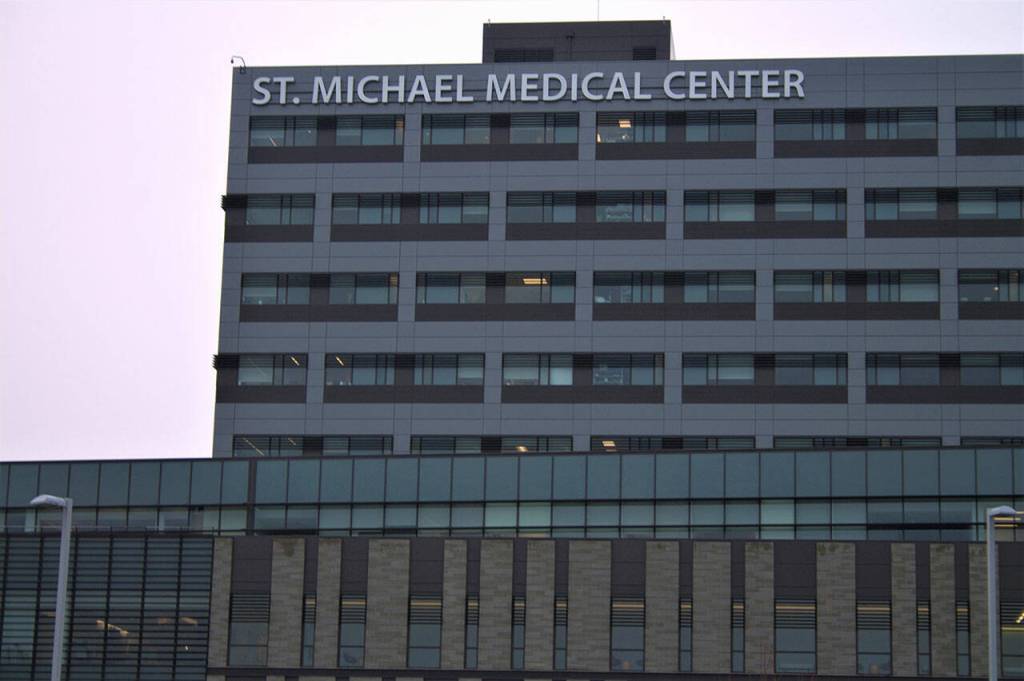
The county’s primary acute care facility is Virginia Mason Franciscan Health’s St. Michael Medical Center in Silverdale, which regularly deals with hundreds of open clinical positions. Staffing gaps have led to excessive emergency room wait times, triage delays and safety concerns over the years.
“Since the height of the pandemic, St. Michael Medical Center has made significant progress in addressing staffing shortages and Emergency Department wait times, while improving overall patient experience and satisfaction within the community,” shared Chad Melton, president of VMFH’s Puget Sound Market.
VMFH owns 10 hospitals in the Puget Sound region and has been in a budget deficit since the pandemic. VMFH continues to face significant financial pressures, Melton shared, including rising labor and supply costs, increasing claim denials and chronic underpayment from government programs such as Medicare and Medicaid. “These challenges are further intensified by recent federal legislation (H.R.1) and new Washington state taxes. VMFH projects an additional $200 million loss over the next five years as a result of these new state taxes, a cap on reimbursement rates for state employees and the impact of H.R.1, while costs continue to rise and community healthcare needs increase.”
In July 2023, the Kitsap Public Health District officially declared the county’s lack of healthcare access and medical staff a public health crisis, adopting a ‘resolution declaring high costs and insufficient access to care are public health crises.’ In May 2024, the health board signed a letter to the Department of Defense requesting increased support for military healthcare services in Kitsap County as well.
“An estimated 23,749 military personnel resided in Kitsap County during 2023, or about 8% of the total population. In addition, the Navy is the largest employer in the county. Downsizing of services at Naval Hospital Bremerton since 2013 has increased pressure on Kitsap’s overburdened civilian medical sector, presenting healthcare access challenges for active-duty service members, their families and military retirees who live or work in Kitsap,” KPHD released in its 2025 fact sheet. “Kitsap County is underserved relative to the state and nearby counties in the number of providers working in primary care, with about half as many providers per 100,000 residents compared to Washington overall.”
In 2025, Olympic College, which is the county’s leading higher education institution, reworked its Poulsbo campus to focus on healthcare.
Thanks to a $10.5 million investment, the campus now has programs aimed at addressing nursing and healthcare workforce shortages by expanding local education and career pathways. The three new programs launched in 2025 include Surgical Technology, Radiologic Technology and Diagnostic Medical Sonography, shared OC’s healthcare outreach coordinator Susan Lomow. “We are expanding the college’s ability to educate future healthcare professionals locally and strengthening the talent pipeline needed to meet regional workforce demands,” she said.
Stricter oversight will begin Jan. 1, 2027, for Washington state hospitals to submit staffing reports to the Department of Health twice per year. If a hospital fails to meet staffing plans more than 20% of the time, the DOH and Department of Labor and Industries can mandate a formal corrective action plan, per House Bill E2SSB 5236.
School Districts
Kitsap County public school districts, including Central Kitsap, South Kitsap, North Kitsap, Bainbridge Island and Bremerton, are actively hiring RNs and Licensed Practical Nurses to address the regional healthcare staffing needs.
Budget constraints, declining enrollment and the expiration of pandemic-era funding are what fuel the fire for nursing shortages in Kitsap County school districts. The typical school funding model in Washington does not allocate enough school nurses for student populations.
For all public Washington state schools, the prototypical school funding model generates nursing allocations based on decades-old metrics, falling short of the recommended Centers for Disease Control and Prevention School Health Services ratio of 1:750 (one nurse for every 750 students). Washington schools operate at an average ratio closer to 1:1,650, and in some larger districts, individual nurses cover multiple buildings and have ratios closer to 1:1,800, per the Washington Office of Superintendent of Public Instruction (OSPI). OSPI has requested legislative enhancements to the prototypical funding model to lower state staffing ratios to the recommended 1:750. OPSI School Nurse Corps operates as a regional delivery model, assisting rural school districts with under 2,000 students. However, state funding requests for the corps are often stretched to maximum capacity. To combat the shortages, some districts utilize health assistants and paraeducators, under the supervision of an RN, to manage daily routine health tasks.
As of June 2026, Central Kitsap School District, which has 19 schools, currently employs 10 school nurses districtwide, including one full-time and nine part-time school nurses. In addition, there are five special assignment nurses who work with specific students based on their individual health needs, as well as one substitute special assignment nurse. Across the district, CKSD serves around 11,000 students, making the nurse-to-student ratio 1:1,100. “Hiring seems to be holding steady from our experience over the past few years,” said CKSD community relations spokesperson RandaLyn Novick. “Our pools aren’t always large, but we’ve been able to consistently meet our needs. Our nurses play an important role in supporting student health and well-being across our district. We continue to monitor student needs and staffing levels closely and work to ensure appropriate health services and support are available to students across our schools.”
North Kitsap School District’s ratio is closer to the recommended 1:750, with six total nurses for a school district of just over 5,350 students at 11 different schools, with the ratio of nurses to students 1:896. All six nurses for the ten schools in the district are part-time. Additionally, NKSD currently employs four nurses who provide one-on-one support for individual students whose medical needs require constant services throughout the day. These nurses are not part of the general school-based nursing program.
“In recent years, we have focused on further developing the Career and Technical Education health and medical career pathways at our high schools,” said NKSD communications and community relations director Jenn Markaryan. “We’ve seen a rise in students engaging in these classes and working to earn certificates in high school that lead to post-secondary careers in the health sciences here in Kitsap.”
South Kitsap School District has a total of 12 nurses that cover all 16 schools in the district, which serves approximately 9,300 students, making their ratio of nurse to student 1:775.
Bainbridge Island School District currently has 11 total registered nurses for its eight schools. BISD has a total enrollment of around 3,300 students, with a ratio of nurses to students at a healthy stage, 1:300.
Although the ratio of nurses to students at most Kitsap County school districts is not significantly larger than the recommended 1:750, there has still been a noticeable increase in burnout among nurses and advertisements from school districts that are still searching for more nurses and substitute nurses.
“We are fortunate to have outstanding nurses, one in each building and a roaming nurse, serving our schools and supporting the health and well-being of our students every day,” said BISD communications specialist Bridget Lockett. “While we are grateful to have strong nursing staff in our buildings, it can sometimes be challenging to find qualified substitute nurses when our regular nurses need to be out.”
Bremerton School District has noticed a similar issue. “Unlike many surrounding districts that rely on outside staffing agencies to fill school nurse positions, Bremerton School District remains committed to directly hiring our own dedicated school nurses as often as possible,” said BSD director of communication and community engagement, Karen Bevers. “We believe this model provides vital continuity of care for our students. However, it is always a challenge to find and hire qualified school nurses and the ongoing nursing shortage has made it even harder.” BSD has seven nurses and a district enrollment of 4,075, making its ratio about 1:582. BSD has a total of 13 schools across nine different campuses.
In the past few years, higher numbers of students in need of critical care have enrolled in BSD, Bevers shared, increasing the overall demand for nurses throughout the district.
Unlike a hospital setting with a floor full of doctors and peers, a school nurse is often the sole medical professional in the building, with the duty of making critical, split-second decisions alone. This independence, coupled with the complex care needed, from acute emergencies and mental health crises to complex, chronic conditions and severe allergies, requires highly specialized, autonomous skills.
“The widespread nursing shortage has hit our substitute pool the hardest,” said Bevers. “Finding qualified substitute nurses has become nearly impossible. When a nurse calls out sick, we are frequently forced to pull a nurse from one school building to cover another, stretching our resources thin and creating a logistical domino effect just to ensure basic student safety.”




Best of Bainbridge
