
BI groups hold walk and talk to discuss king tide effects
Published 1:30 am Thursday, December 11, 2025
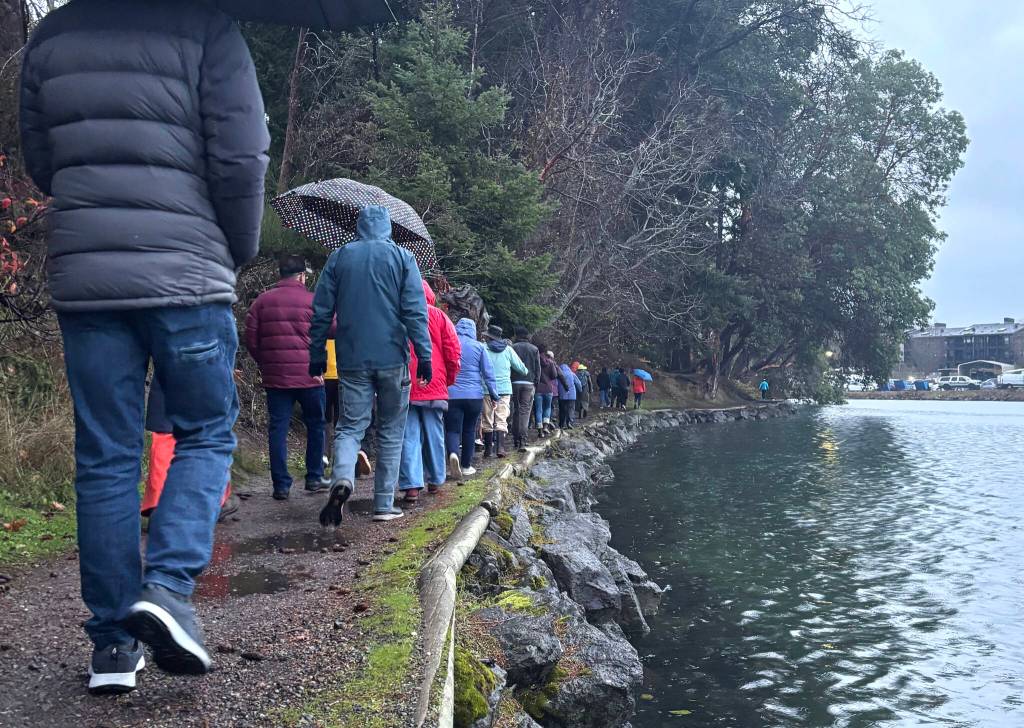
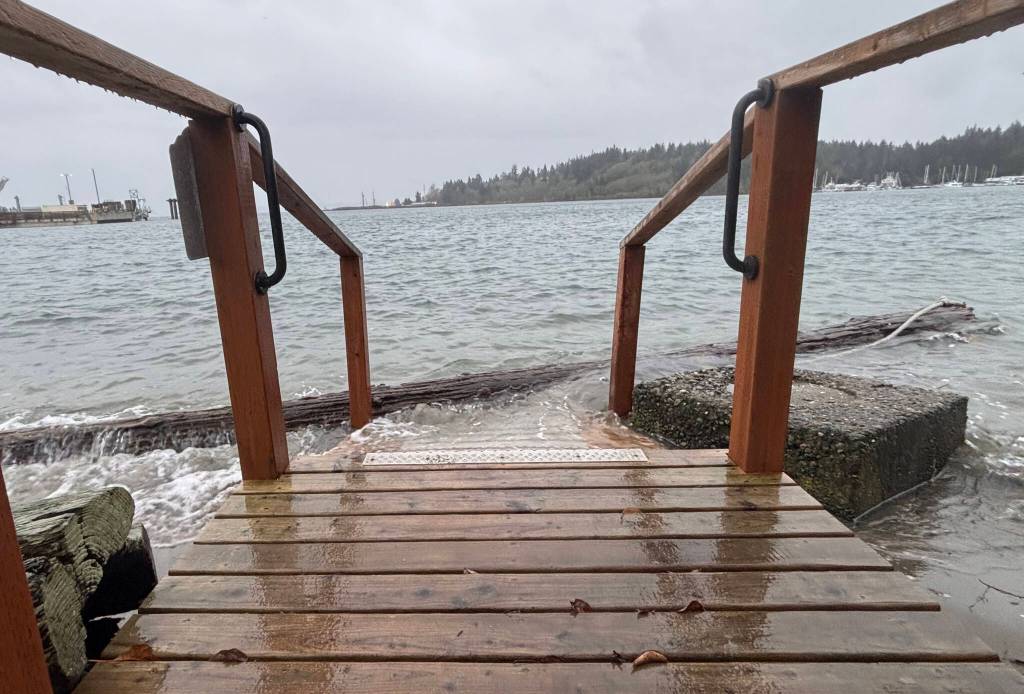
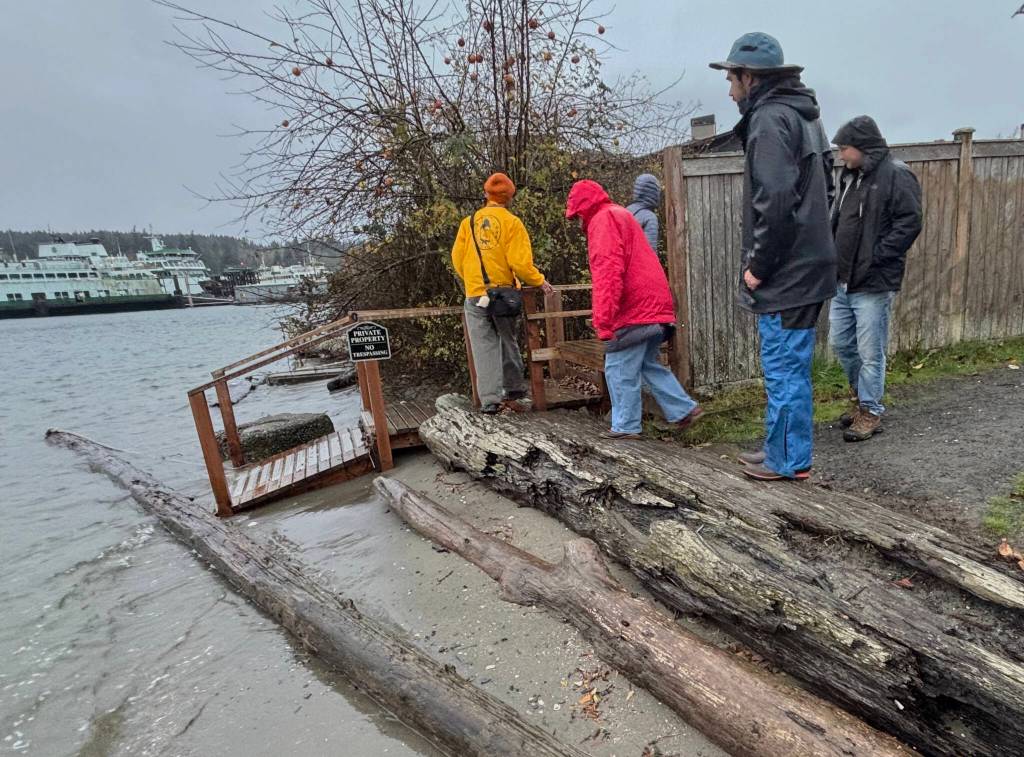
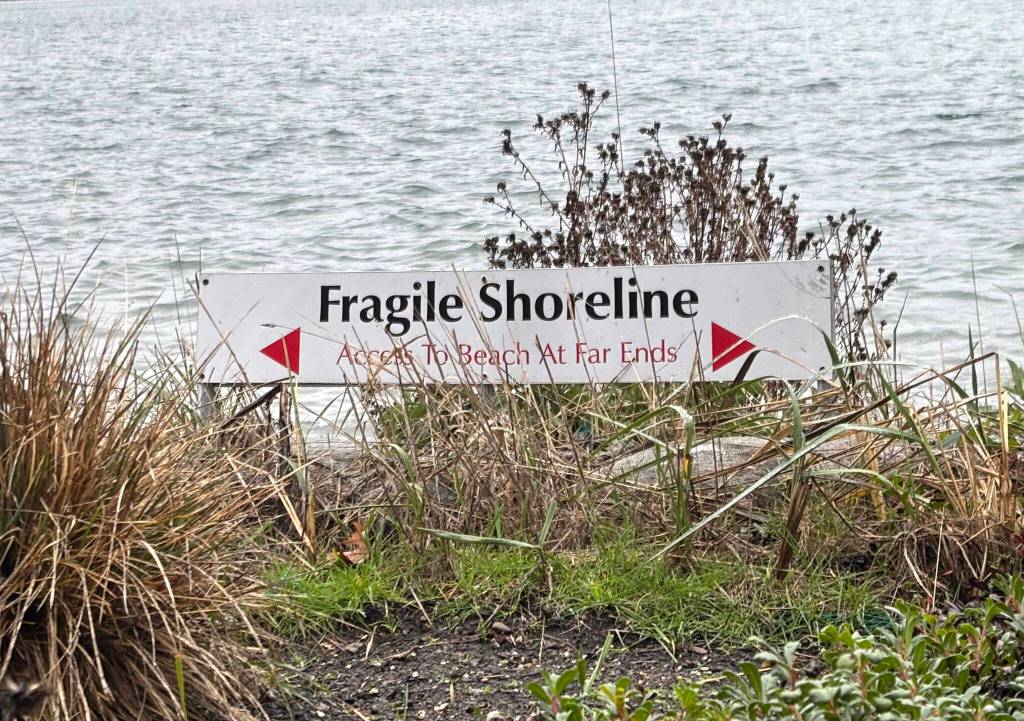
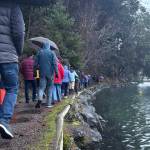

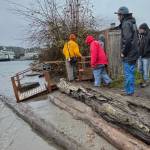
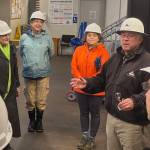
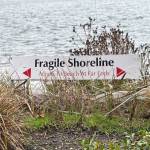
A host of Bainbridge environmental organizations led a walk along the Eagle Harbor waterfront Dec. 8 to view the effects of one of the largest king tides in state history and to discuss the threat of sea level rise.
Flooding and climate-change exacerbated high tide events threaten both private and public infrastructure on BI, as well as environmental health, but finding momentum to address the issue has been a challenge, advocates explained.
“It’s not just the structure issues, it’s not just the road issues. There’s a whole suite of things that build, and add up, in considering what we’re going to do about this on Bainbridge Island,” said Lara Hansen, chief scientist and executive director of EcoAdapt. “And as the [Hyla] students pointed out, this is something that’s going to go on for a very long time.”
Around 35 people — students and teachers from Hyla High School, city officials, residents from BI and North Kitsap and personnel from the Washington State Ferries — attended the morning walk, which coincided with the apex of the Dec. 8 king tide of about 12.3 feet at 8:30 a.m.
While a 12-foot tide is fairly typical for the Puget Sound area, low atmospheric pressure and an active storm surge amplified the effect of the already-high tide created by the sun and moon, raising the actual water level to about 13 feet. Without action, these tide levels will be the norm by as soon as 2050, and even higher by 2100.
“Paying attention to naturally occurring king tides is important because they provide a glimpse at what local sea level rise will look like in the future. Since we’re still working to curb greenhouse gas emissions, sea level rise is among the more certain climate change impacts,” wrote Curt Hart, communications manager for the shorelands and environmental assistance branch of the state Department of Ecology.
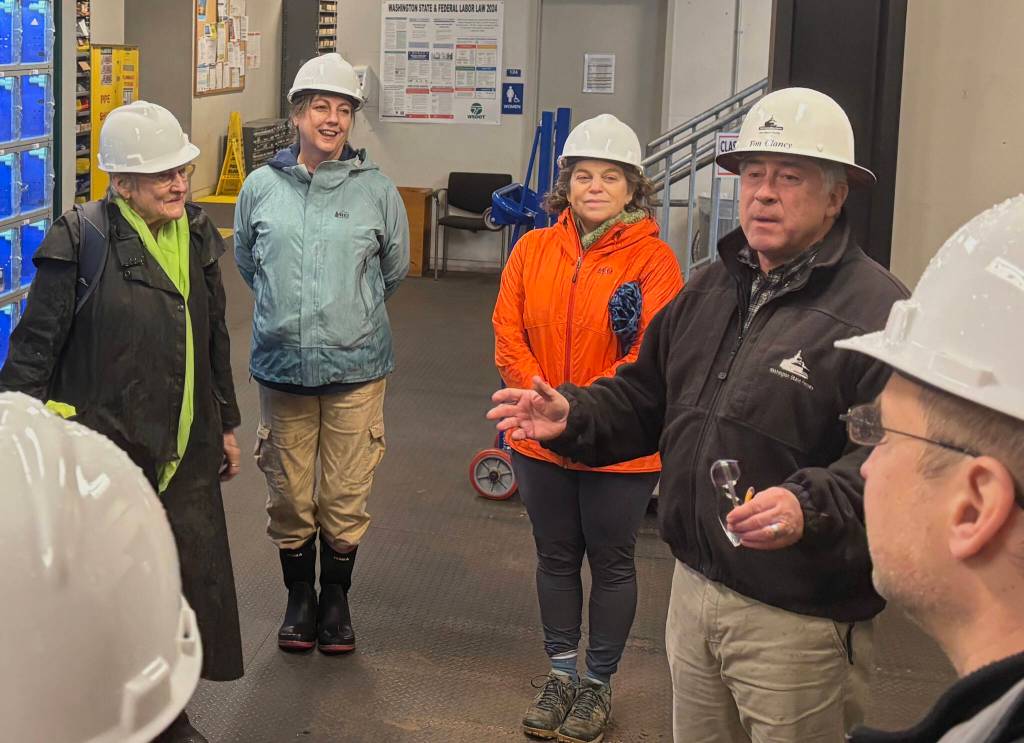
Program leaders from Sustainable Bainbridge led the group on a walk along the Waterfront Trail through Waypoint Woods, then to the shoreline next to the Eagle Harbor condominiums complex by special invitation. Afterward, they passed the baton to WSF staff for a tour through the Eagle Harbor Maintenance Facility.
Water was inescapable that morning. Rain poured from the clouds, forming puddles on the trail’s packed duff, and seawater lapped at the uppermost rocks of the bulkhead just feet away. The mouth of Ravine Creek was swollen and green, reaching the branches of bankside trees. Where the trail met the shore, even the narrow strip of rocky public beach had vanished, subsumed by the tide, and a piecemeal log boom installed by the condo complex bobbed in the waves.
“It’s not only the water coming in. It’s the erosion of the shoreline, which will bring the water closer even sooner,” said Hansen.
The effects of sea level rise coupled with aging infrastructure are already being felt by waterfront residents and operations around the island. In December of 2022, a major king tide submerged roads, buildings and parks around the island, stranding some residents for hours and highlighting the impacts of sea level rise.
After flood levels receded, EcoAdapt conducted a survey of residents in neighborhoods that were affected by the king tide and held follow-up discussions to “start a community conversation about how climate change will affect us and to begin generating ideas regarding what we want to do about it,” the group wrote on its website.
About 400 people from Eagle Harbor condominiums, Murden Cove, the Fort Ward area and one individual from Point Monroe participated in the discussions.
Per EcoAdapt’s BI Sea Level Rise 2022-2025 Project Report, many residents expressed concern about the integrity of their property and access to emergency services during tidal events. Some noted natural tidal and erosion barriers like wetlands and shoreline stabilizing plants had been curtailed by development, and called for greater involvement from civic and legislative authorities to address flooding concerns.
Jeannette Franks, founder of Weed Warriors and resident of Eagle Harbor condominiums, has been advocating for more action from the building’s board of directors for years, she said. The 2022 king tide event nearly flooded the ground-level units at the condo complex, alarming residents, she recalled. The building’s homeowners association installed logs and native plants to stabilize the shoreline, but Franks worried it won’t be enough.
“The residents and the board, most of them are very well aware of [the need for a bulkhead], but it’s a very slow, challenging process, and expensive […] We have assessments, we have a budget, and they have been putting away more money to address this issue, but nobody knows exactly what the deadline is and what the cost is going to be. It’s unpredictable, but it’s coming sooner than I think a lot of people expect,” said Franks. “One of the things that scares people is how much money it’s going to cost, but it’s going to cost a lot more money if it comes up to the ground level. I mean, we have flood insurance now, as an entity, the board gets it, but at some point we won’t be able to get insurance.”
It’s not just the Eagle Harbor complex, Hansen added. Some homes in Rolling Bay and on the sand spit at the north end of the island are very vulnerable to sea level rise, and some may already have compromised septic systems, she said. The city’s wastewater treatment center may also be threatened, she said.
At EHMF, rising tides have begun to encroach on infrastructure that was not built with climate change in mind.
Tides often fully submerge electrical cable boxes installed in the 1980s, said Tim Clancy, operations manager at EHMF. The 2022 king tide swept into a dockside workshop at the facility, Clancy recalled, and while no equipment was damaged, technicians “were lifting toolboxes off the floor,” and the encroaching saltwater corroded the metal floors of the shop.
“It took about two years to remove all the rust. This [black floor] was bright orange for about a year. You can still see some of the residue,” said Clancy.
Some upgrades have begun to include precautions for rising sea levels, such as a new drive-on slip for maintenance access to ferries docked at the terminal, added Adrienne Stutes, WSF biology program lead — “Those are things that we’re starting to do when we can.”
Jacqui Beresford, an 11th-grade student at Hyla, noted that any methods to address sea level rise should include considerations for the benefit of island ecosystems.
“There’s a lot of talk about what it’s going to do for us, but there’s also huge ecological impacts to sea level rise. Coastal erosion and saltwater intrusion has a huge impact on many ecosystems. There’s a lot of ways to mitigate this problem, but how do we do that in a way that doesn’t go destroying other ecosystems? How do we build sustainable infrastructure that doesn’t destroy our environment?” said Beresford. “We need to start looking at what we have, rather than what else we can add on to it. How we can fix this without creating more problems is one of the biggest things.”

Best of Bainbridge
