
Islander walks 45 miles in Texas to condemn immigrant incarceration
Published 1:30 am Thursday, July 9, 2026
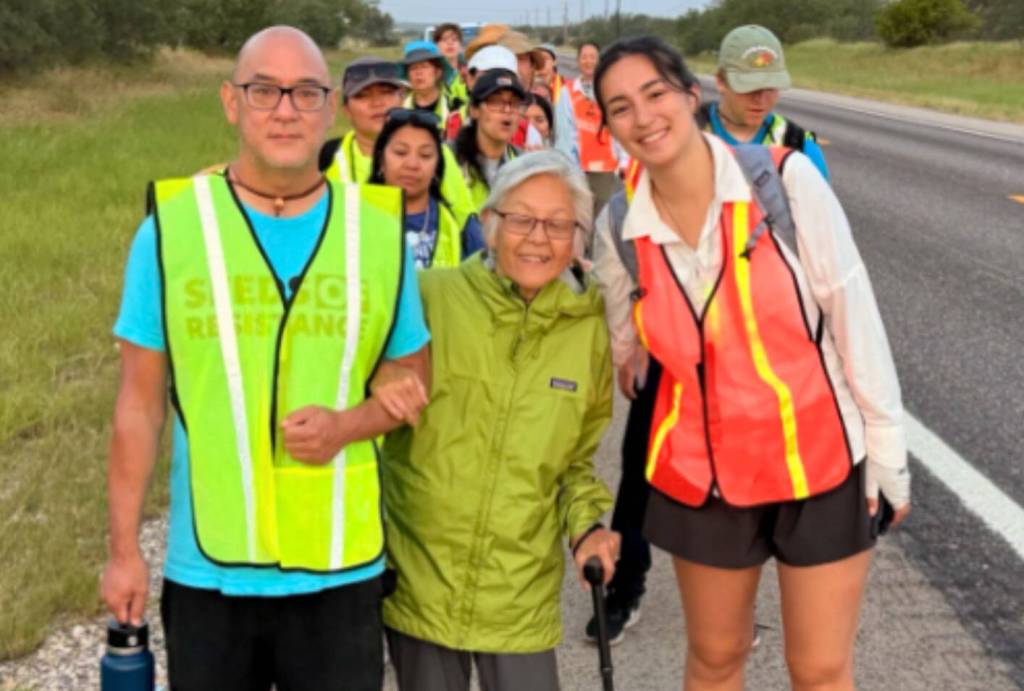
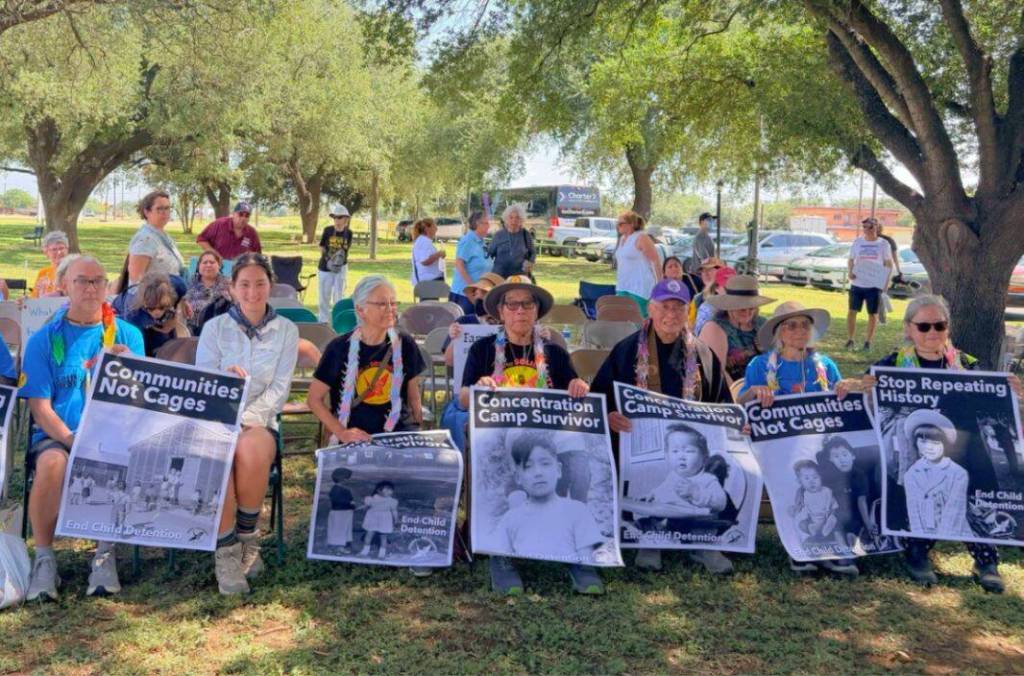


Bainbridge High School class of 2022 graduate, Skyla Sachiko Tomine, participated in a pilgrimage and protest this June in South Texas, alongside her grandmother, Satsuki Ina, to condemn family and children immigrant detentions nationwide. Ina was born in 1944 at the Tule Lake Segregation Center in California during the World War II incarceration of Japanese Americans and was later transported to the Crystal City Internment Camp in Texas, the site where the pilgrimage and protest began. Ina was held there for four years before being released at the end of the war.
The pilgrimage and protest with over two dozen participants lasted four days, totaling 45 miles from the former Crystal City Internment Camp to the Dilley Immigration Processing Center. Crowds consisted of immigration advocates, faith leaders, Japanese concentration camp survivors and their descendants.
“Setting foot on the land where my family was incarcerated for the first time was an emotional experience,” Tomine told The Review. “I walked alongside former incarcerees of ICE (Immigration and Customs Enforcement) detention, elderly survivors of WWII incarceration, amazing volunteers, local leaders and so many communities that care deeply about protecting the rights of children and families. We faced temperatures upwards of 95 degrees every day, several close encounters with border patrol and many early mornings. It was perhaps the greatest privilege of my life to be one of the organizers of this action, and to watch the many communities come together in their dedication to imprisoned children and families.”
A national coalition of organizations, called Free Families, organized the pilgrimage with Texas Unitarian Universalist Justice Ministries, Grassroots Leadership and Tsuru for Solidarity. Tomine is the National Organizing Fellow for Tsuru for Solidarity.
Tomine first became involved with Tsuru for Solidarity in high school, after attending a protest to shut down Northwest Detention Center, an ICE facility in Tacoma. That experience sparked something in Tomine to continue advocating, and she went on to lead a youth activism panel for the organization.
After graduating from BHS, Tomine became youth chair of the Tsuru for Solidarity Leadership Council, and upon college graduation from the University of California, Santa Cruz this past winter, she joined the organization’s staff as a National Organizing Fellow, where she helped plan the recent pilgrimage in Texas.
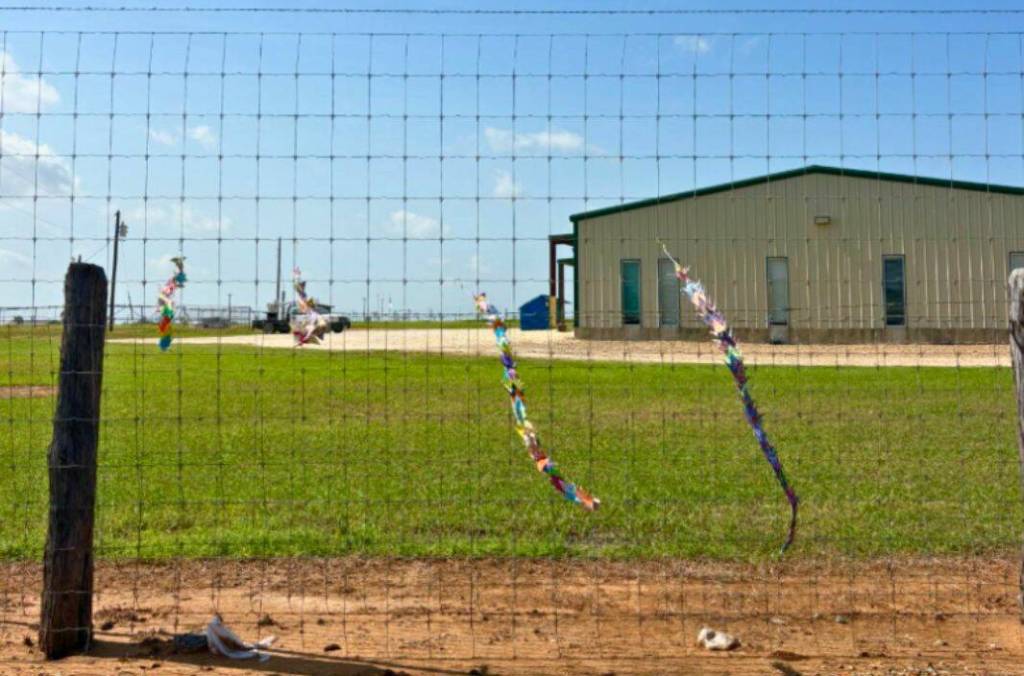
Each morning, the group walked up to 12 miles, beginning June 24 and ending June 27. Prayers were said, chants were loud and many participants came together to make multicolored origami cranes, which were eventually placed on the facility’s 10-foot chain-link fence. Tomine and Ina, alongside other Japanese American concentration camp survivors and their descendants, folded the cranes.
Opening in 2014, the Dilley Immigration Processing Center is currently the nation’s only major federal immigrant detention center that imprisons parents with their children. The facility is the Department of Homeland Security’s largest immigrant family detention center, holding 2,400 people.
The center has faced multiple protests and backlash due to concerns surrounding detaining children and families. During the Biden Administration, the facility was closed, and in March 2025, the Trump Administration reopened it.
Walking from the former Crystal City Internment Camp to a present-day facility served as a powerful reminder of Tomine’s family’s history of forced removal and the countless other Japanese American families.
“My family, and the Japanese American community know the lasting impacts of incarceration,” said Tomine. “Our elders carry deep wounds of knowing that not many people spoke up for them. This is why we recognize the importance of speaking out. Every child, every family, every person, who is incarcerated today, deserves to know that the people outside care, and will not stop fighting for them.”
Protesting wasn’t the only goal Tomine and others had at the Texas pilgrimage, however. Another part of their journey was to meet directly with impacted children and families. Elders, like her grandmother, listened to the children and shared stories, offering sympathy and hope for the future, she shared.
“The incarceration of my community in illegal concentration camps has been widely recognized as wrong and a violation of human rights,” said Tomine. “We even received redress for the incarceration. The truth is, it is happening again today, to immigrant communities across the country. Their families have been torn apart, they have been ripped from their communities, their children are suffering. It is beyond time to ‘do something.’”
While Tomine draws parallels between past and present injustices, the island also works to ensure the history of Japanese American incarceration is not forgotten.
Students in the Bainbridge Island School District learn about Executive Order 9066 and Civilian Exclusion Order No. 1, which led to the incarceration of 227 Japanese and Japanese American residents of Bainbridge Island. On March 30, 1942, Bainbridge Island became the first community in the nation to undergo the forced removal of residents of Japanese ancestry. They gathered at Eagledale Ferry Dock on the south end of the island and were transported via ferry and train to a concentration camp in California.
“I was grateful to be able to learn about the incarceration, particularly from survivors such as Kay Sakai Nakao, during my time in the Bainbridge Island School District,” Tomine shared. “I recognize that the curriculum available to me when I was a student is miles ahead of that offered in many other school districts across the country. However, growing up, I was also acutely aware that our curriculum avoided many of the harsh realities of incarceration that I knew of from my family.”
She added: “I believe that most Bainbridge Island residents know the history of my community, but many are not aware of the realities of the experience,” she said. “Many of these sites were not ‘internment camps,’ but concentration camps and prisons that violated human rights. It is important for students in our school district to know the realities of incarceration, and also to know about the bravery and resistance that our community showed during that time.”
Sonoji Sakai Intermediate School, which serves grades five and six, was named in honor of a first-generation Japanese immigrant and local farmer, Sonoji Sakai. After incarceration during WWII, the Sakai family returned to Bainbridge Island to resume farming, and in the late 1990s donated a portion of their strawberry farm to BISD. The Sakai family works in partnership with the school to continue to educate BISD students about the history of incarceration of Japanese Americans.
“I hope that in the future, the curriculum could continue more in-depth at the high school level,” said Tomine. “In order to teach this history effectively and responsibly, it is essential to address modern-day implications of our incarceration by recognizing generational trauma and solidarity between many communities of color who have faced unjust, racially motivated incarceration.”
Tomine is now focusing on supporting other pilgrimages across the country throughout the summer and helping to plan Kintsugi, a community healing conference that is hosted every two years.
Best of Bainbridge