Plumbing issues put BI co-op mobile home park in financial crisis
Published 1:30 am Wednesday, March 25, 2026
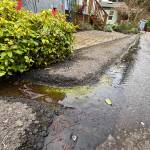
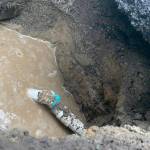

The only mobile home co-op on the West Coast — and one of the last vestiges of affordable housing on Bainbridge Island — faces a massive financial crisis as its aging plumbing systems start to give out, sending funding reserves down the drain.
The Islander Residents Association, the housing cooperative group that collectively owns and governs the mobile home park just off Madrona Way in the heart of Winslow, must perform about $2 million in repairs to the drainage and water infrastructure of the park or face defaulting on its loan on the land, backed by the federal Department of Housing and Urban Development.
Residents contribute to a reserve fund for capital projects through their co-op dues, explained board member Ann Lovejoy, but there’s only about $1.3 million available — which means if they can’t raise another $700,000 or so, each resident will have to pay about $18-22,000 out of pocket.
For most households in the community, that’s not possible, Lovejoy explained. Many residents have said they may have to sell their homes if the funding goal is not met.
“Eleven households said they could meet that; 11 out of 50 […] [The park] is pretty unique, the fact that there’s places where you can have a very small income — and it’s not necessarily affordable housing, as such, we’re not supported by [Housing Resources Bainbridge] or anything like that — but in fact, for a lot of people who’ve been here a long time, it’s the best they could possibly do,” said Lovejoy. “And if they have to sell their house, there’s no way they’re going to get another one. It would be very difficult to find anything local, even in Kitsap County.”
The park predates both the incorporation of the city of Bainbridge Island and modern regulations regarding the ownership of utilities. It was originally built in the 1960’s as housing for Washington State Ferries workers. It shifted to private ownership for several decades, then in 2004, the residents formed a cooperative and purchased the deed for the land from the existing owner with loan assistance from HUD.
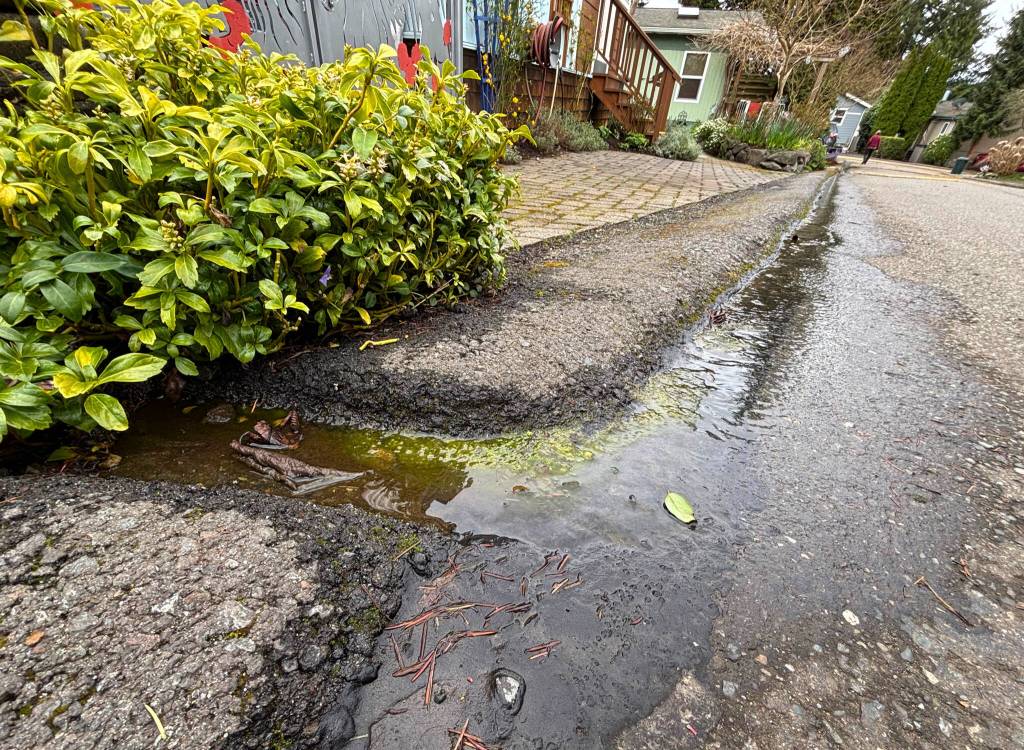
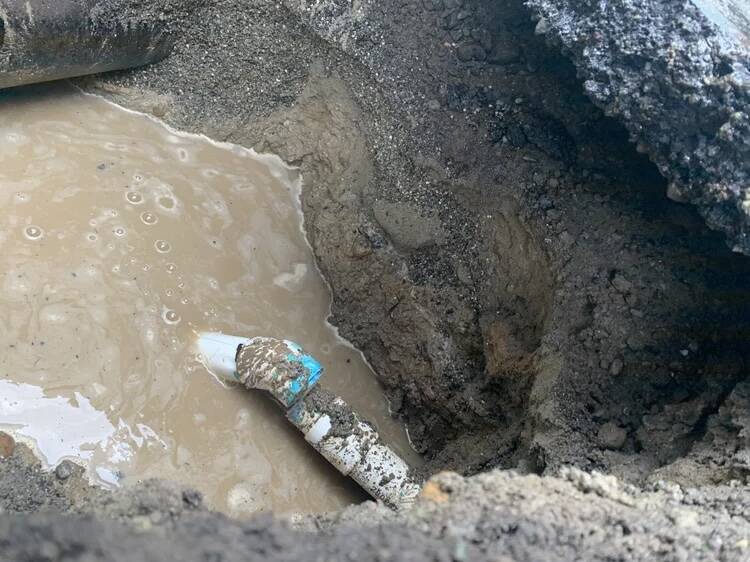
Over the next two decades, the haphazard construction of the park’s utility system began to beget issues. Mysterious leaks began to emerge, forming standing water beneath homes. Water use rates, measured by one shared meter for the entire park, showed unusually high levels. Several pipes tested positive for lead contamination.
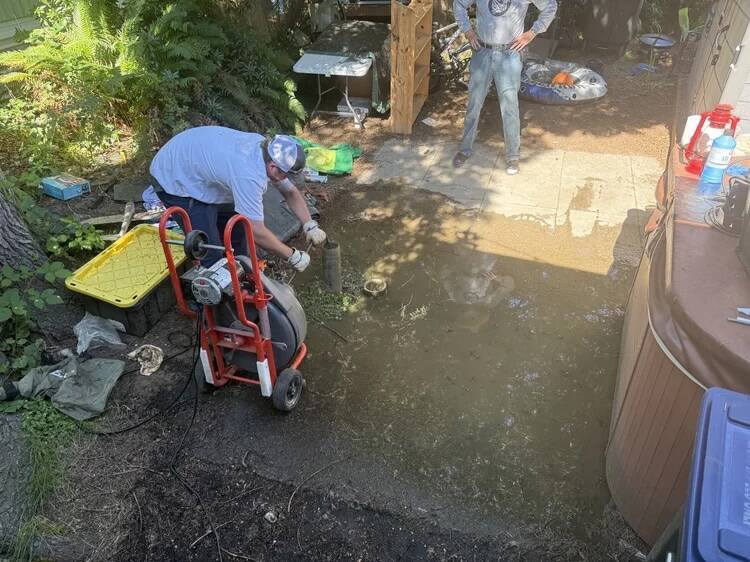
The park co-op did what they could — repairing leaks when they occurred, installing filtration systems for every home — but it wasn’t a perfect fix.
“Some of the things that were happening was when they installed newer homes. Some of the old ones were pretty funky, and so when they were replaced, they take the old home away, and then they prep the ground, and then they go to fix the pipes — and some of the pipes had actually just mouldered into the ground,” said Lovejoy. “They were working, but it was the pressure of the soil that was holding them together, and they were sort of like bread dough.”
To make matters more complex, the park’s piping is entirely privately owned — a holdover from its establishment in the mid-1960’s — which means that modern regulations regarding utility maintenance and ownership won’t apply until the private owner of the park, the co-op, completes the construction. When finished, the new sewer mains will become property of the city, but the stormwater system, the new water system and “side sewer” connections to individual units will remain privately managed, explained city communications manager Shannon Hays.
“Typically, drainage issues on private property are not the responsibility of the city. We do not perform maintenance on private systems. When new stormwater management facilities (ponds or other management structures) are constructed that serve combinations or public and private development – for example, a subdivision with private lots and public streets – the city is typically required to take ownership of those facilities and maintain them,” Hays said in an email.
In March 2025, the city purchased two parcels in the Islander Mobile Home Park as part of a 2023 ordinance that committed the city to providing workforce housing for first responders. Hays confirmed that the city would pay its share of the costs of upgrades.
The park’s status as a cooperative puts it in a unique position to seek funding.
In order to qualify for HUD assistance, the co-op undergoes an annual audit of park infrastructure, landscaping bylaws, and finances. However, that doesn’t mean the group qualifies for grants from the same agency; it’s not a nonprofit, nor is it designated affordable housing, since it does not have a cap on income for residency.
That means the parks’ best bet is to find an “angel donor” — someone who is willing to loan the co-op the funding to complete the project, with the expectation that co-op membership will pay the “angel” back over the course of many years.
Construction starts May 1, whether the IRA has all the funding or not.
“Most people, if something happens, it’s one house, right, or maybe a little cul-de-sac. But this is 50 units, and it’s a shared responsibility,” said Lovejoy. “It’s an extremely diverse neighborhood — that is a true neighborhood, a true community. People are not just mobile home owners, they’re members of a cooperative.”