
BI moves forward with community outreach for possible speed cameras
Published 1:30 am Monday, March 16, 2026
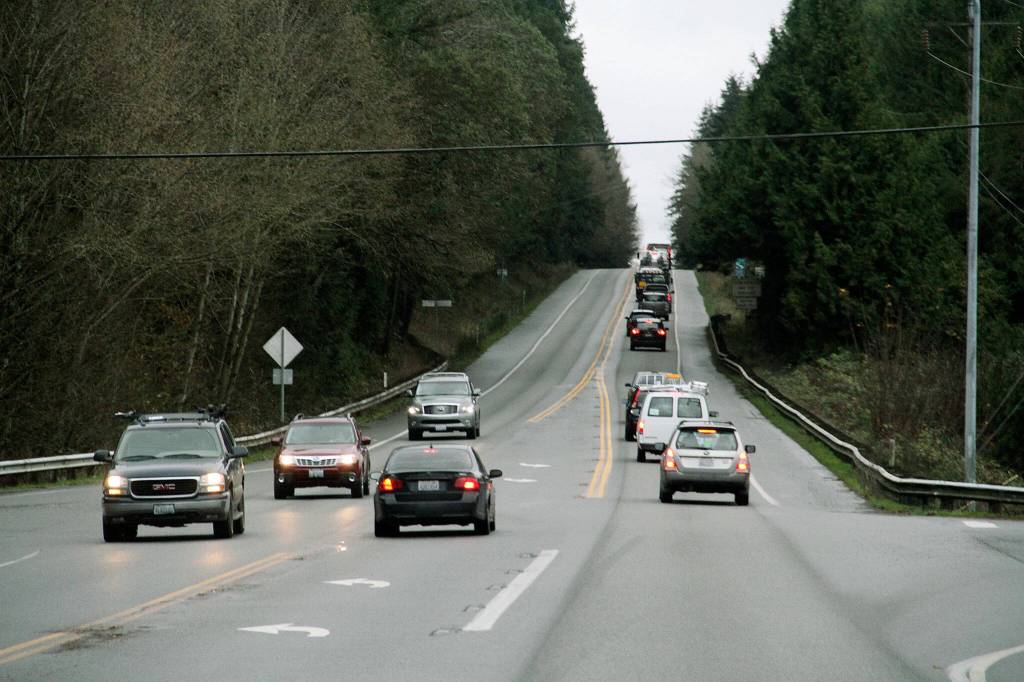
The Bainbridge Island City Council approved at its March 10 meeting to move forward with community outreach for possible future adoption of traffic safety cameras around the island.
Council voted 4-1 in favor of the motion, with Councilmember Mike Nelson being the sole no vote. Councilmember Brenda Fantroy-Johnson and Mayor Clarence Moriwaki were both absent from the meeting.
A previous Bainbridge Island Police Department traffic study identified three locations that may benefit from proposed speed cameras: 12000 Miller RD NE, 9343 Sportsman Club RD (Sakai/Woodward School Zone), and 4704 Blakely Ave NE (Blakely Elementary School Zone). “A preliminary impact study indicated a positive impact for equity considerations, including: livability, accessibility, economics, education, and environmental health,” per city documents.
BI police Sergeant Joseph Fastaia said he has since spoken with the Race Equity Advisory Committee, which made several recommendations, including speaking directly with stakeholders who may live, work, or visit the areas where cameras will be present, as well as official city communications through social media, flyers, and contacting businesses to ensure they are aware of the cameras. Fastaia added, “We need to make sure we’re reaching the largest population segment that comes here during business hours. Our population will often double with the number of people who travel through Bainbridge and come here to work. And we want to make sure we have contact with organizations for communities that will be impacted,” he said.
At the Dec. 2 council meeting, Fastaia said that, on average, BIPD can only issue around five to six citations an hour with physically manned patrols. Speeding is the number one community complaint BIPD received in 2020-2025, and it can be difficult for officers to keep up with 911 calls and other community responses, including speed enforcement, he said.
City communications coordinator Shannon Hays outlined several community questions, including: privacy concerns, what the cameras would capture, and how information would be retained or shared, adding, ”It’s important to understand that these cameras are a proven safety tool designed to reduce speeds where needed, and they have been shown to be effective in improving safety. We also want to dispel the myth that this program is implemented for financial gain. Protecting overall driver and pedestrian safety (especially in school zones) is the priority,” she said.
Nelson shared both privacy and data security concerns about individuals hacking into the system.
“In addition to just hacking and getting the images, you could hack and use the camera to take new pictures and get new images, and even if you’re talking about in school zones, that makes me even more nervous,” he said. “I don’t support this, and I don’t think we should move forward with this.”
Fastaia didn’t rule out the possibility of someone hacking into the system, but said selecting a vendor with a strong data security background could help minimize concerns, adding, “I fully believe it is within the ability of the federal government to be able to do that. I’m not sure there’s a whole lot of reason for them to look at doing it for a limited system like this, the images that would be recorded. It is a vehicle and a license plate. There are already license plate databases that the government has access to. I’m not sure that the juice is worth the squeeze for the government to try hacking into the system.”
Regarding privacy concerns, BIPD asserts: “By law, only the vehicle and plate are captured by the camera. It is illegal to take pictures of the driver of the vehicle. The photo enforcement system is not connected to other databases, and other agencies do not have access to the images or violations. BIPD has access only for the verification of violations. Access logs and system audits are periodically conducted and results reported to ensure system integrity. System misuse results in criminal charges,” per the BIPD presentation.
Councilmember Ashley Mathews asked if cameras would help BIPD with speed enforcement.
“We are a small police department in our beautiful city. We don’t have the staffing to be able to head out and just hammer speeding like we wish we could. It is the community complaint we received the absolute most for a community policing organization, and we want to address that complaint the best we can. Given our size and just the limits of driving cars… (and) pulling people over, leveraging a technological tool to do it will have a much bigger impact than we could, even with double our staffing,” Fastaia said.
Councilmember Lara Lant asked about the timeline of camera installations and how quickly citations would be mailed to potential violators.
Fastaia said tickets could be mailed within a roughly two-week period, depending on several factors, including whether they need to be reviewed, federal holidays, and the municipal court system. Regarding installation, he said that, from speaking with Poulsbo Police Department officials, the timeframe could take roughly six months.
Following council’s approval, interim city manager Ellen Schroer will engage with a consultant or firm for up to $15,000 to support pre-implementation communication and community engagement for an Automated Traffic Safety Camera program, per city documents. Schroer said staff will return with more information in roughly four to six months following community outreach efforts.




Best of Bainbridge
