
Can dogs sniff out COVID in people?
Published 1:30 am Thursday, October 29, 2020

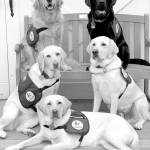
A Bainbridge Island nonprofit is participating in a research study to teach dogs to detect people with COVID-19 and help prevent the spread of infection.
Once trained, medical detection dogs can be deployed in ports of entry and public gatherings,to provide rapid non-invasive screening for the coronavirus.
The work by Assistance Dog Northwest may prove integral in the fight against COVID and be a method of screening large numbers of people quickly.
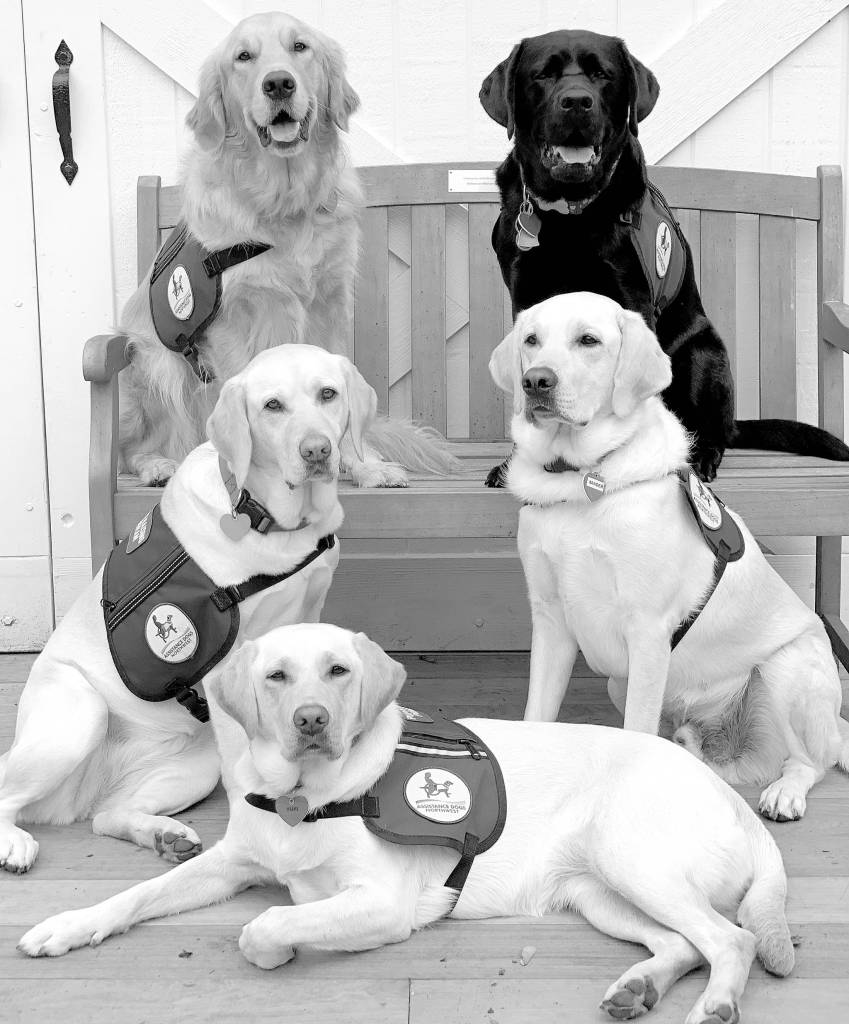
Five Bainbridge Island dogs are being evaluated for participation in the study. These are dogs-in-training that will eventually become assistance dogs for children and adults with physical disabilities.
Additional dogs will join the study from Assistance Dogs of Hawaii, an affiliate organization in Maui, where the training will start next month.
“The ultimate goal, for me, is the practical application of this research to help screen people, even those who may be asymptomatic, at places like airports, schools, hospitals and other gathering places to prevent the spread of disease,” said Maureen Maurer, ADNW executive director. “It’s encouraging to have man’s best friend join in the fight against man’s worst enemy.”
It’s not the first time ADNW has participated in a study on the extraordinary capacity of dogs to detect disease. Maurer was the principal investigator in a groundbreaking research study in 2016 that proved that dogs could be trained to detect life-threatening bacterial infections in people with an accuracy rate close to 99 percent.
“As soon as the pandemic hit, it occurred to me that dogs could be taught to detect COVID-19, based on our previous research and other study outcomes,” Maurer said. “I believe they will be able to help us fight this disease and am excited for the opportunity to contribute to the growing body of knowledge in this field.”
Five Labradors or golden retrievers are being evaluated at the Bainbridge Island campus for their aptitude in medical scent detection. The dogs include Sadie, Ginny, Samson, Yuki and Nash.
Those who make the cut will travel with Maurer to Hawaii next month and begin Phase 1 of the study, which involves teaching dogs to discern the presence of COVID-19 in the sweat of infected people. Coronavirus samples will be collected in sweat from T-shirts and socks and is not transmissible to dogs or people.
Dogs not chosen for the COVID project will continue their training and development as assistance dogs. They will eventually be matched with a person with a disability, whose needs align with their skills and temperament. Others will become facility dogs and work full-time at children’s hospitals or child advocacy centers, helping kids who are victims of crime. Assistance dogs and lifetime followup support are provided free.
Maurer, who has a master’s of science in canine studies, said when it comes to smell, dogs’ olfactory acuity is over 100,000 times stronger than humans, and they are able to detect odors in parts per trillion. The key to harnessing their ability is accomplished by teaching dogs to accurately discern one scent over another, and let humans know when they find it.
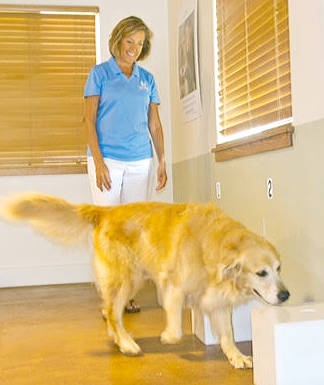
ADNW begins training by teaching the dogs to detect a target scent by having them “go find” an item – a tea bag, for example – hidden in boxes and rewarding them with food for accomplishing the task.
“We are looking for dogs who are not just scent-oriented, but have a high degree of drive and determination. We want dogs who are eager to search for items and enjoy this type of work,” Maurer said.
How to donate
ADNW is a charitable organization. To give, visit assistancedogs northwest.org.