600 frames, 1 minute of film
Published 8:00 am Wednesday, September 14, 2005
The fourth annual student animation fest runs Saturday.
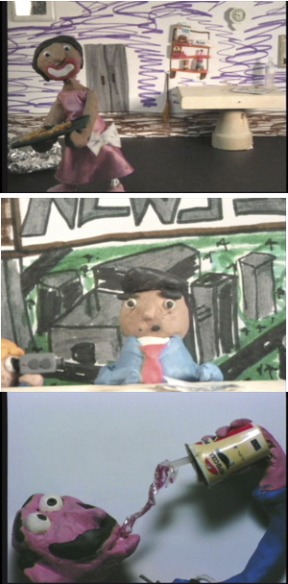
Flying home from vacation this summer, 15-year-old Sam Kuniholm watched the airplane safety video and thought:
What would happen if you blew into the tubes of the life jacket and it exploded?
“That would be funny, for the people to be doing the wrong thing,†Kuniholm said. And so was born “Welcome Aboard.â€
Kuniholm’s short claymation film is one of more than 30 animated films made by local kids, to be screened in the fourth annual Bainbridge Island Animation Festival, 10-11 a.m. Saturday at Bainbridge Cinemas.
The event is run by veteran instructor Wendy Jackson Hall of Animated Adventures, who offers classes through the park district and Fridays at the Boys and Girls Club starting in October.
“Kids really respond to the chance they get to use real techniques,†Hall said. “They take it more seriously. It’s not watered down for them.â€
The young animators draw on acetate cels, use light boxes and real cel paints to color in the characters and backgrounds. Even with “just†10 pictures per second – Hollywood animation uses 15-30 per second – a one-minute movie means 600 shots.
Instead of drawing every frame, students learn labor-saving techniques like the “Speed Racer†shot in which a character stays in place while three backgrounds of horizontal lines move behind, creating an illusion of character movement.
A “talking head†reuses the shots of four different mouths to give a character speech. Scenery drawn on a long strip, called a “scroll,†can be reused as the figure “walks†through a neighborhood.
“One of the most important things they learn in my class is how other people did it, and how to reverse engineer animation that they like and discover it’s just a process or technique they can use,†Hall said.
Students are forbidden to copy characters from other productions, but Hall encourages them to share animation they like. The class often will watch a movie frame by frame to see how a particular effect was achieved.
“I used to watch (animation) as something happening like a real movie,†student Emily Safford said, “but now I notice how they just reused two frames, or ‘Wow, this must have been really hard to animate because they couldn’t reuse frames.’â€
Safford, age 14, has been drawing characters in the style of Japanese animation – called “anime†– and filming them for two years. Her film “The Kung Fu Kid†appears in the festival.
She was first attracted to Japanese anime because of the stories. She saw “My Neighbor Totoro†by famed Japanese animator Hayao Miyazaki when she was 4; she liked the happy story, because as a child she was scared of a lot of things.
“Other cartoons are aimed at being funny, but (anime) can also be serious as a live action movie,†Safford said. “It’s not just focused on younger kids, but how can you make a character cute and pretty, but without being juvenile.â€
Also 14 years old, Wes McClain already has been making animation for four years.
McClain has a desk set up at home for his animations, which sometimes require resourcefulness. To make a character in his film, “Survival of the Fittest,†drink Coke, he colored a strip of tape red when he couldn’t find the cellophane called for by a book. And, being animation he filmed that scene with just the character’s head laying on a piece of paper instead of standing, the audience none the wiser.
“I like it because it’s a lot easier than film because you can do it in your garage,†McClain said.
“Too Many Sweets†is the first film of Dylan Lehotsky, age 9. His character falls into a vortex. He was surprised to find that four days’ work – including suspending the character from fishing wires when he “entered the vortex†– turned into just 10 seconds of film.
The thinking didn’t end with the film though. He shared his idea about making progressively smaller figures to make his character really look like it is entering the vortex, and plans to make more animation next summer.
Hall says anime is hugely popular among teens for its “slick†and stylized characters. The stores are ones teens can relate to and see as an escape. In response, four years ago she added anime to the claymation classes she had already been teaching for years.
Hall got into animation after a class in high school: “I was instantly hooked. I didn’t have to think of what to do with the rest of my life.â€
Safford feels similarly.
“I definitely want to continue to pursue it professionally,†she said “I would like to be an animator in the future with my own studio.â€