New competition for the ol’ piglet-skin
Published 7:00 pm Saturday, August 27, 2005
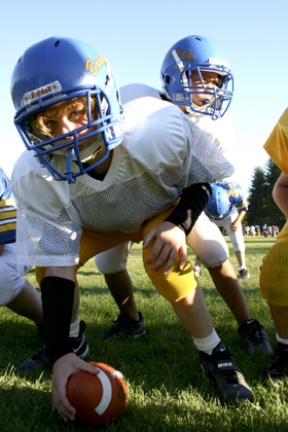
The new Junior Football Association will face opponents from the Seattle area.
The Bainbridge Island Junior Football and Cheerleader Association is moving on up to the eastside.
The group, formerly known as the Bainbridge Island Pee Wee Association, will play its first full season with the Greater Eastside Junior Football Association this fall.
Wayne Houston, BIJFCA president, felt it was in the league’s “best interests†to move to the GEJFA, which has been in existence since 1963.
“This way, the kids will be able to play in their own age groups,†Houston said. “We wanted to maximize the participation of our kids in football and this is the only way we could see them playing. It’s really exciting.â€
The move started two years ago, when Houston and the BIPWA board met with Kitsap County Adult Pee Wee Association officials to try and change the rules on how kids can participate.
The KCAPWA operates with four divisions, divided by age and by a weight cap. The weight cap was set at 150 pounds for the “A†division, 140 pounds for the “B†division and so on, which meant younger kids who were heavier would have to move up into a higher division and many kids over that weight wouldn’t be able to play at all.
Furthermore, island kids over the limit did not have the option of playing in the island’s middle and intermediate schools because they don’t have a football program, whereas numerous junior highs in Kitsap County do.
“We had some kids that we knew we were going to lose,†Houston said. “We looked at trying to get the weights (limits) raised, but that didn’t work. So we had to do what was best not for just a select few, but for all our kids on the island.â€
Kelley Yarbrough, who has two kids in the program and is also the league’s treasurer, felt it was a safety issue.
“My child only weighs 70 pounds,†she said. “With his age, he could have played with children who weighed twice as much and be older.â€
So, the board decided to look for another league to call home. They eventually decided on the GEFJA, whose teams they had played in some “crossover†games in past seasons.
They received permission last year for their 13- and 14-year olds, who would have made up their “A†team in the Kitsap County Pee Wee League, to form a team to participate in their “senior†division. Although they went 3-5, Houston said that was all they needed to decide they could be competitive in the new league.
“The first game was not pretty,†he said, recalling a blowout loss to Woodinville. “But the kids and coaches came back and said, ‘It’s a different kind of football.’ They realized they had to work harder and they wound up doing well. It was just a matter of getting the kids over the hump (to realize) that they can compete. They’re not so far above us.â€
With the experiment dubbed a success, the association changed its name in March and officially moved all teams to the GEFJA, which works under an age/weight point system.
The age/weight chart helps divide kids ages 8 to 14 into six levels: Rookies, Cubs, Sophomores, Junior Varsity, Varsity and Senior. Families can decide whether their kids will play by the age-only chart or by the age/weight chart.
With the exception of seniors, all other levels must be weighed prior to every game to ensure they can stay within their respective divisions. Players are allowed to gain a pound every two weeks before they have to be moved.
“That’s one of the benefits of this organization,†Houston said. “It’s a lot more flexible. You’re not limited to the weight cap. They know kids are going to grow throughout the year.â€
It also gives the younger and smaller kids a chance to play with others their age, reducing the chance of getting hurt playing against older and bigger kids.
Under GEFJA rules, a coach must empty the bench on a change of possession, and the kids must stay in for at least four plays. A mercy rule says one team cannot defeat another by more than 32 points.
The BIJFCA also allows ninth graders to play on the senior level team if they want to, but they cannot play for the high school at the same time.
Other changes the organization made allow coaches to operate as one staff and the players to practice as one, making a familial atmosphere for players, coaches and parents. The cheerleaders, who will be at all home games, will accompany them to some road games as well.
New plays
The association also converted to the playbook the Bainbridge High School football team uses, thanks to a partnership that has been forged over the past few seasons.
BHS varsity coach Andy Grimm, who has two boys in the program and played for the association back when they were still in Pee Wees, likes the advantages with the competition and the weight cap.
He also tries to spend as much time as he can hanging out at practice, developing relationships with other players and giving them a chance to get familiar with him and the program.
“It can only work to my benefit at the high school level to develop relationships with kids down there,†Grimm said. “It’s not a recruiting thing by any means. I want to be around my kids and watch them develop. That’s the fun part for me.
“I’m more than willing to help out and try to model stuff around what we do here to make it a smoother transition (from junior high to high school football). The kids aren’t like, ‘What are we doing up here?’ They know what they’ve been doing since second grade.â€
Said Houston, “To get coach Grimm out here, I think that says a lot for where we’re headed.â€
But it hasn’t been an easy road. The organization has dealt with parents concerned about their child getting hurt, a lack of funds and not having a field to call their own, among other issues.
Most notable was a vocal minority that opposed the move, but Houston and secretary Tina Estabrook said the board tackled their concerns.
“Their issue was, they were (mostly) talking safety, but we went over each concern and addressed it,†Estabrook said. “It kind of proceeded to they just didn’t want to make the move. It wasn’t really travel, it wasn’t really anything.â€
Estabrook, who has two kids in the league, noted how much easier it was for all the divisions to play at one location, rather than have them in different divisions at different places.
The league provides the majority of equipment, save for cleats, athletic supporters and, this year, girdles. They bought new jerseys and pants last year and 80 new Revolution brand helmets to give their kids one brand of helmet, rather than the several brands they had in use. They also offered parents the chance to buy their own helmet, and then either donate it back to the program or keep it.
But their split from the KCAPWA meant they had to split with the Pee Wee basketball program, which Houston said provided most of the operating revenue for the association. He said they’re trying to get funding via sponsorships from businesses, fund-raisers, their snack shack and merchandise.
They also share the field with the baseball and softball programs on the island, and Houston is concerned with the hard dirt infields causing injury.
“Unfortunately, we’re kinda stuck here at Strawberry (Hill Park),†he said, noting that there isn’t another spot on the island that will allow them to put up lights. “It would be nice if we could partner with lacrosse or soccer and get a FieldTurf (field), but that’s another $700,000.â€
But they will work through these issues and get on equal footing with the other sports on the island. It may take a few years to gain some respect, but Houston said the most important thing is simply getting the kids onto the field.
“When somebody asks why did we do this, I can point to each one of those kids and say ‘That’s why,’†he said. “You can argue with me, but these kids are out here participating. That’s the bottom line.â€