The future of ‘la finca’
Published 5:00 am Wednesday, July 27, 2005
The Ometepe cooperative sees a new influx of foreign tourists.
ISLA DE OMETEPE, NICARAGUA – The lights flicker and die at Finca Magdalena as a rainstorm sweeps in from the west. The rain pummels the clay tile roof and roars over the eaves in thick sheets.
The women of the cooperative call out to each other and are soon carrying candles or old tin flashlights.
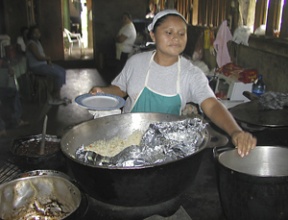
In the kitchen, large pots of beans, rice and soup continue to glow over a wood fire. An old coffee picker sits in a corner watching an errant river crab amble in from the rain.
Just when it seems the 120-year-old plantation has drifted back in time, the lights suddenly blaze back to life to a round of cheers accented in German, Dutch, Hebrew and French.
The faces of their neighbors revealed again, dozens of young travelers end their storm-induced reverie and order another round of beer or fire off emails to friends and family.
They write home about hikes up volcanos and of a worker-owned plantation that has taught them much about Nicaragua’s revolutionary and agricultural history.
As the tourists praise Finca Magdalena’s rich past, the cooperative’s president, Santo Lopez, sees in the tourists a profitable future.
“The first seven years of the 1990s were very hard for us,†he said of the co-op’s post-Sandinista downturn. “Then in 1997, we began tourist (services) and things started changing.â€
And the changes were swift and dramatic. The flood of dollars from more than 500 visitors each month now accounts for about 80 percent of the cooperative’s income.
Coffee production has dropped to 15 percent, while other crops and goods, including honey and plantains, draw in an additional 5 percent.
“We decided to try a (hotel) here because we saw that tourists were happy here and liked to see our farm,†Lopez said. “We had seen an economic opportunity for a while, but necessity finally forced us to take it.â€
Lopez credits the Bainbridge-Ometepe Sister Islands Association for rescuing the cooperative’s lagging coffee sales and for providing the impetus for a fast-growing hospitality business.
“BOSIA gives us a good price for our coffee and it’s a good way to get more tourists from everywhere,†he said.
Rustic charm
Word from visiting Bainbridge Islanders spread quickly and the cooperative’s rustic charm is now lauded in travel guidebooks the world over.
Lounging in a hammock one sunny day last week, German university student Max Grosse often paused from his book to sip beer and soak up his surrounds.
“Look at this view,†he said with a nod toward the green slopes of Volcan Conception. “It’s really calm here and is a nice place to relax. It’s not just another hotel that you find in every part of the world.â€
The cooperative offers dozens of low-price accommodations, ranging from $1 hammocks to private queen-sized beds for $5.
A little more than a buck buys the Nicaraguan staple meal of rice, beans, eggs and cheese, and a bottle of Nicaraguan beer can be had for just 80 cents.
The initial overlap of tourists and workers wasn’t an easy mix, Lopez said.
While some travelers enjoyed rubbing shoulders with the campesinos, others were put off by their rough ways.
“Some of the tourists looked at our workers in fear because many carry their big machetes with them,†Lopez said with a laugh.
The cooperative also moved its coffee processing equipment from the main building to make way for more bunks and replaced a nearby cow-grazing field with a flower garden.
“You can imagine how the tourists felt about the loud sounds of the baby cows at 8 in the morning,†Lopez said.
The cooperative’s declining focus on agriculture has sent BOSIA looking for organic coffee beans at nearby farms.
“The finca is gradually turning into more of a hotel with less focus on coffee,†BOSIA founder Kim Esterberg said. “More and more, we must rely on other growers.â€
Partnerships with other plantations don’t mean BOSIA’s relationship is in decline.
BOSIA is helping the cooperative charge ahead into high- tech industries yet uncharted on Ometepe Island.
Initiated by BOSIA member David Mitchell, the cooperative is the first and only Internet service provider on the island.
A satellite link on the cooperative connects travelers to the web for about $4 an hour.
The service, started five years ago, now broadcasts to a handful of hotels and businesses on the island. Government, police and schools are eligible to receive the service for free.
“The service is popular with tourists and is necessary for students and researchers,†said Ever Martinez, who runs the Internet service and is the cooperative’s accountant. “Few people on Ometepe have even seen a computer, but we hope that more schools and businesses will be connected as more people learn to trust the Internet and see it as a valuable service.â€
Although not a part of the 25-member cooperative, Martinez’s position and youth mean he will likely help guide the cooperative into the future.
“I don’t want to see a fight between technology and sustainable agriculture,†he said. “We need to move forward, but not destroy the original character of this farm.â€
Martinez sees new opportunities for the cooperative to expand its tourist services, including more private cabins, a museum and a restaurant that allows diners to choose their meals from a selection of free-ranging iguanas and other exotic fare.
And, if the sky was the limit, Martinez would like to see bridges spanning the high tree canopy to bring tourists closer to monkeys and other wildlife.
Martinez, who attended business school through a BOSIA scholarship, said agriculture should continue to be fostered at the cooperative regardless of the changes in store.
“Coffee farming provides a good living for many people in the community,†he said. “Tourism cannot employ almost 200 people – as coffee does – and we should continue to emphasize this source of money for many families.â€
Proud of the cooperative’s role in the community, Martinez has vowed to remain in its service long into the future.
“I will stay here as long as the farmers need me because I am, after all, the son of one.â€
* * * * *
The series
Review staff writer Tristan Baurick is on a three-week sojourn to Bainbridge’s sister island of Ometepe, Nicaragua. The series began July 16 with a look at the genesis of the sister island relationship through the eyes of founder Kim Esterberg. Today’s issue wraps up a three-part story on the Bainbridge connection to Ometepe coffee and the Finca Magdalena plantation.
Coming up: How Bainbridge Island helps bring
literacy and clean water to the community, plus a ferry ride across Lake Nicaragua.