The beauty of the local garden
Published 12:00 pm Wednesday, March 9, 2005
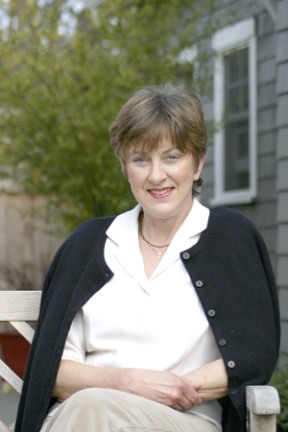
Barbara Denk has an eye for emotion.
Two new garden books, both featuring images by island photographer Barbara Denk, are as distinct as poppies and peonies.
“The Abundant Garden†(2005, Cool Springs Press) is a pastiche of nine Bainbridge Island gardens, while “A Garden Gallery,†(2005, Timber Press) is an incisive portrait of the quarter-acre Bainbridge garden of David Lewis and George Little.
Denk’s superb pictures support the two very different book projects, her first publications. Sustained by her positive outlook through the five years it took to go from concept to print, Denk says she was also helped by not understanding, to begin with, just how slim her chances were of bringing out a book of color photography.
“Ignorance is bliss,†she said, “because I had no idea how tough the competition was.â€
Denk was no “point-and-click†hobbyist in love with pretty flowers; she brought to the table a determination to do each garden justice and an eye honed before she ever picked up a camera through years of designing houses.
Although Denk had photographed a trip to Egypt in 1994, she didn’t shoot again until the late 1990s, after her son left home. An activity taken up to ward off “empty nest syndrome†soon became a full-time commitment.
“I took (the camera) out of my closet and literally said, ‘I’m going to do a book on garden art.’ It was that simple,†Denk said.
Learning curve
While the decision was straightforward, the execution would take nearly five years.
“That first year was a learning curve for me,†she said, “deciding what film to use to get the richest blues and greens, what filter to use, what lenses.â€
Denk found her way to island gardens through networking and through chance. Her foray into Fort Ward resident Liz Robinson’s garden happened when Denk stopped to admire the house, and stayed to shoot the plants.
“Each of these gardens is so different,†she said. “Liz’s is a rose garden above all. It grew over the sidewalks. It was so abundant.â€
Other connections followed, and Denk found herself immersed in a world of passionate plantsmen and women. She made thousands of slides she sent to Kodak to be developed into prints.
“The first year I thought, ‘oh these are wonderful.’ But practically all those slides got thrown away later,†she said.
She learned technique, but she also learned that, for her, the key element to taking a successful garden photograph was emotion.
She spent many hours absorbing the gardens’ atmosphere and photographing in them, alone.
Her sensitivity to the spirit of each is what makes the pictures more than pretty.
As she grasped the complexity of the gardens, Denk’s appreciation of their creators deepened also.
“I started realizing these gardeners are incredible,†she said, “because you simply cannot create that kind of beauty, that kind of emotion without having an incredible spirit. I just don’t think so.â€
The photographs she’d taken of George Little and David Lewis’ garden for “The Abundant Garden†were rerouted, with her permission, to “A Garden Gallery†after the pair showed her slides to a visiting editor.
It was hard to put what, in the case of “The Abundant Garden,†had been a five-year dream, into others’ hands after her part in it was done, Denk admits.
The two books turned in very different directions.
Little and Lewis swiftly abandoned the notion of writing collaboratively and made the decision to let their individual voices emerge.
One may feel invited into their distinctive garden where sculpture, architectural fragments, oversize concrete plant forms and a jungle of plantings meet. In sometimes discursive, often informative, but above all self-revelatory prose, readers are drawn as close to the heart of a garden as those without spade in hand are likely to get.
Who could resist an aside on ancient gardens from classics scholar Lewis? Or Little’s paean to the chutzpah of “Brave Plantings,†oversized foliage the pair helped pioneer?
The book design is exquisite, from the smaller-than-your-average-coffee table size subtly mirroring the intimate scale of the Little and Lewis garden, to the light green boxes that are the visual envelope for the book’s asides, and the rich representation of the garden in Denk’s photography.
“The Abundant Garden†is a different sort of project, a collection of nine gardens, harder to unify with a single vision.
Seattle author Debra Prinzing tries, but in the push to define overarching concepts, she’s sometimes in danger of treading on the greenery.
“The Abundant Garden†is a gorgeous visual record of unforgettable gardens – and a tribute to Denk’s persistence.
“When a person has a dream, there’s nothing that can stop them,†Denk said. “Whatever that creative mind has going on in there, whether it’s an art form or physics, whatever it is.
“If I’d had negative thoughts, I wouldn’t be holding these two books.â€