Iconography, one mold at a time
Published 11:00 am Wednesday, November 24, 2004
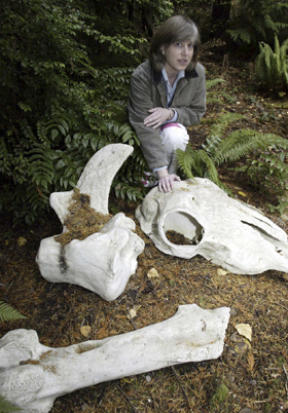
Robin Krutch casts strange, imaginative visages in stone.
Visitors to sculptor Robyn Krutch’s north island studio this week might be unnerved to find the artworks staring back.
On every available flat surface – the floor as well as studio tables – haut-relief cement renditions of the human face, as well as the visages of hogs, hens and other critters, confront the viewer.
The still-curing sculptures represent a last-minute flurry of industry as Krutch readies a body of work for the upcoming Winter Studio Tour, rising at 5 a.m. to pour cement into silicone molds made from clay originals.
“I pour and then (the molds) sit for 12 hours,” Krutch said. “Then it takes me a couple of hours to unmold. Then I make another pour.”
Krutch adapts images from other cultures, including the kissing goldfish, the Chinese symbol for fidelity, and the ferocious-looking “foo dogs” that are the sacred temple dogs of Asia.
Or, she may slip fairy tale and folk lore themes into pieces like “After the Kiss,” featuring an androgynous visage embraced by a smiling frog. Krutch develops such themes as much to keep herself interested as to engage patrons.
“I do try to do 10 new designs for each studio tour so it’s always fresh,” Krutch said.
Krutch balances the need to make multiples to sell with the compulsion to do the one-of-a-kind, experimental works that engage an artist.
Unique pieces include oversize replicas of animal skulls and other bones Krutch hand-formed in concrete over an armature of metal lathe. The special concrete that allows for hand-building forms has a quick cure rate that is accelerated by even the heat from her hand.
“I have to work fast, because in about a minute it starts to crack,” she said. “But I also have to plan, because the nature of the material is that it will droop.”
Some would find the need to make instant decisions daunting, but Krutch says she likes the challenge.
“I work best under pressure,” she said.
Krutch also worked fast when it came to career development, once she made the decision to turn to art.
An islander’s islander, still living on the property where she was born, Krutch had worked her way up from clerk to paralegal for a Seattle firm. While the work was “a living, not a passion,” she liked doing the research – until she was assigned to an attorney with a penchant for overlooking facts that didn’t support the case.
Her own early attraction to art and her husband’s support made the choice to leave law in 1996 relatively easy. Krutch began taking classes, including an influential sculpture course at Seattle’s Pratt Fine Arts Center.
As she moved from papier mâché to plaster and concrete, Krutch swiftly developed a personal iconography, and soon began to show work.
“Ignorance has been a good thing,” she said. “I applied for things and got in. Had I had more information and more understanding of how hard it is, I probably wouldn’t have applied in the first place.”
If her career continues to evolve, Krutch hopes to turn her “bread-and-butter” work over to a production assistant and concentrate solely on unique designs.
The direction that tugs at her most recently is the lure of making public work, and her work has recently been juried into the prestigious Art Bank, the pool of artists making commissioned pieces for government buildings in Washington State.
“I would love to turn (making multiples) over to someone else someday and move on to doing just the one-of-a-kind things,” she said, “because that’s where the joy is.”