Natural Landscapes: ending pesticide pestilence
Published 8:00 pm Wednesday, April 23, 2003
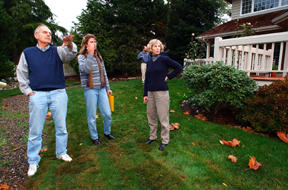
It was concern over the effects of synthetic pesticides – many of which work by disrupting growth hormones in their plant or animal target – on the human endocrine system that prompted Joan Gardiner to re-examine her use of chemicals.
After meeting with volunteers from the Natural Landscapes Project, she and her husband Tom requested a “material data safety sheet” from their lawncare company – only to find that their Wing Point home was being treated with harmful chemicals.
“It was the lawn equivalent of fast food,” Tom Gardiner said.
“The irony is that we saw people we know and respected who had used that company,” said Joan, “which is why we chose them.”
The Gardiners’ experience is typical, say Bobbie Morgan and Cara Cruickshank.
The founders of the Natural Landscapes Project – recently awarded $35,000 by the city to conduct pesticide and toxin reduction awareness on the island – say that while most homeowners are aware of the toxic effects of pesticides on wildlife, many aren’t aware that they are part of the problem.
“People just assume they can’t buy things that are harmful. These products are legal – but they have to wear moonsuits to dispose of them,” Cruickshank said. “It’s an issue both for wildlife, and for human health.
“We all live downstream.”
In addition to the well-publicized toxic effects of insecticides like diazinon on salmonids and other aquatic life, Cruickshank and Morgan cite studies linking extensive pesticide use and cancer rates in children, yet-unanswered questions about disruptive effects of synthetic chemicals on hormone levels in humans, and the long-term effects of accumulated toxins.
In one recent University of Washington study, Morgan said, “109 out of 110 children tested had pesticides in their urine. The one child who didn’t ate organic foods.”
It was their alarm over the evidence that prompted Cruickshank, a specialist in holistic health, and Morgan, a longtime environmental activist, to launch NLP last fall.
Modelling their efforts on a successful toxics education program in Bellingham, the pair designed a targeted information campaign to educate streamside homeowners about the effects of pesticides and herbicides, especially lawn and garden treatments, on the environment.
Their strategy: encourage rather than badger or shame homeowners to “get their lawns off drugs,” by coupling data about pesticides’ effects, with natural – and, they argue, more effective – solutions to weed and pest problems.
“We’re not the cops; we’re not a lobby group,” Cruickshank said. “We want to educate people.”
Trained in “green” gardening practices by Ann Lovejoy, volunteers called streamside homeowners and walked those interested through an onsite assessment of their gardening challenges – from crane flies and slugs to lawn weeds and blackberry thatch – and the non-toxic methods for addressing them.
“There really are natural solutions to every problem we’ve encountered,” Cruickshank said.
While the one-on-one approach might have seemed off-putting to some, Morgan says most homeowners they contacted were happy to listen to new ways of solving old problems.
“I was surprised at how much receptivity there was,” she said. “People really saw us as consultants and resources.”
To help homeowners translate information into behavior, NLP volunteers invited them to sign a “pledge” in which they select the environmentally friendly changes they will observe.
“Making a commitment in front of someone means you are two to three times more likely to follow through,” Cruickshank said.
“Our work is all about figuring out what causes change,” added NLP volunteer Van Calvez. “We want to make people aware of the magnitude of the problem, and get them past feeling guilty and empower them to do something.”
For the Gardiners, that’s meant switching to an organic lawn and garden service, which uses compost and biotic “soil soup” to tend to the lawn and perk up the roses.
It’s also meant turning to natural alternatives, like corn gluten, instead of the chemical weed killers recommended by friends.
“It’s amazing how fighting the mainstream is such a challenge,” Joan Gardiner said.
Cruickshank and Morgan intend for the Gardiners to be in good company. This year’s expanded project will target 750 homes, including 200 in the watershed feeding Eagle Harbor, currently listed on the state’s list of “impaired” water bodies.
Although their switch from chemicals has meant some additional up-front costs and a good deal of time spent in research, the Gardiners say they are looking forward to a healthier, lower-maintenance yard.
“So far we’re optimistic, but I don’t think we can see results quickly,” Joan said. “You just have to believe in what you are doing – because it all makes sense.
“I don’t want us to sound like born-again environmentalists…it’s just that when you believe in something, you jump in wholeheartedly.”
——-
The Natural Landscapes Project is conducting an all-day volunteer training, 8:30 a.m. to 5 p.m. April 24 at Bainbridge Gardens, with a follow-up session from 6:30-8:45 p.m. April 29.
Volunteers will learn about the toxicity of pesticides and natural garden care solutions, as well as methods for community outreach.
Information: 842-4815.