Some heroes you should meet: Author to discuss Nisei veteran documentary project, new book
Published 1:16 pm Monday, January 26, 2015
 People fight in wars for lots of reasons.
Some do it out of a sense of patriotism, or family tradition. Others do it simply because to be a soldier is their chosen occupation, or because they were drafted into service.
Some do it because they have something to prove, even if just to themselves, and still others harbor dramatic, romanticized visions of what the experience will be.
The second generation Japanese Americans who fought in World War II and Korea, the Nisei, fought for all these reasons, of course, but they did it in spite of the intolerable treatment levied against themselves and their families by the very government they fought and bled for.
They fought because they were Americans.
The story is a familiar one to Bainbridge Islanders, and a critical part of the community’s history:
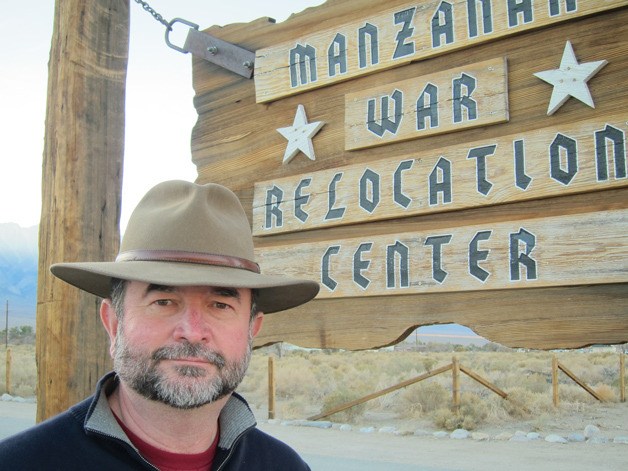
In the panic following the December 1941 Pearl Harbor attack, Japanese American citizens around the nation were prohibited from joining the U.S. armed forces and, along with their families — young and old, men and women — many faced forced incarceration in bleak concentration camps, including the Manzanar War Relocation Center.
It remains one of the most shameful chapters in our nation’s history.
It was from these camps that so many took up the fight for their country, for civil liberties and for the freedom of their families as well as for recognition of themselves as the full American citizens they always were.
San Francisco-based photographer Tom Graves has been photographing and interviewing veterans since 2001, including more than 100 Nisei veterans. He has collected their portraits and testimonies in his new book “Twice Heroes: America’s Nisei Veterans of WWII and Korea.” In it, the author shares the experiences of Japanese American veterans before, during and after World War II, true and personal stories of the human spirit overcoming obstacles of race, poverty and warfare.
The book contains 98 black-and-white portraits, each of a different Nisei veteran, along with their own words and memories. Featured veterans include the late Senator Daniel K. Inouye, Cabinet Secretary Norman Y. Mineta, the first Asian American governor George R. Ariyoshi, Medal of Honor recipients and dozens more brave men and women who fought for America.
From Graves’ website, “Among the many veterans Tom met and interviewed, the Nisei struck him as special. The government saw their military service as an experiment: Would these men be loyal? They were assigned to segregated combat units while 120,000 of their family members were locked in prison camps.”
“Many people I meet ask, ‘Who would fight for a country that so mistreated a people?’” Graves wrote. “The Nisei.”
“Their parents’ directive was simple: This is your country. America has been good to you. Die if you must, but don’t dishonor yourself, your family or your country,” he added. “The soldiers added three words of their own: ‘Go For Broke!’ These are the men and women I grew to know so well.”
Graves has more than 30 years of professional photography experience.
Born in Princeton, New Jersey, he was originally in business there and in New York City before moving to San Francisco in 1991.
He studied portraiture with Philippe Halsman, and taught for seven years at Parsons School of Design/The New School in New York. He has worked for clients including AT&T, Burlington Northern Santa Fe, Cisco Systems, IBM, Merrill Lynch, The New York Times, People and Time.
Photography has taken him to five continents and to all 50 states.
“My interest is in documenting the ordinary people who make history,” Graves said. “I am neither a professional historian, journalist nor veteran, something people find interesting. I am just a guy full of curiosity who asks a lot of questions.”
“I first learned about Manzanar in an Ansel Adams photography book,” the author explained. “As a Caucasian growing up on the East Coast, I did not understand then how that could have happened in the United States of America, and I still do not understand it. To this day most Americans do not know about the wartime internment of Japanese Americans. Those that do, know few details.”
As part of his larger overall “Heroes” series, Graves has interviewed and photographed more than 250 veterans of all ethnic backgrounds.
“Every single interview is significant, but the Japanese Americans’ story stands out as unique, and a part of American history that must be told,” he said. “The Nisei veterans are overlooked members of America’s ‘Greatest Generation.’”
Graves will share his work and his own experiences from interviewing veterans around the country in two separate presentations at 3 and 7 p.m. Thursday, Jan. 29, first at the Bainbridge Island Historical Museum (215 Ericksen Avenue NE), and then at Eagle Harbor Book Company (157 Winslow Way East).
Clarence Moriwaki, president of the Bainbridge Island Japanese American Exclusion Memorial Association, said that he was very impressed with Graves’ book and considered it “a beautiful presentation on every level.”
Moriwaki will introduce Graves prior to his presentation at the historical museum and talk specifically about the importance of the island memorial’s recent renaming.
“I’ve had it for about a month,” he said of the book. “It’s a pretty amazing piece of work.”
Graves and his work to spread knowledge about the Japanese American internment, Moriwaki explained, is crucial to the preservation of history that — as unbelievable as it may sound to Bainbridge Islanders — many Americans simply don’t know about.
“Even to this day when I travel people say ‘What is that?’” Moriwaki said of the memorial and the story it preserves. “It’s in our own backyard; it’s our own history.”
‘Twice Heroes’ visit
What: Author/photographer Tom Graves to discuss his new book “Twice Heroes: America’s Nisei Veterans of WWII and Korea.”
When: 3 and 7 p.m. on Thursday, Jan. 29.
Where: First, at the Bainbridge Island Historical Museum (215 Ericksen Avenue NE), and then at Eagle Harbor Book Company (157 Winslow Way East).
Admission: Admission to the museum presentation is $4 for adults ($10 for families) and $3 for students and seniors. Admission to Graves’ talk at EHBC is free; seating is limited.