
In death, a spiritual rebirth
Published 6:00 pm Wednesday, September 10, 2003
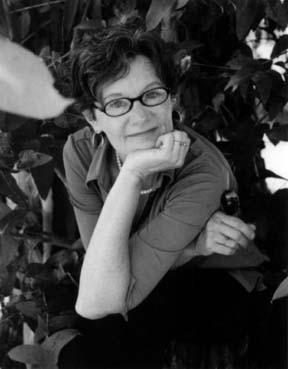
Her mother’s decline inspired new beliefs, and a new book.
A writer with Bainbridge roots returns to read a memoir laced with island references.
Joyce Thompson’s nonfiction work, “Sailing My Shoe to Timbuktu: A Writer’s Adventurous Search for Family, Spirit, and Love,” is at once a romance, a family saga and the record of a remarkable spiritual quest.
“I’d always been a fiction writer and a fiction writer tries to hide,” said Thompson, who has nine books to her credit. “But here, I was sorting out events in my own life.”
Thompson began to jot down her thoughts in April 2000, almost a year after her mother’s death.
The writer had been the primary caretaker of Anne Thompson, a pioneering attorney in the 1940s, as she descended into the last stages of Alzheimer’s.
Thompson was writing what she thought would be private musings. Writing without tailoring the manuscript to a readership, she produced a work of unusual candor, which friends urged her to publish.
The book delineates three themes that ultimately merge – Thompson’s coming to terms with a difficult mother; the dissolution of her own marriage and the advent of new love; and immersion in the Afro-Caribbean religion known as Santeria, or Lucumi.
Island time
The setting for much of the book is Bainbridge, where Thompson moved with her parents in 1954.
She attended Seattle’s Lakeside School and then earned a degree at Cornell University in Ithaca, N.Y., returning to Bainbridge in 1990.
With her husband and their two children, she moved into the cabin her parents had built at Pt. Yeomalt.
Thompson raised her family and wrote books, but the marriage foundered.
Then Thompson met Schuyler Ingle, like herself a Northwest native and a writer for the Seattle Weekly.
Through Schuyler, Thompson was introduced to Lucumi, a West African religion carried to the New World on slave ships. The practice features drumming, dance and song. Magic is part of the belief system, as well as trance states.
Although far from Thompson’s upbringing – her parents were rational humanists, she points out – the exotic religion was a good fit.
“The reason it made sense to me,” she said, “the reason I was available to it, was that all my religious impulses were already centered in the natural world.”
“In Lucumi, I encountered a full-blown spiritual technology that ratified my own experience.”
Thompson’s life as an artist tapping in to her unconscious also conditioned her to accept religion, she says.
The chapters of the book that speak to her mother’s decline into a final illness and the passages examining spirituality begin to draw closer as Thompson’s mother begins an uncharacteristic consideration of her own spiritual state.
“The doorway between the two worlds grows thin at the end of life, I think,” Thompson said.
In the death of her mother, Thompson found release from the family secrets that emerged in her mother’s last days, and release into her own new life.
Schuyler and Thompson moved to Oakland, where she is being initiated into the Lucumi priesthood, a year-long process the writer likens to a rebirth.
Publishing the book, she says, was a way of coming to terms with her own changing life, and the loss of her mother.
“That’s why I made the book public,” she said. “It was a way of keeping her close a little longer.”