He conquered the Arctic, and that’s no bull
Published 9:00 am Wednesday, August 24, 2005
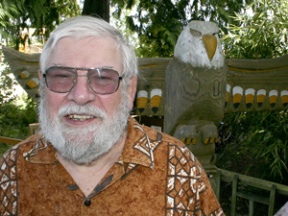
Bainbridge author Colin Bull has a lifetime’s worth of tales.
The thing about Colin Bull is, he tells a damn fine story.
Or two. Or 20.
His journey through life has been one adventure after another, a crazy quilt of people and places covering all corners of the world that delights him no end.
“I’m always having fun,†said Bull, 76, originally from Birmingham, England. “That’s what life is about.â€
He has made 20-plus sojourns to the polar regions – from a graduate student in geophysics at age 23, to a veteran on cruise ships decades later – and received medals from Queen Elizabeth and the Russian and American governments for his work in the polar regions.
His expeditions, coupled with his love for his family and affection for poetry, cooking and gardening, belie his serious former life as dean of the College of Mathematics and Physical Sciences at Ohio State University.
No stuffed shirt is he.
“Take your work very seriously,†Bull recounts the advice of an old friend, “but yourself not seriously at all.â€
Bull details a compelling, scientific and thoroughly entertaining account of one of the more colorful chapters of his life in “Innocents in the Arctic: The 1951 Spitsbergen Expedition.â€
On Sunday at Eagle Harbor Books (see box), he will share some of his group’s adventures and explain the serious work they did on a glaciated piece of land in the high Arctic.
Bull’s list of achievements is weighty.
A glaciologist with a Ph.D. in solid-state physics, he has published numerous papers in his far-reaching field and served on national and international committees galore.
Among many other scientific duties, he was the U.S. representative on and later chairman of the glaciological panel of the Scientific Committee on Antarctic Research, the international group that coordinates all the Antarctic research.
Many of his papers are archived in the Byrd Polar Research Center at Ohio State University in Columbus.
What lured him to Ohio State from New Zealand?
Bull and Gillian, his artist wife, arrived at the university in 1961 for a 15-month visiting faculty appointment, during which Bull helped establish the university’s Institute of Polar Studies (now the Byrd Polar Research Center).
They left 25 years later, when Bull took early retirement “to help the university shed its deadwood.â€
He gave up his post as dean because he had other things to do, he said, adding, “I wanted to write and sell books.â€
With that turn of events, Colin and Gillian – the sister of one of his Spitsbergen friends – had to decide where to live, so they made a list of criteria.
“Gillian wanted to be by the sea, where she had always lived with the exception of Columbus,†Bull said. “And it had to be near a major art and craft center. For me, I have to work with a major (Polar Science Center), and the University of Washington has it.
“And the ragweed pollen count has to be zero.â€
Home found
The Bulls, married since 1956, looked at a map of the United States and it all came down to one place: the Seattle area, which they had visited many times before.
They moved to Bainbridge in 1986, into a house they built off Sunrise Drive with a spectacular water view and a plot of hilly ground, which has become its own patchwork of flowers and vegetables.
Their warm, eclectic home is filled with carved furnishings, treasures from their numerous travels and Gillian Bull’s artwork.
One room off the entry contains floor-to-ceiling bookshelves brimming with polar books. Holding court is Slim, an elegant greyhound.
The garden is Bull’s “recent venture,†currently abloom with raspberries, potatoes, rhubarb, broad beans, scarlet runners, corn and brussels sprouts.
With gardening, he said, “you can put your mind in neutral and just allow yourself to think about anything you wish.â€
Many thoughts occupy Bull’s mind. There’ll be time for naps when he actually gets around to retiring, he said. This week, for instance, he has visiting grandchildren to dote over (Simon, 11, and Ellen, 14), interviews to grant and books to receive for Sunday’s speaking engagement.
In 1951, Bull and nine other University of Birmingham students put together a 12-week geological expedition to Spitsbergen, a nearly uninhabited, ice-covered island in the Svalbard Archipelago, north of mainland Norway.
The 23-year-old men set sail in a wooden World War II boat that was not exactly up to the task. They were inexperienced yet enthusiastic, a trait that served them well through miserable living conditions, beastly weather and a number of mistakes. Still they managed to conduct some serious work in an uncharted area and have a great adventure, thereby achieving their goals.
This collection of memoirs – taken from diaries, scientific field notes, correspondence and memories – details the poetry and the pain of arctic exploration, complete with maps and digitally restored photos of startling vistas and robust young explorers, who relied on a sense of humor and purpose to see them through.
“We stuck together through thick and thin and have met a dozen times in the last 50 years,†Bull said.
“When I was 10 years old, in September 1938 … one of the first books I read was ‘South With Scott,’ written by the second-in-command of (Robert) Scott’s expedition,†he said, pointing out the Spitsbergen expedition fulfilled his childhood dream of being an explorer.
It also set him on a fascinating course that has shaped the whole of his life.
Because of time constraints, Bull had to quit field work when he became dean at Ohio State, though he did all the planning for his students – many of whom achieved greatness of their own – and continued his glacial research. His interest in history, geology and minerals has never waned.
Bull tried to call the world’s attention to global warming in 1962, he said, but nobody was interested in it.
“Nobody was working on it. It met with resounding nothingness,†he said. It wasn’t until 1975 that “the Department of Energy told me to go off and measure the temperature in the ice to use as a baseline in the Antarctic. Now everybody believes in global warming except President Bush.
“I can’t devise a method by which to reverse the problem.â€
Three years ago, Bull snapped his Achilles tendon, which put an end to his gallivanting around the world. He can no longer accept guest lecture invitations issued by cruise lines because taking ships filled with people to the Antarctic requires that he speak and guide people ashore.
“The cruise ships are wonderful,†he said. “The people on them are good ambassadors. We are spending taxpayer money and people have a right to see what we’re doing.â€
Although Bull dislikes turning down these treks, he is philosophical about the matter.
“Think of all the other things that could have happened (to me),†he said.
Bull can still enthrall listeners with his tales of long ago and far away, told with a twinkle in his eyes and a hearty chuckle.
Every Thursday at 7 a.m., he holds court with the rest of “The Oatmeal Group.â€
This assemblage of up to 40 males – “and only males†– meets in the basement of the Eagle Harbor Congregational Church.
They represent varied interests and discuss myriad topics. For instance, an upcoming meeting will tackle the subject of freedom.
Bull makes no apologies for associating with a group that excludes women. He has resigned from or refused to join prestigious academic groups that at the time barred women from joining and, he adds, “I have liberated a whole continent for women.â€
Translated, that means he worked long and hard over the course of 10 years to gain permission for women to join Antarctic field parties.
“In the end, in 1968-69, the U.S. Navy relented and allowed me to send a four-woman team – as long as they all had Antarctic experience!†he writes. “That was a real challenge, but we succeeded!â€
* * * * *
Arctic explorer
Bainbridge author Colin Bull will discuss “Innocents in the Arctic: The 1951 Spitsbergen Expedition†($34.95, University of Alaska Press) at 3 p.m. Aug. 28, at Eagle Harbor Book Co.
The event is free and open to the public and will include a question-and-answer session and a book signing. For more information, call 842-5332.