
Acupuncture patients get the point
Published 4:00 pm Wednesday, July 27, 2005
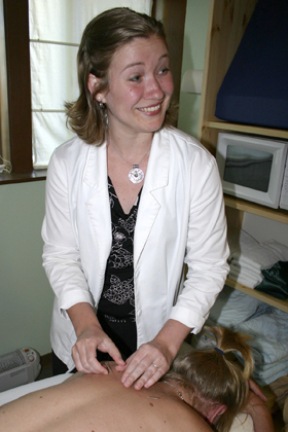
Treatments ease pain, restore health, vitality.
When Halin Zindell looks at a painful shoulder, it’s never the same cure twice.
“In Chinese texts, there is a lot about an acupuncturist being an artist, seeing patterns and bringing them into balance,†said Zindell, a licensed acupuncturist on Ericksen Avenue, is one of several island practitioners of the ancient Chinese method of care developed 3,000 to 5,000 years ago.
Acupuncture looks at the life energy in a person, called qi (pronounced “cheeâ€) in Chinese, the vitality in a person.
Treatments can relieve pain, strengthen the immune system and balance and harmonize the body’s organs, which are represented by the five elements: wood, fire, water, earth and metal.
A person with too much “water†– associated with the kidneys and bladder – may be emotionally overly sensitive. A person with too much “earth†– the spleen and stomach – tends to worry or be more pensive, and may internalize emotions too much. Excess worry can lead to headaches, tension in the neck, shoulder and difficulty concentrating.
“There’s always a physical and spiritual aspect to things not feeling right,†Zindell said.
To sort out imbalances, she inserts hair-thin needles into “meridians,†points in the body through which qi is said to flow. Metaphorically, if meridians were traffic patterns, a traffic jam of qi causes pain; putting in the needle is like a valve releasing the jam, Zindell said.
While in middle school, she lived with her family in Hong Kong and she was struck by how tactile a Chinese doctor’s examination is. The doctor would focus on more than the ailment, gauging the patient by feeling the tongue and skin and smelling.
In her first session with a patient, Zindell likes to begin with reflexology, a massaging of different points pm the patient’s feet and calves, which correspond to different organs.
“It gives me the opportunity to be in touch – literally – with people and talk with them,†Zindell said. “The work is what happens between the acupuncturist and the patient, talking, making sure you have a connection. The needles are just a tool.â€
For a woman with shoulder pain from too much gardening, Zindell used needles in the knee, which “talks†to the shoulder.
For a man whose shoulder was still bothered from an old sports injury, Zindell chose “cupping,†in which the lip of a glass jar is placed over the injury to pull the layers of tissue above the sore muscle and allow better circulation in the tissue below.
By contrast, Western medicine may just prescribe a muscle relaxant or anti-inflammatory in either case.
After the needles are inserted, the patient rests for 15 to 30 minutes. Zindell said the quiet time should feel comfortable and relaxing, as “that’s when the body restores itself.â€
“I use needles to bring attention to certain parts of the body. As points are helping the body with the problem, (the patients) are also getting in touch with their body,†she said. “The more acupuncture you do, the more you clue into the feeling and stimulation from the needles.
“Some people describe feeling a wave over them, that is, they feel the points link up.â€
Zindell sees acupuncture not only as a way to treat maladies, but also as preventative medicine, a time to “check in†with the acupuncturist to see that everything feels right.
Does any part of the body feel tight? Are you getting good sleep? Do you have good energy and appetite?
Zindell says insurance companies are required by Washington state to cover health care provided by all licensed practicioners in the state. Most policies will cover 12 sessions of acupuncture a year; patients can do a self-referral for a specific complaint or come in if they just feel “off.â€
Acupuncture is also used as a complementary approach to Western medicine and physical therapy. Seattle Children’s Hospital keeps an acupuncturist on staff.
Acupuncture was “peasant medicine†in China,†Zindell said, and cheaper than the doctor. By staying well, a person was less likely to become sick and have to go see a doctor.
“If I could run the practice on wellness and health,†she said, “I’d love it.â€