
Bainbridge Organic Distillers uncorks new Yama-inspired whiskey
Published 10:54 am Friday, April 8, 2016
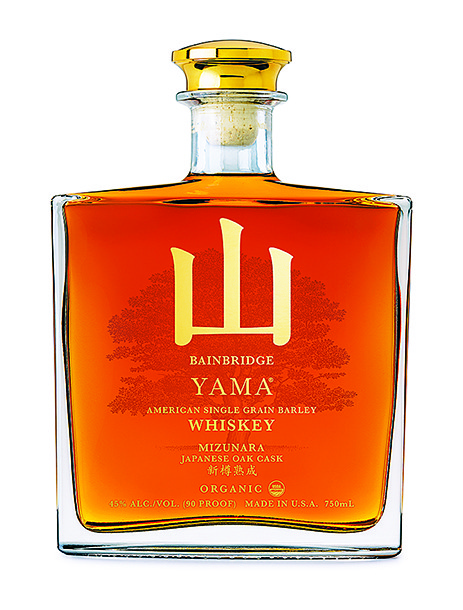
Like all the best spy movies, the story of Bainbridge Organic Distillers’ Yama Mizunara Cask Single Grain Whiskey is full of international intrigue, secrecy, diplomacy, adventure and risk — and it ends with a well-made cocktail.
The Bainbridge-based distillery will mark the debut of its latest — limited edition — spirit, the first-ever non-Japanese whiskey in the world to be aged exclusively in hand-crafted barrels made from rare Mizunara oak harvested from the island of Hokkaido, with sales set to begin Sunday, April 10.
The whiskey — the world’s first non-Japanese whiskey aged exclusively in virgin Japanese Mizunara casks — takes its name from the village of Yama, founded on Bainbridge Island in 1883 by Japanese immigrants coming to America to start new lives. Thriving until 1922, when the Blakely Mill closure forced Yama residents to look elsewhere for livelihoods, the site is reportedly now the last undisturbed first-generation Japanese village in the U.S. not destroyed by development.
The process from dream to drink was not an easy one, and has been more than six years in the making, said Bainbridge Organic Distillers founder and master distiller Keith Barnes.
“When I heard that efforts were being organized to preserve the Yama site, its artifacts and history, I wanted to take part,” Barnes added. “Making a very special whiskey using rare Japanese Mizunara oak that follows the same path to Bainbridge Island from Japan made by those first Japanese immigrants seemed fitting.”
Fitting, that is, if they could manage to pull it off at all.
“Obtaining stocks of this rare and sought-after wood and bringing this special whiskey to fruition, has taken more than six years and the efforts of several people both here in America and in Japan,” said Barnes. “It has been an effort fueled by friendship, passion, determination and an unbelievable amount of hard work by all those involved. But once we stood back to look at the accomplishment, and taste the whiskey, it’s been worth every effort we’ve made.”
Barnes described the finished liquor as having, “bright aromatics of mango, vanilla, toasted sandalwood, tropical flowers, marzipan and star anise. Flavors open on nutmeg and clove, pear and toasty wood notes, settling out to honeyed vanilla and toasted marshmallow. Finish is warm and lingering with fading spice and a pleasant oak grip.”
It took a lot of effort to get the new whiskey into production. Even just finding the right wood, Barnes said, was looking impossible at first.
Failing to find anyone in Japan who could acquire Mizunara oak, Barnes said the project was all but abandoned for a time. Then a personal acquaintance of his reached out to relatives in Japan.
Relatives, it seemed, with many friends. Calls were placed. Introductions were made. This guy knew a guy who put them in touch with a friend who knew somebody who might be able to help. Then came the Herculean task of shipping the wood from Asia, maintaining its unprocessed characteristics and still abiding by America’s environmental requirements. And, of course, even with a small stock of the rare wood finally purchased and delivered, Barnes and his crew had no idea if the end product would be any good — or if they would have an end product at all.
“It’s been a long process,” he laughed. “And one that we didn’t know if it would eventually be successful.”
Even under the best of conditions, it seems Mizunara oak is rather finicky. It’s very porous, which results in frequent leaks and a high percentage of evaporation when made into barrels. The wood is also brittle, making fashioning it into barrels at all quite a chore. In fact, even Japanese whiskey makers have gotten away from using the Mizunara wood regularly anymore, Barnes said.
“Not only do most of the barrel makers not work in Mizunara,” he said, “there’s not a lot of whiskey barrel makers in Japan anymore and most of them have consolidated and most of them are either affiliated with or under the influence of the big Japanese whiskey makers.”
Barnes and his crew didn’t know for sure if all the effort would result in anything worthwhile for another two years when, at the first tasting of their new whiskey, things were shaping up nicely.
“There’s really no notes available on ‘What does whiskey taste like when it’s aged in virgin Mizunara oak?’” he said. “Nobody knows. I mean, if you worked at Yamazaki or Suntory, you worked at a big Japanese whiskey company, you would have a really, really great idea. You would know the ins and outs of Mizunara because they’re the only ones who use it. But even then, they use it so sparingly it’s not like a regular everyday thing for them either.”
Having worked in the spirits industry for three decades, Barnes said that whiskey in particular has an unequaled appeal to American drinkers.
“They’re looking for something that’s different,” he said. “I think they’re looking for something that’s genuine.
“If you can build something, or create something that is genuine and authentic and you really have a reason for doing it, then people will look it up.”
The distillery — the third independent distillery ever in Washington — is located at 9727 Coppertop Loop N.E., Ste. 101.
Visit www.bainbridgedistillers.com for more info.
The initial launch of the Bainbridge Yama Mizunara Cask Single Grain Whiskey will consist of 200 bottles.
The cost is $495 a bottle, and the profits from the sale of Yama Mizunara Cask Single Grain Whiskey will support the ongoing efforts to preserve the unique Yama historic site for the study and enrichment of generations to come.


Best of Bainbridge
