
Black lives still don’t matter enough to too many people
Published 1:30 am Friday, June 2, 2023
My best friend recently came to my house for a long overdue reunion. Adult schedules and the demands of parenthood being what they are, it had taken UN-level negotiations to get our calendars to match.
As we caught up, it wasn’t long before our teenage daughters, who sat politely with us for as long as they could stand it, announced they were grabbing coffee at the cafe up the street.
“Be careful,” my friend told his daughter. “It’ll be fine,” my friend’s daughter shot back without missing a beat. “I’ll be with a white girl.” I glanced across the table at my friend. He smiled back and offered a philosophical shrug. “She doesn’t miss a thing,” he said.
Our daughters are separated by about two years — mine is the older. The age gap made a bigger difference when they were in elementary school and our families lived next door to each other.
A decade later, time and experience have closed the gap between our daughters, children no longer, who are both young women making their own mark on the world. But there’s one gap that will never close between our two children. Whatever the calculations my daughter makes about her safety when she leaves the house, she’ll never have to worry about going someplace because of the color of her skin.
Jordan Neely wasn’t so lucky.
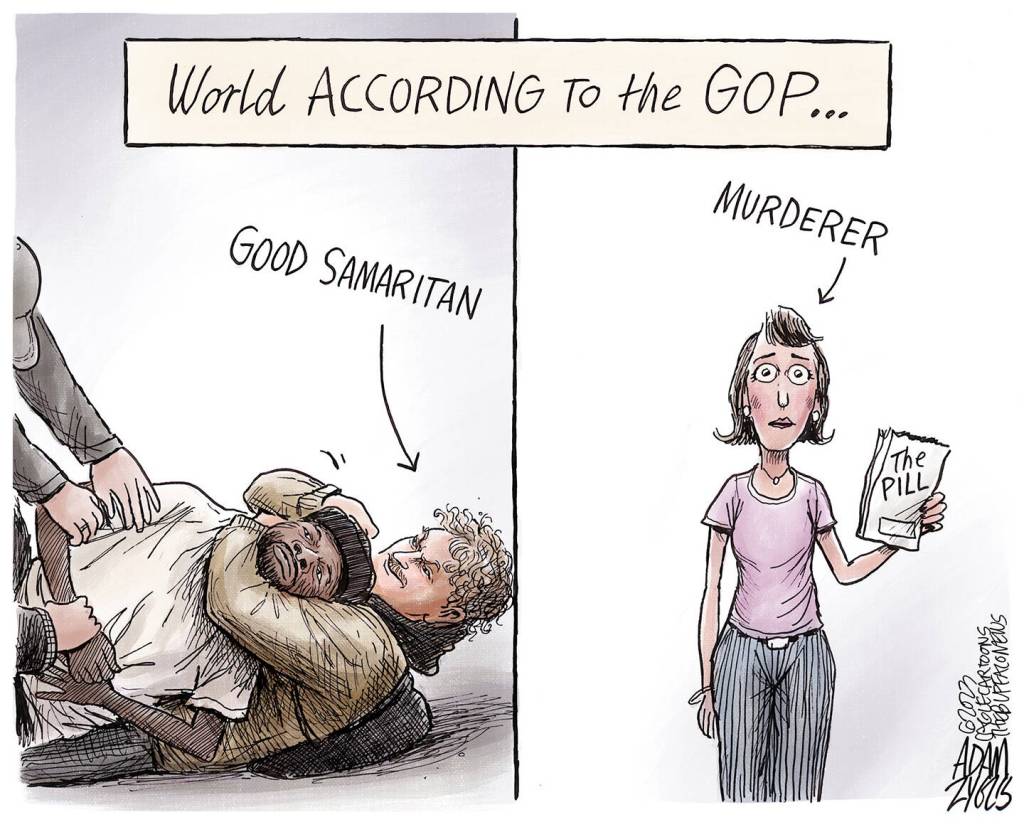
Neely, you’ll remember, was the New York City street performer who died after a 24-year-old, ex-Marine put him in a fatal chokehold on a subway train.
The marine, Daniel Penny, has been charged with second-degree manslaughter. Penny has said his decision to subdue Neely “had nothing to do with race,” and that he has no regrets.
The key thing to remember here is that Neely, who was visibly distraught and shouting at passengers, apparently never made a move to physically harm anyone, published reports indicate.
Penny allegedly acted because of the potential threat he believed that Neely, who was Black, presented — not because he posed an actual threat.
“I judge a person based on their character. I’m not a white supremacist,” Penny told the New York Post. “I mean, it’s, it’s a little bit comical. Everybody who’s ever met me can tell you, I love all people, I love all cultures.”
There’s been widespread agreement that Neely’s death was an “unnecessary tragedy that underscored the city’s inadequate policies toward its most vulnerable and marginalized residents,” the Times reported.
I’ll take Penny at his word that race had nothing to do with his decision. But as anyone who has ever lived in, and ridden mass transit, in any major city can tell you, such situations are far too common. And when they happen, you put up with them and, if you can, offer to help.
If things get really bad, there’s always the option of moving to another car, or calling transit police. Extrajudicial killings never enter the calculus.
And while Penny is not being charged with a hate crime, it’s still difficult to unravel issues of race and class from Neely’s death.
Would bystanders have intervened if Neely had been white? Would Penny even felt it necessary to allegedly use what ended up being deadly force on Neely had he been white? Would Neely have more easily accessed the services he needed had he been white?
Without being there, it’s difficult to say with any degree of certainty.
But as the deaths and grave injury of too many Black Americans who posed no threat mount up, the fact is such tragedies are easily avoidable.
Even Penny’s assertion that he loves “all people,” skates uncomfortably close to the inevitable “all lives matter.” Black Americans quite reasonably ask for the same rights and protections the rest of us take for granted.
There should never be a world where a 16-year-old Black girl has to tell her father she’ll be safe getting coffee because she’s going with a white girl. Or one where an unarmed Black man is choked to death on the subway instead of getting the help he so clearly needed.
The Rev. Al Sharpton said as much during Neely’s funeral services. “Jordan was screaming for help. We keep criminalizing people with mental illness,” Sharpton said, according to the New York Times.
We can, and must, keep saying that Black Lives Matter — as loudly and as often as we can. But after all, we’ve learned these last few years, they still don’t matter enough to too many.
Copyright 2023 John L. Micek, distributed exclusively by Cagle Cartoons newspaper syndicate. He is an award-winning political journalist. Email him at jmicek@penncapital-star.com


Best of Bainbridge