
Harrison Bainbridge: ‘A new way of delivering care’ | BALANCE
Published 2:28 pm Thursday, February 19, 2015
 Editor’s note: This article originally appeared in Balance, the 2015 Sound Fitness & Health Guide.
For its new center on Bainbridge, Harrison Medical Center has done away with one of the most disheartening aspects of a visit to the doctor’s: the waiting room.
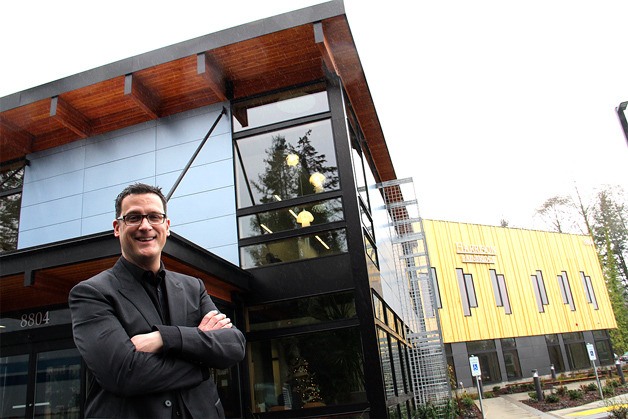
Harrison Medical Center opened its new two-story, 17,800-square-foot medical building on Bainbridge last month. The $11 million facility offers around-the-clock urgent care, plus primary care, specialty care, expanded imaging and lab services and other outpatient services.
Mei-lin Gonzales of Harrison’s Bainbridge facility said the new location has been a long time coming.
Gonzales, who grew up on Bainbridge, said Harrison has been thinking about an expansion to the island for a decade or so.
“We’ve needed access to health care for a long, long time,” she said.
The Bainbridge facility will have a 24/7 staff that totals approximately 50 employees, and Harrison expects to see roughly 10,000 urgent care patients and 5,000 primary care visitors in its first year.
“That’s our projection based on the other (Harrison) locations and the community,” Gonzales said.
The projection was made based on the nonprofit medical center’s other locations; Poulsbo, Silverdale, Bremerton, Port Orchard, Belfair and Forks.
From outside in, the Harrison Bainbridge boasts the latest in construction and design. Built by Tim Ryan Construction, it was designed by Coates Design Architects.
“This is such an important project and contribution to the community, so I’m super excited to be involved with it,” architect Matthew Coates said.
He said the location, at 8804 Madison Ave. North, was a great choice not only for its visibility next to Highway 305, but its location near the Bainbridge Island Fire Department’s Station 21, which is used for medivac flights.
“Harrison was looking for a site, and this one is just so perfect because it’s very strategically located, with its adjacency to the helipad and access to the highway,” Coates said.
The outside of the building mimics its fir-tree setting, with vertical wood planks of varying depths and widths.
“When I first came to the site and I saw all of these beautiful trees in the background, I sort of wanted the building to echo that in the background,” he said.
Wood elements highlight the exterior of the building, and the Accoya timber, a brand that is sustainably grown and harvested, is unique and more often found in European construction projects.
“It’s actually a different type of preserved wood. Most pressure-treated wood, for example, uses heavy metals. So it’s really toxic. It’s actually not very healthy for people or the environment,” Coates said.
Accoya wood is pressure treated in a process that Coates likened to pickling.
“Because of the way it’s preserved, it will last a long time with low maintenance,” he noted.
New concepts continue on the inside of Harrison Bainbridge. Gone is the usual expansive waiting room. Instead, think “pause” and “pods.”
After a quick stop at the front reception area, visitors will make their way further into the building to a “pause” area that will be right outside their room.
“So whether you’re here for urgent care, or clinic, or lab or imaging, you check in right here,” Gonzales said of the front reception area. “And as soon as you’re checked in — which is a fairly quick process — they will take you or send you to a specific pause area.
“It’s a new way of delivering healthcare where patients and visitors.”
Coates said the idea is to create a calming, peaceful environment. Materials that are reminiscent of nature and of natural materials were incorporated into the construction.
“Usually when people are coming here, they are not feeling well, for one reason or another,” Coates said, adding that the entryway and pause areas will ease the transition into the rest of a visitor’s medical care. “It’s intended to be a comforting experience.”
As a patient moves back to be seen for urgent care, for example, they approach the urgent care “pod,” where medical providers share a large central hub area filled with computers and equipment that is surrounded by exam rooms for patients.
Patients enter through the pause areas, then into their exam room, while practitioners access the patient’s room through the central core area, the hub.
“What we would traditionally call a waiting area is a pause area, and they call it that because their care started back there, where they registered and checked in, and then they are going to pause for a short amount of time here before being roomed,” Gonzales explained.
“Each (patient) room is connected to the hub, and all of the care providers are working from within the hub,” she said. “It increases the level of care and supports a team approach.”
Urgent care will handle everything from broken bones to coughs and colds, while specialty physicians at Harrison Bainbridge will offer services ranging from cardiology to gastroenterology, orthopedics, general surgery and urology. Specialty care is available on the second floor. There are a total of 13 clinic rooms; six for specialty care and seven for primary care.
Coates said he was pleased with the project and the partnership between Harrison, which is affiliated with CHI Franciscan Health, the construction team and the designers.
“My passion is really doing projects that benefit the community. And this is clearly another one that really is going to help the community and I think really raise the quality of life here,” he said.