UPDATE | Bad design, blown fuses caused Tacoma blackout
Published 7:44 am Saturday, November 15, 2014
The MV Tacoma went dead in the water off Bainbridge Island in late July because of a voltage surge that fried two fuses after a breaker was opened for the ferry’s Generator 4 as the vessel approached the Bainbridge dock, Washington State Ferry officials said Wednesday.
“We have found the problem, and we have identified a fix for it,” said Lynne Griffith, Assistant Secretary for the state Ferries Division.
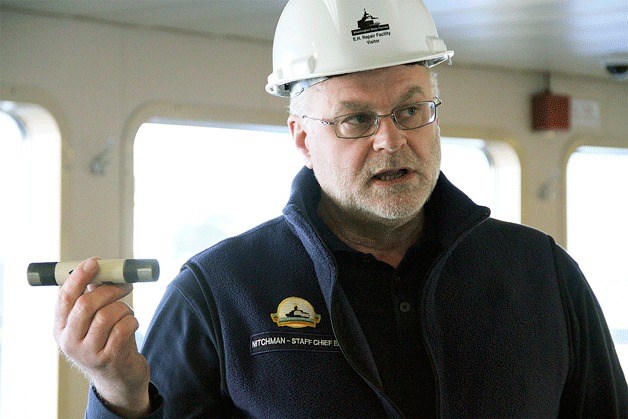
It was a never-seen-before problem, said Mark Nitchman, the staff chief engineer of the Tacoma.
It was the first time in the ferry’s 17-year history that such a surge has been seen, Nitchman said.
The Tacoma will be out of service until spring, officials said.
Officials estimate that the repairs to the vessel and its sister ferries will cost $1.8 million.
The Tacoma went dead in the water with more than 400 passengers aboard on the afternoon of Tuesday, July 29 after departing the Seattle terminal for the 12:20 p.m. sailing.
After the ferry lost power, the ship’s crew dropped anchor — the first time in 30 years for a Washington state ferry — on the approach to Bainbridge to prevent the vessel from being beached by the current.
State ferry officials held a press conference aboard the Tacoma at the ferry system’s Eagle Harbor shipyard to detail the results of the investigation into the ferry’s failure.
Officials said a flaw in the ship’s design led to the power loss.
A protective device in the circuit breaker control failed, Griffith said, which led to a chain of events that knocked out the ship’s power.
“This was not caused by the way we operate the vessel, nor was it related to any of our maintenance practices,” she said.
The technology that would have identified the problem didn’t exist at the time the ship was built in 1997, she said.
A minor design modification will be needed on the Tacoma and its sister ships in the Jumbo Mark II Class to include additional redundancies, Griffith said, so the problem doesn’t happen again.
The repair plan for the 202-car-capacity Tacoma has been submitted to the Coast Guard, which has to approve the plan before all of the repairs can get underway.
Nitchman said the damage from an “arc flash” event was isolated by the failure of the surge protectors. The meltdown destroyed the 3,000-kilowatt generator power supply cables attached to switchboard.
It was over in 2 seconds, he added.
“It did a lot of damage,” Nitchman said, including melting metal components in the switchboard.
It was a long, complex process to find out what exactly happened when the ship lost power, and involved rebuilding and reexamine information in the ship’s data recorders from events that happened milliseconds apart.
“It’s like going through a flight data recorder that an aircraft would have. You have to be very meticulous and make sure you’re on the right path,” Nitchman said. “There are multiple things that can cause an electrical event to take place.”
According to an analysis done by Siemans on the ferry blackout, the Tacoma’s Generator 4 was put online as the ferry was approaching the Seattle dock on July 29 and taken offline after the ferry docked.
When the generator was taken offline, a voltage surge occurred after the circuit breaker was opened that connected Generator 4 to the rest of the system.
The ensuring jump in power damaged all three surge limiters and two fuses in Generator 4.
Thirty minutes later, when the Tacoma was nearing Bainbridge, Generator 4 was put back on line but the blown fuses caused a severe voltage mismatch between the generator and the rest of the system.
There was no alarm that sounded in the engine room, however.
“Anything that took place at the dock when it landed in Seattle was unknown to the crew until they were preparing that generator for service when there were headed into Bainbridge Island,” Nitchman added.
Nitchman said the ferry system’s practice of running on two engines — and shutting off a third to save fuel — and the repeated off-and-on shutting of the generators’ circuit breakers was not a factor.
“The vessels run just fine on two engines. I calculated out that we had done this circuit breaker cycling 66,000 times before this casualty occurred,” he said.
The circuit breaker involved in the blackout had been operated 8,000 times previously but has a 30,000-cycle life.
“It wasn’t even a third of the way through its life cycle,” Nitchman said.
The circuit breaker itself that was closed, which is designed to be used in steel mills under very hot conditions, and up to 10,000 cycles a year, was not the cause.
“We don’t do anything to really stress these circuit breakers at all,” he said.
Griffith said that while the ferry system does have insurance, but the coverage would not kick in and cover the costs of the repairs.
“We do have insurance, but the deductible is $3.6 million,” she said.
“This won’t be paid by insurance.”
It’s also not likely that the state will be able to seek compensation from the shipbuilder, she added.
“We’re 17 years after construction of these vessels. Fleet defects that far out are not likely to be recoverable. But we’re going to look at every angle that we can, in terms of whether there was any kind of contribution to this,” Griffith said.