BACK ON THE BIG SCREEN: Film festival offers up a bevy of island talent both behind and in front of the camera
Published 7:43 am Friday, November 14, 2014
Some of the films in this year’s Celluloid Bainbridge Film Festival will take you to the future, others to the past, but they are all well worth the trip.
This year’s festival marks the event’s 16th anniversary and features a diverse lineup of local talent both in front of and behind the camera.
Also unique this year are the three films screening Sunday afternoon on the topic of the Japanese American Exclusion during World War II, undoubtedly a pivotal moment in the island’s history.
Following the simple guideline that works must have been filmed on Bainbridge or feature a past or present islander in the cast, crew or production, the goal of the three-day festival and its featured films is to bring the Bainbridge community together to learn about and celebrate local filmmakers.
Twenty-eight films were ultimately chosen for the program this year, bringing to the big screen works from aspiring students, working professionals and more established filmmakers.
The films run the gamut from serious documentary efforts to mind-bending futuristic westerns.
In Matt Smith’s autobiographical tale “My Last Year with the Nuns,” the renowned storyteller spins a wild and surprising yarn of growing up in 1960s America. Simultaneously categorized as a comedy, avant-garde, mockumentary, dramedy, and period/historical piece, this unique film seeks to explain why eighth grade was actually the best year of Smith’s life.
Another local writer with a film in the festival is Matt K. Turner, creator of “Family Weekend.” This movie centers on a 16-year-old competitive rope skipper who takes matters into her own hands to bring her parents — played by Kristin Chenoweth and Matthew Modine — back to “normal.”
After receiving accolades at screenings in Malaysia, Australia, Myanmar, Korea, China and New York City, writer Hector Carosso will return to Bainbridge Island to show “Kayan Beauties.” This film tells the story of three Kayan women who travel from their remote village to sell handicrafts in a distant city in Myanmar. They are accompanied by a Kayan girl, who has just had the tribe’s decorative, heavy brass coil rings placed around her neck. In the city, the girl is kidnapped by human traffickers. Far from home and out of their element, the Kayan women desperately search for the girl.
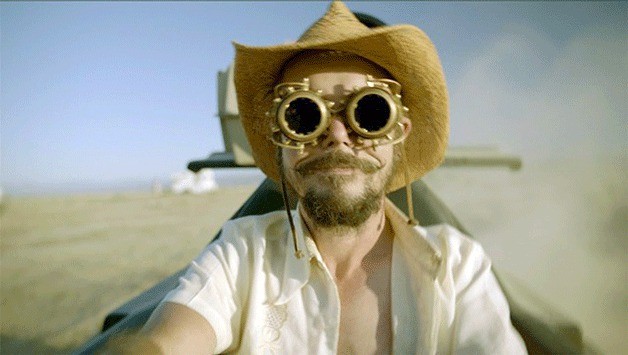
The multi-talented Robert Scott Crane will also return to the island and bring with him from Los Angeles his newest film “Curio Shop,” an award-winning post apocalyptic acid western directed by two-time Emmy Award-winning Eric S. Anderson and shot by the Academy and Emmy Award-winning director of photography David Stump.
The historical highlight of the festival will be Sunday afternoon when four films on the topic of the Japanese American Exclusion during World War II will be shown with a discussion panel featuring the voices and stories from invited guests from the Bainbridge Island Japanese American Community.
In Lois Shelton’s film “After Silence: Civil Rights and the Japanese American Experience,” Frank Kitamoto, who spent 3 1/2 years of his childhood in a United States internment camp during World War II, and five students from Bainbridge Island High School develop archival photographic prints in the high school darkroom and discuss the need to safeguard the constitutional rights of those living in America.
“Only What They Could Carry” is a Brenda Berry film viewing the exclusion topic through the lens of a delegation of Bainbridge Islanders who journeyed to the former Manzanar concentration camp. Several current island educators and community leaders accompanied former incarcerated islanders to the High Sierra desert of California on the 70th anniversary of their forced removal and relocation.
“The Manzanar Fishing Club,” by Cory Shiozaki, is about a small group of Japanese Americans incarcerated at Manzanar who sought to maintain a semblance of personal freedom by sneaking outside the barbed wire and machine gun studded towers to catch fresh fish in nearby streams, then return to camp without ever being discovered by guards or camp officials.
Lucy Ostrander and Don Sellers’ “Fumiko Hayashida: The Woman Behind the Symbol” celebrates the life and legacy of the late Fumiko Nishinaka Hayashida, who was the oldest living survivor of the first group of Japanese Americans who were taken to camps from Bainbridge at the very start of World War II. The film is both a historical portrait of Hayashida, her family and the Bainbridge Island Japanese American community in the decades before the war, as well as a contemporary story which follows then 97-year old “Fumi” and her daughter Natalie as they return to the site of the former Minidoka camp.
Films will be screened at both Bainbridge Cinemas and the Lynwood Theatre throughout Saturday and Sunday. Admission is free but seating is limited.
Visit Celluloidbainbridge.org for a complete screening schedule.
On Friday there will be a “Meet the Filmmakers” reception at the Bainbridge Island Museum of Art. Also during the evening reception, guests will be privy to a special screening of “The EDGE at the Movies,” celebrating the best of the EDGE Improv.
Tickets to the reception are $75 per person. To purchase, visit Celluloidbainbridge.org or call 206-842-7901.