Science camp gets visitor from out of this world
Published 11:25 am Friday, July 27, 2012
Summer is known as a time for students to break free from school, but some island students opted to spend one week learning, and playing with, science.
At the STEM summer camp, students get a week full of the four STEM fields — science, technology, engineering and math.
“At the end of the week they have exposure to four different STEM fields and they learn mo re about themselves,” said Greg Moncada, STEM coordinator. “And hopefully one day they will enter into a science field.”
Students learn about various aspects of science, while getting a peak at the fun side of the subject through exhibitions of model rockets, hover crafts and even a trebuchet, a type of catapult.
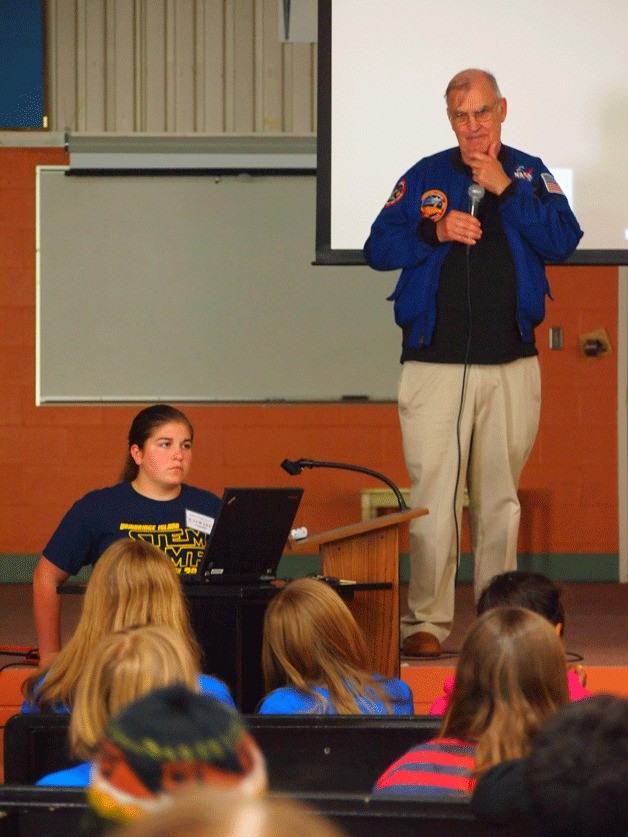
This year, the camp also hosted a special guest for science campers. Astronaut John Fabian visited the camp and spoke to the students about his time on the crews of space shuttles Challenger and Discovery.
Fabian, now 73, was a hit. He not only brought pictures and his experience with him, he also brought a few laughs. He took time to answer students’ questions, too.
Questions such as what it’s like in zero gravity.
“You can put your pants on two legs at a time and we get to play with food like your mother doesn’t want you to,” he said.
Or what the scariest part of space travel is.
“I’ve been a combat pilot, and been strapped into two shuttles, and I’ve been married to the same woman for 50 years,” Fabian answered. “I don’t scare easily.”
Of course other questions took on a more scientific basis, such as the air conditioning system of the shuttles.
Since the shuttle is going in and out of sun light among the vacuum of space, temperatures rise and drop dramatically. The shuttles therefore are kept at a constant 68 degree Fahrenheit.
“We had really good air conditioners,” Fabian said.
The camp is the result of a grant from the Bainbridge Schools Foundation, and therefore is funded by money island parents donated.
According to Moncada, it’s money well-spent.
“They are doing things in robotics they never thought they could do, and they are doing things in math they never thought they could do.” Moncada said. “Students are absolutely engaged, they don’t want it to end.”