Farming ‘rock star’ will speak at upcoming events on island
Published 12:45 pm Friday, June 1, 2012
Some communities fawn over celebrities passing through their town. Perhaps a presidential visit can incite a swarm of onlookers, or even a sighting of a famous actor.
But on Bainbridge, an appearance by a farmer will draw a crowd of excited islanders.
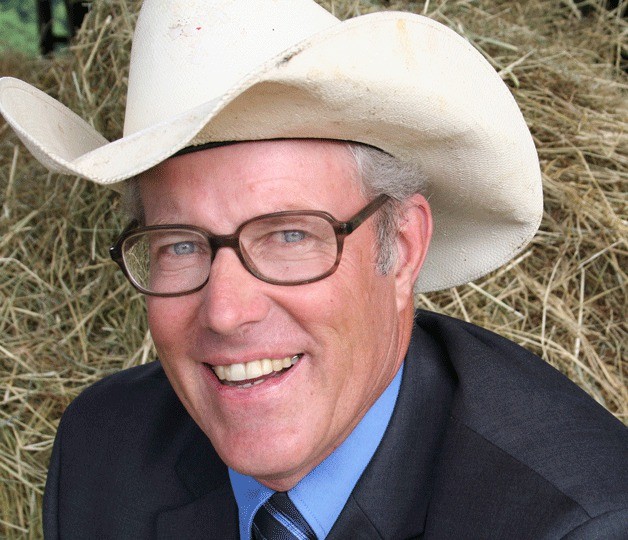
Friends of the Farms will host farming visionary earthworker Joel Salatin on Saturday, June 2.
“He is the rock star of farmers,” said Wendy Tyner, executive director of Friends of the Farms.
Salatin is a pioneer in his field, she said, and young farmers usually don’t get to hear from inspirational speakers such as Salatin on traditional or new farming techniques.
If Salatin is a rock star, then his 2012 Bainbridge Island Tour will give the island quite a show. His first trip to Bainbridge will offer three gigs; a lunch, a lecture and an intimate meet-and-greet with island farmers.
Proceeds from his appearances will benefit the island’s cherished and historic Manzanita Farm.
“This gives young and new farmers the opportunity to hear about how he has helped transform farming all over the nation,” Tyner said.
“He is very practical and a visionary at the same time.”
Salatin plans to speak on practical farming while also offering advice to local farmers on how to change the public’s perceptions of farming, and their food, for the better.
“It’s going to take more of an interest in earthworms, and their health, than the Dow Jones,” Salatin said.
Salatin has experienced a bump in his cult celebrity status in recent years. He was featured in Michael Pollan’s book “The Omnivore’s Dilemma” and has also appeared in various documentary films such as “Fresh” and the popular “Food, Inc.”
Despite his recent rise in fame, Salatin is not new to the world of lecturing, books and touring.
He has been farming for decades and has been publishing books since 1996.
His most recent book, “Folks, This Ain’t Normal,” is also the title of his lecture at Bainbridge Performing Arts on June 2.
Salatin plans to discuss how much of modern farming isn’t in line with how it has been done for thousands of years, and that sudden and dramatic changes in farming have not been for the better.
For example, Salatin recalls meetings with other farmers so the Department of Agriculture could offer training on the newest farming techniques.
“It was to teach us new scientific ways to feed cows, which was to take dead cows, grind them up, and feed them back to cows,” Salatin said. “The cows then are not herbivores.”
Such practices left Salatin scratching his head.
“Our family did not buy into that USDA science,” Salatin said. “Not because we didn’t like them, there was just no template in nature where herbivores eat like that.”
Salatin opted to follow what his father and grandfather did before him, which was to simply copy what happened in nature, and use that to put food on the plate.
He also practices what he preaches.
At his farm in Virginia, Polyface Farm, he uses a variety of methods that some may find novel — rotating the animals through the fields, feeding them what they naturally would eat, and not depending upon the use of chemicals.
And while such methods may seem unique to some, Saltin says they aren’t anything new.
“If you look at nature as a template, animals don’t stay in one place,” Salatin said. “It’s the philosophy of biomimicry, copying nature’s patterns.”
Salatin’s home farm is what one might imagine when thinking of a traditional farm; a pastoral scene with fields and roaming animals, as opposed to industrial pens with cramped animals common to today’s farming operations.
It’s a way of farming Salatin stands behind as superior, though he realizes that it is an uphill battle to get others to view it that way. But that isn’t stopping him.
“I am not a big fan of being victims,” Salatin said. “For anybody who thinks our food system and farming system is messed up, it is simply a manifestation of billions of little daily decisions made by individuals.”
The idea is to influence a change in those daily decisions, he said.
His inspirational message of changing the farming industry is part of what he plans to share with audiences while on Bainbridge Island.
For Salatin, it might be a challenge, but it’s not an impossible feat.
“We have the money, we have the resource base, what we lack is participation,” he said. “We can do this. It is not out of our grasp to do it.”